Tracking Study Finds Olowalu Tiger Shark Mating Hub Overlaps Whale Calving
Researchers found tiger sharks gather seasonally at Olowalu, overlapping humpback whale calving; this overlap could affect whale-watching, fishing and beach safety.
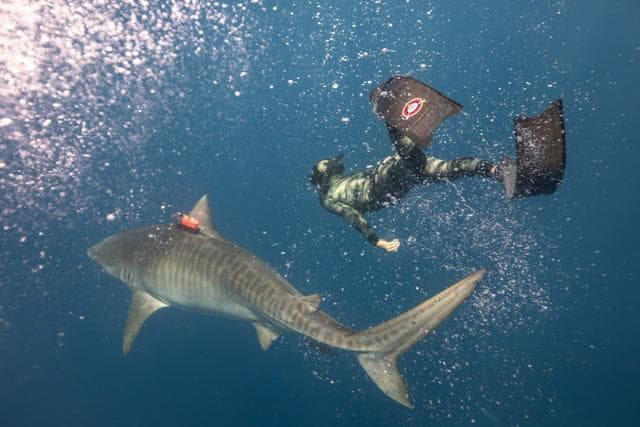
A University of Hawaiʻi at Mānoa research team has identified Olowalu, Maui, as a predictable seasonal mating hub for tiger sharks, and the site overlaps with humpback whale calving activity. The finding is based on six years of acoustic-tracking data and was released Jan. 18, 2026, highlighting an ecological intersection that could matter to coastal communities across the islands.
The study tracked movements of mature male and female tiger sharks and found they converge on Olowalu during the humpback whale calving season. Researchers conclude the overlap suggests dual drivers for shark presence: mating behavior and foraging opportunities, including access to vulnerable whale calves or placental material following births. The dataset spans six years of detections from acoustic receivers, giving the team a multi-season view of repeatable patterns rather than a one-off event.
Funding for the project came from the Hawaiʻi Department of Land and Natural Resources and the Pacific Islands Ocean Observing System. Investigators said tagging efforts will continue with more targeted deployments intended to document behaviors directly and distinguish mating-related activity from scavenging or predation.
For Big Island County residents, the findings bear practical and economic implications. Whale-watching operators, charter fishermen and shoreline recreation businesses depend on predictable whale season traffic; any change in wildlife patterns or emergent safety concerns could affect revenues and operations. Local lifeguards, surf schools and commercial fishermen may need updated guidance if further studies confirm increased tiger shark activity around young calves or nearshore birthing areas. State resource managers at DLNR and regional ocean observing programs are positioned to use these data to refine monitoring, public advisory timing and targeted outreach.

Beyond immediate safety questions, the overlap raises broader ecological and policy issues. If mating sites coincide with whale calving habitats, managers will need to balance shark conservation with protection of humpback calves and public safety. Acoustic tracking and more intensive tagging could provide the species-specific and behavioral data necessary to inform spatial or seasonal management measures, such as advisory zones, enhanced monitoring during peak weeks or coordination among island agencies.
The study also underscores how interconnected Hawaiian marine ecosystems are: behavior observed at Olowalu on Maui can have ripple effects for communities on Kauaʻi, Oʻahu and the Big Island through shared migration corridors and tourism markets. Researchers plan further tagging to clarify what drives shark movements and to provide actionable evidence for managers. For residents and businesses, the next steps will be watching for updated guidance from DLNR and scientists as new data refine where and when overlap poses the greatest risk or management need.
This article was produced by Prism’s automated news system from verified source data, official records, and press releases, then run through automated quality and moderation checks before publishing. The system is built and supervised by the people who set the standards it runs under. Read our full AI policy.
Did this article answer your question?