UH Maui College Hosts Free GenAI Cybersecurity Clinic for Hawaiʻi Small Businesses
UH Maui College hosted a free GenAI cybersecurity clinic for Hawaiʻi sole proprietors and small businesses to strengthen data protection and incident response.
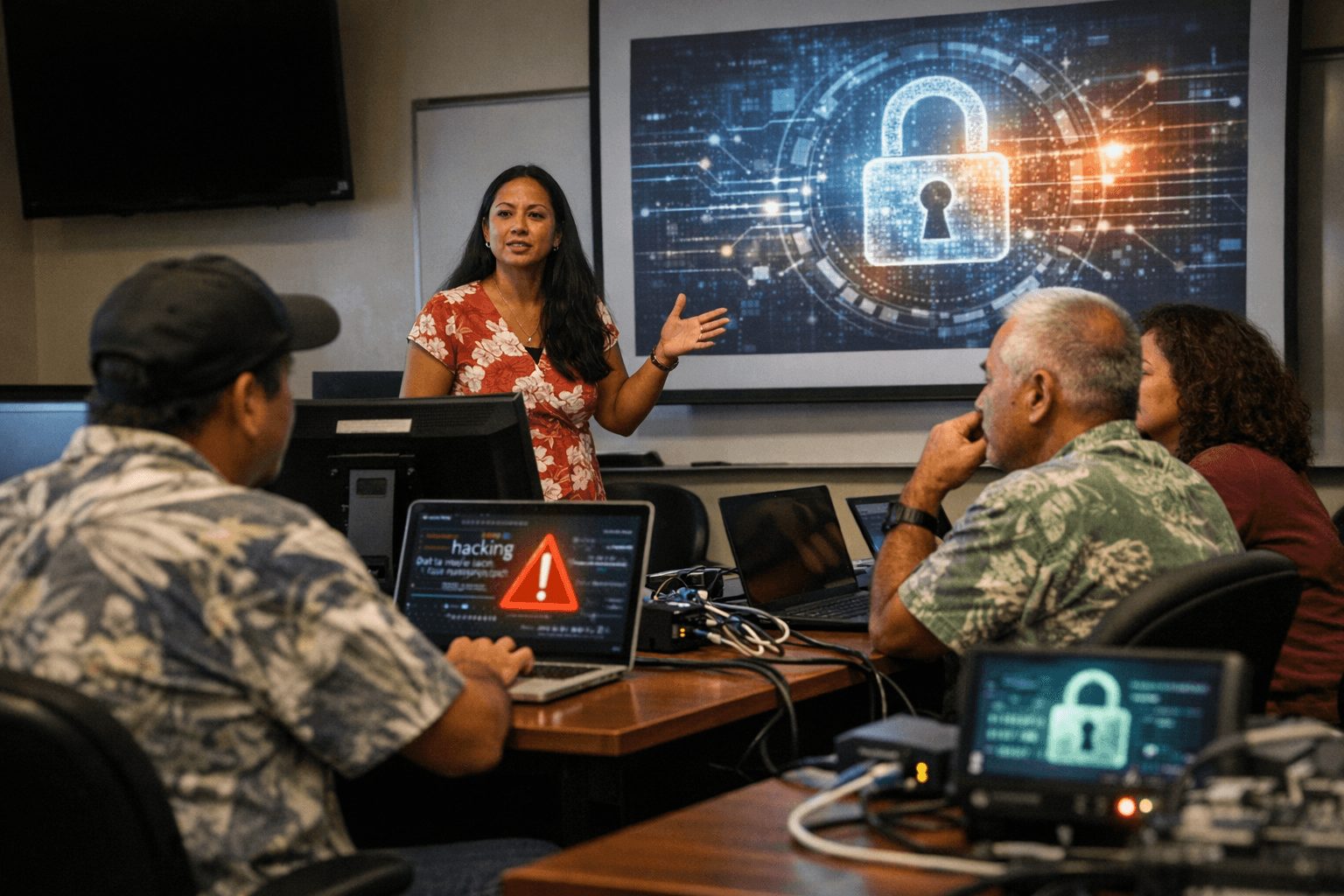
UH Maui College hosted the second session in its UH Cybersecurity Clinics program, a free online clinic titled both as "Security using GenAI" and "Security Using Generative AI" aimed at Hawaiʻi sole proprietors and small business owners. The hourlong Zoom session was held Feb. 9 from noon to 1 p.m. and focused on practical, hands-on ways artificial intelligence can help small operations detect and respond to cyber incidents.
The workshop was presented as part of a three-session series designed to bring enterprise-grade cybersecurity practices to local small businesses that often lack dedicated IT teams. Debasis Bhattacharya, professor and program coordinator of the UH Maui College Applied Business and Information Technology Program, moderated the session. Presenters included Jodi Ito, UH chief information security officer, and David Stevens, assistant professor at Kapiʻolani Community College.
Organizers stressed concrete applications of GenAI for community businesses: using AI to detect unusual activity, automating threat detection, and speeding up incident response so owners can recover more quickly from attacks. The curriculum also addressed privacy and ethical concerns tied to AI use, basic prompt writing for small businesses, managing data privacy concerns, and avoiding "shadow AI" that can create unvetted risks inside an organization.
The clinics are supported by a $1 million grant and additional funding from Google’s Cybersecurity Clinics Fund, resources that organizers say make tailored, no-cost technical guidance possible for Hawaiʻi's small-business ecosystem. Registration for the session had been offered via a Zoom link on the event page that displayed the instruction "Click here to register."
For Big Island County small-business operators, the session underscored how cyber risk intersects with public health and community resilience. Clinics, medical offices, caregiving services, and small retailers often hold sensitive customer information yet operate on thin margins and limited IT staffing. Faster detection and better incident response can reduce downtime, protect customers' personal and health data, and preserve trust in local services that residents rely on for daily needs and care.
Beyond the UH clinics, small-business owners were pointed to additional federal and industry resources to build digital skills and security awareness. The U.S. Small Business Administration offers free materials on starting, growing, or selling a business. Google’s Grow with Google small business showcase provides more than 250 videos on topics such as project management and data analytics. HubSpot maintains free and paid courses through the HubSpot Academy, including longer certification sessions and digital badges for staff training. A separate note flagged that Applied Digital Skills lessons were set to migrate to a new platform as of June 30, 2025, and users needed to take steps to retain account data.
The UH Cybersecurity Clinics program plans one more session in the series, offering another opportunity for sole proprietors and small-business owners to gain practical tools for safeguarding data and continuity. For local businesses that have juggled finances, staffing, and care responsibilities through economic and weather-related disruptions, improved cybersecurity is another layer of protection for the community's health and economic equity.
This article was produced by Prism’s automated news system from verified source data, official records, and press releases, then run through automated quality and moderation checks before publishing. The system is built and supervised by the people who set the standards it runs under. Read our full AI policy.
Did this article answer your question?