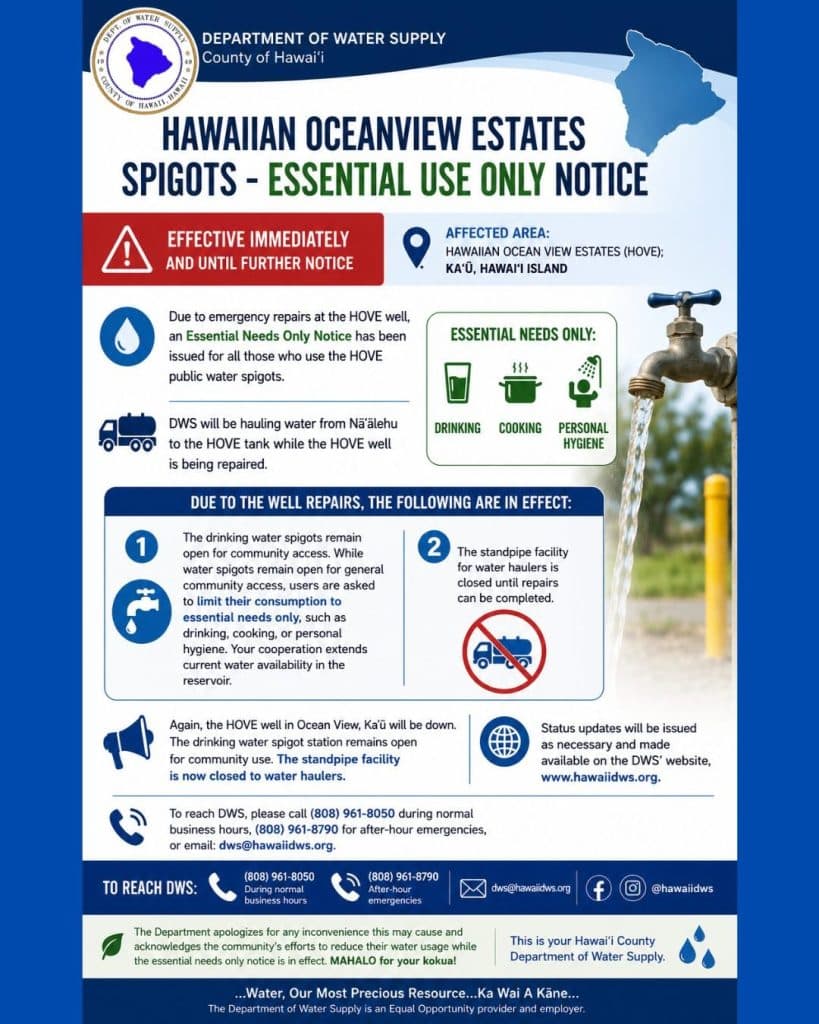
Water Officials Urge Big Island Residents to Prepare, Conserve Amid Severe Weather
With a flood watch running through Friday and power outages threatening the island's water grid, DWS urged Big Island residents to store at least 14 days of drinking water.
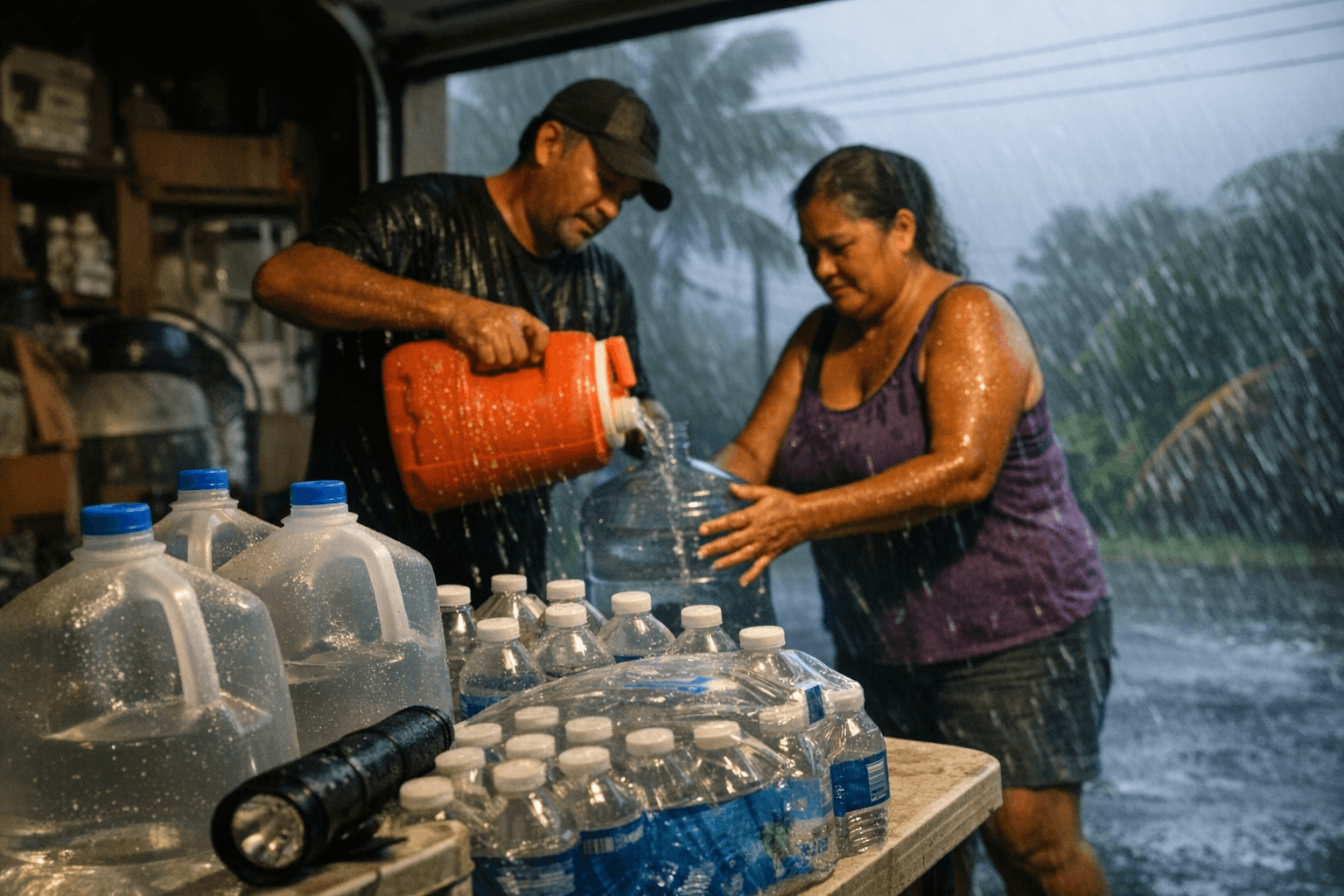
With a statewide flood watch active through Friday afternoon and severe weather already bearing down on Hawaiʻi Island, the Department of Water Supply called on Big Island residents Wednesday to stock a minimum of 14 days of drinking water per person before conditions deteriorate further.
The warning came as the National Weather Service in Honolulu forecast excessive rainfall beginning Wednesday morning through Friday, raising the risk of flooding, road closures, and landslides across the island. DWS officials emphasized that the storm system posed a double threat: physical damage to water infrastructure and widespread power outages that could disable the electrical grid needed to run county water systems, private community water systems, and private catchment systems alike.
The Hawaii Emergency Management Agency sets the minimum standard at one gallon of water per person per day for the 14-day period, a figure that also applies to pets and livestock. DWS stressed that how water is stored is as important as how much. Residents were directed to use clean, food-grade containers, wash them with dish soap, and sanitize with one teaspoon of mild liquid chlorine bleach per quart of water before rinsing. Containers should be filled from the tap with as little air space as possible and stored in a cool, dark location. The Federal Emergency Management Agency recommends rotating any non-commercially-bottled water every six months.
DWS also cautioned that deteriorating water quality could force the county to issue a Boil Water Notice during the event, with customers to be notified through official channels if that threshold is reached. Conserving water during the storm was urged as well, with officials recommending residents limit non-essential use and reduce toilet flushing.
Above 12,500 feet, conditions turned sharply more severe. A Winter Storm Watch covered the summit areas of Mauna Kea and Mauna Loa, where forecasters projected up to three inches of snow, ice accumulation of up to a quarter inch, and wind gusts reaching 55 mph. Summit travel was expected to become difficult or impossible, particularly on ice-covered surfaces.
The combination of lowland flooding and summit icing makes this storm one of the broader weather threats the island has faced this season, and DWS officials made clear that the time to prepare was before the heaviest rainfall arrives.
This article was produced by Prism’s automated news system from verified source data, official records, and press releases, then run through automated quality and moderation checks before publishing. The system is built and supervised by the people who set the standards it runs under. Read our full AI policy.
Did this article answer your question?