Wind advisory extended for Big Island, gusts could reach 50 mph
Strong trades were still hitting the Big Island, with the northern and southern sides facing 50 mph gusts and east- and north-facing shores under a 7- to 10-foot surf advisory.
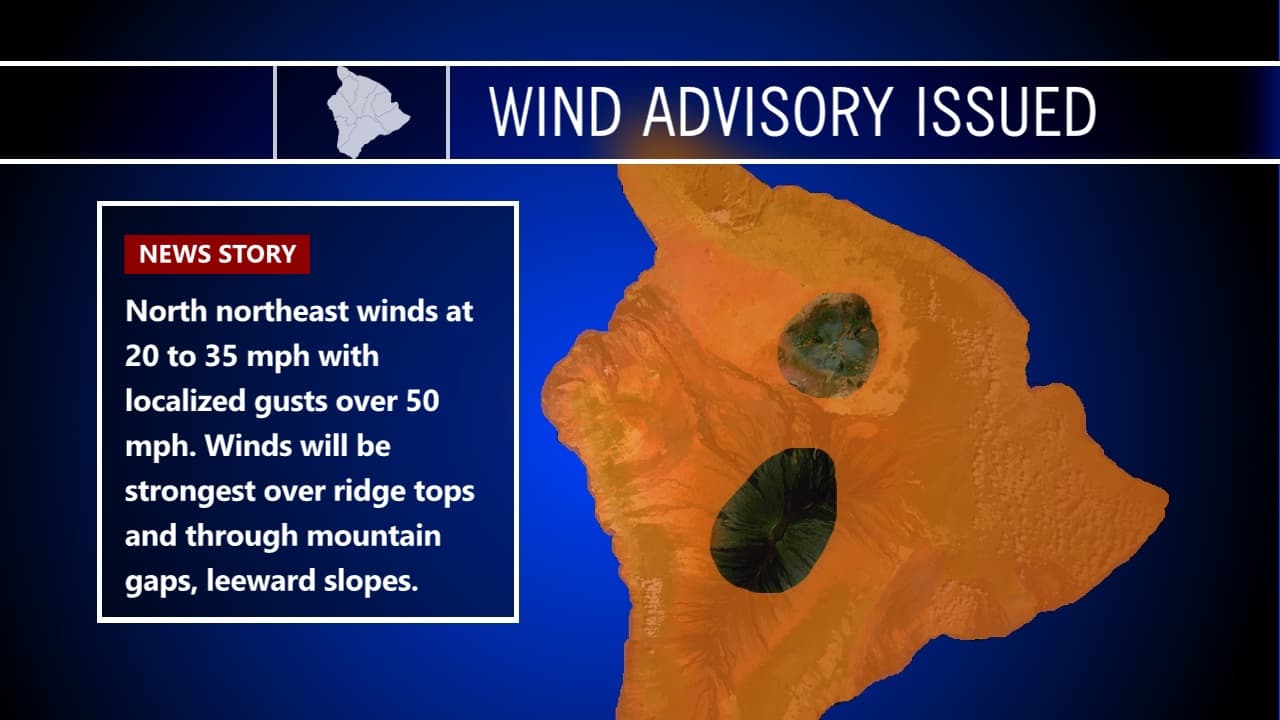
Wind remained the biggest problem for the Big Island as Hawaii Emergency Management Agency extended an advisory for portions of the island until 6 a.m. HST today, with the National Weather Service saying the strongest gusts were most likely in the evening hours. Northern and southern parts of the island were expected to see northeast winds of 15 to 30 mph, with gusts reaching 50 mph.
The National Weather Service Honolulu Forecast Office said the advisory was extended through tonight for portions of the Big Island and Maui because locally windy trades were continuing. Forecasters said a 1032 mb surface high about 950 miles north of the islands was driving the strong trade-wind flow, and the wind was being sped up over and downwind of terrain. That put the island’s exposed slopes and higher ground at the greatest risk for sudden gusts, especially after dark.

The practical impact for Big Island County was clear: power interruptions, rough driving, and scattered debris were more likely in the windiest areas than on the island’s sheltered leeward side. The forecast office said little rainfall was expected over most leeward areas, while showers were more likely to hit windward and mauka sections. That pattern pointed to a sharp divide across the island, with the most disruptive weather concentrated where trades funnel through the terrain.
Hawaii Emergency Management Agency had earlier placed the original wind advisory in effect from 6 p.m. HST on May 20 through 6 a.m. HST on May 22 for all of Kahoolawe, Lanai and Molokai, plus portions of Maui and the Big Island. By the time the extension was issued, officials were still watching weather impacts across Hawaii County as the trade winds held firm.
The wind was not the only hazard. A high surf advisory for east- and north-facing shores was also extended into Saturday until 6 p.m. HST, with surf expected to run 7 to 10 feet. That combination of strong wind and elevated surf meant tougher conditions for coastal travel, early-morning commutes, and anyone heading toward exposed shoreline areas before winds and seas eased later in the day.
This article was produced by Prism’s automated news system from verified source data, official records, and press releases, then run through automated quality and moderation checks before publishing. The system is built and supervised by the people who set the standards it runs under. Read our full AI policy.
Did this article answer your question?