Winter Storm And High Wind Warnings Threaten Mauna Kea, Mauna Loa Summits
The National Weather Service issued a winter storm warning and a high wind warning for the summits of Mauna Kea and Mauna Loa beginning Jan. 5, bringing heavy mixed precipitation, strong southeast winds and dangerous travel conditions. These forecasts matter to Big Island residents because summit roadways, observatory operations, emergency response and residents who work or travel to high elevations may face hazardous or impossible conditions.
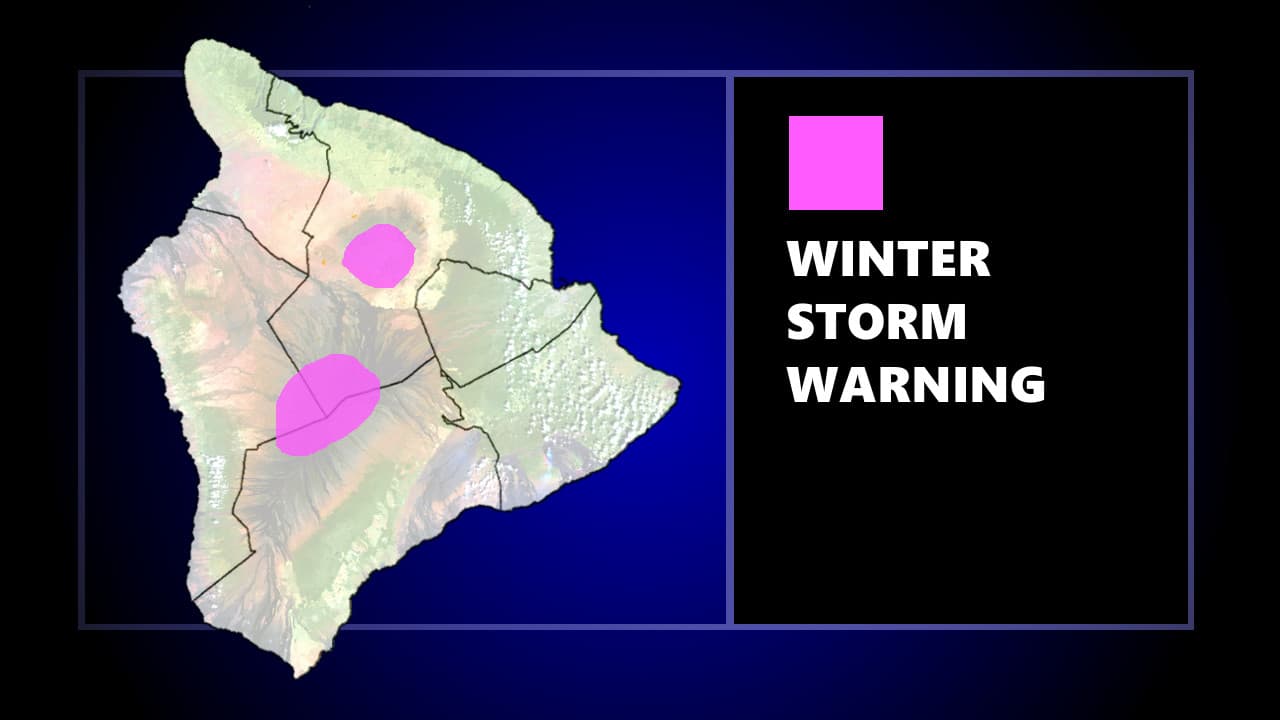
Forecasters warned that winter storm conditions and powerful southeast winds will affect the summits of Mauna Kea and Mauna Loa through the early hours of Tuesday, Jan. 6. The winter storm warning covers elevations above 11,000 feet and replaces an earlier watch; a separate high wind warning was set to begin at 6 a.m. Monday and run through 6 a.m. Tuesday. National Weather Service meteorologists expect heavy mixed precipitation on the summits with total snow accumulations of 5 to 10 inches and significant rime ice building on road surfaces.
Southeast winds are forecast in the 50 to 60 mile-per-hour range with gusts up to 75 miles per hour. Forecasters cautioned that winds of this strength can forcefully open doors, damage hinges or slam doors shut, and make driving and walking dangerous. Blowing snow and rime ice could produce periods of zero visibility, rendering travel very hazardous or impossible.
The storm is being driven by deep moisture drawn north from the south ahead of a developing cold-core kona low. That setup increases the likelihood of heavy mixed precipitation at high elevations and the rapid formation of rime ice, a white, granular ice that can coat pavement and equipment and create brittle, slippery surfaces.
Local impacts are most acute for people who live, work or travel at summit elevations, including observatory staff, contractors and visitors. Roadway icing and whiteout conditions threaten access to summit facilities and could delay essential maintenance or emergency response. Travel to the summits should be postponed until the threat of severe winter weather diminishes, and residents are advised to secure loose property and avoid summit travel while warnings are in effect.
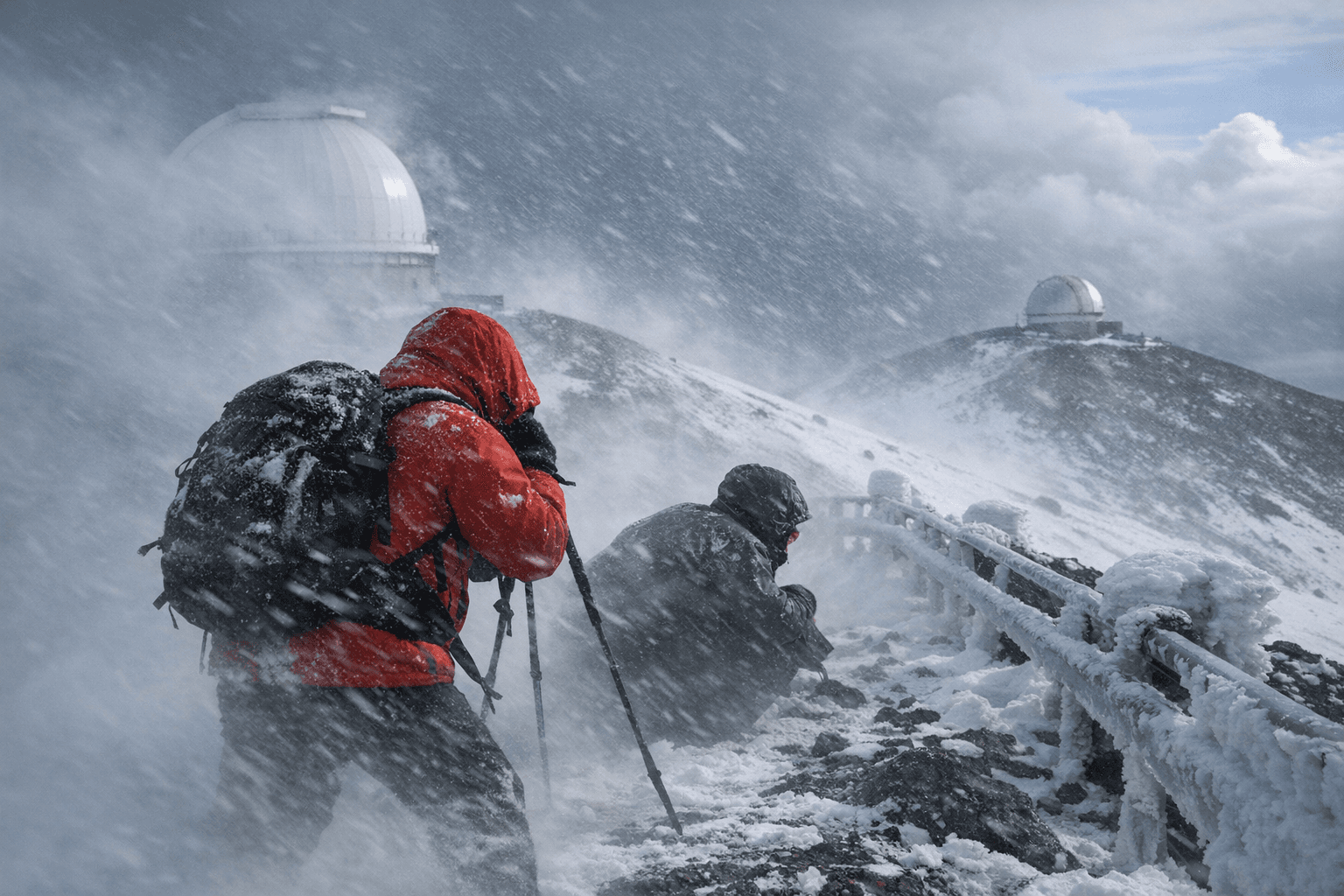
Public health risks include hypothermia, falls on icy surfaces, and vehicle crashes in low-visibility conditions. Rural and low-income residents who rely on hourly wages or who lack flexible transportation face disproportionate burdens when severe weather forces delayed work or access to services. Community leaders and service providers should consider outreach to kupuna, workers with limited transportation options and those with chronic health needs to ensure checks and continuity of care during the storm.
As conditions evolve, residents with plans to travel to high elevations should cancel or postpone trips and monitor official updates. With heavy snow, rime ice and hurricane-force gusts possible at summit heights, the safest course is to avoid summit travel until forecasters lift the warnings and conditions improve.
This article was produced by Prism’s automated news system from verified source data, official records, and press releases, then run through automated quality and moderation checks before publishing. The system is built and supervised by the people who set the standards it runs under. Read our full AI policy.
Did this article answer your question?