Winter Weather Advisory for Hawaiʻi Island Summits: Snow, Icy Roads Expected
A winter weather advisory for Hawaiʻi Island summits brought snow, freezing fog and icy roads, prompting warnings to avoid travel and prepare for limited visibility.
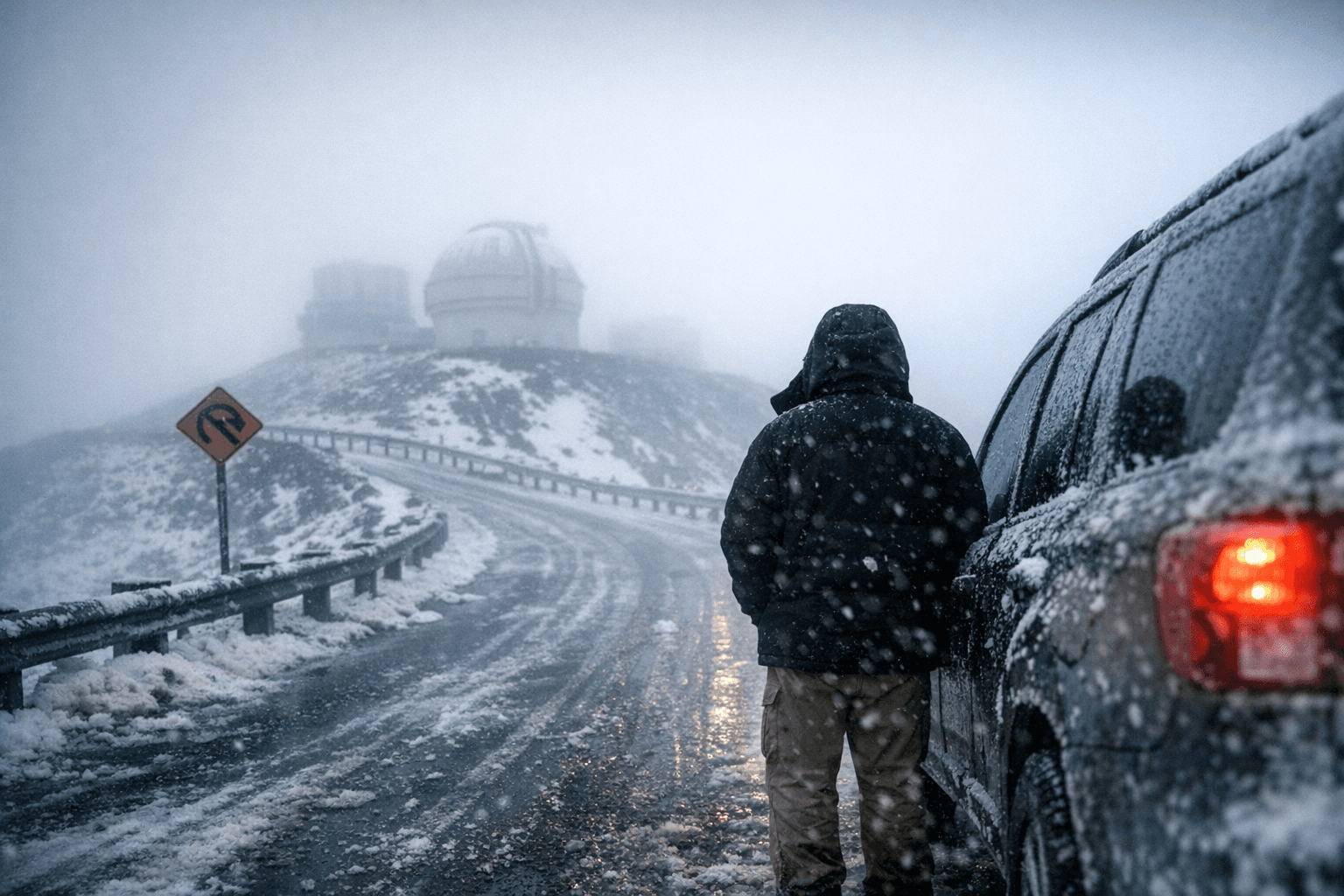
A winter weather advisory issued by the National Weather Service for Hawaiʻi Island summits warned of snow showers, freezing fog and hazardous travel conditions that affected the island from Jan. 23 into early Saturday morning. Forecasters said summits could see up to about 2 inches of snow at the highest points, with blowing snow capable of reducing visibility to near zero at times.
The advisory described icing on roads and slick surfaces as the primary threat to motorists and summit communities. Freezing fog and periodic snow showers raised the risk of black ice and localized accumulations on pavement, making steep, winding roads particularly treacherous. The National Weather Service advised drivers to use caution, prepare for slippery roads and limited visibility, and to avoid travel during the advisory if possible.
Local impacts were concentrated at high elevations where temperatures fell below freezing. While lower-elevation areas of the island did not expect measurable snowfall, residents who travel to volcanic summits or cross higher passes for work, services or recreation faced shortened windows for safe travel. Emergency responders and county crews typically monitor summit approaches during such events; the advisory warned that travel could become hazardous enough to impede routine response times.
The forecast quantity - around 2 inches at the highest points - underscores that this system was not a large snow event by mainland standards, yet it posed an outsized risk on Hawaiʻi Island because roads and infrastructure are not routinely prepared for sustained icy conditions. Blowing snow reducing visibility to near zero can transform short exposed stretches of roadway into immediate safety hazards for drivers unfamiliar with winter driving in summit conditions.
For residents and visitors, practical steps included postponing nonessential summit travel until conditions improved, allowing extra time for necessary trips, and ensuring vehicles were equipped for slick roads. Drivers were urged to slow down, allow greater following distances and be prepared for sudden changes in visibility due to blowing snow or freezing fog. Those living at higher elevations were advised to check on vulnerable neighbors and expect potential delays in services that require travel through summit zones.
Looking ahead, forecasts and any updates to advisories remain the best source for timing when roads and summit access will return to normal conditions. The advisory's brief but sharp impact highlights how even modest snowfall on the island's high terrain can disrupt travel and daily routines; residents and officials will be watching subsequent forecasts for lingering icy spots and any needed safety guidance.
This article was produced by Prism’s automated news system from verified source data, official records, and press releases, then run through automated quality and moderation checks before publishing. The system is built and supervised by the people who set the standards it runs under. Read our full AI policy.
Did this article answer your question?