Buena Vista University exhibit honors World War II generation in Storm Lake
Evalyn Scott and Del Thayer anchor a July 3 exhibit reopening in Storm Lake, turning Buena Vista University's World War II loss into a living campus record.
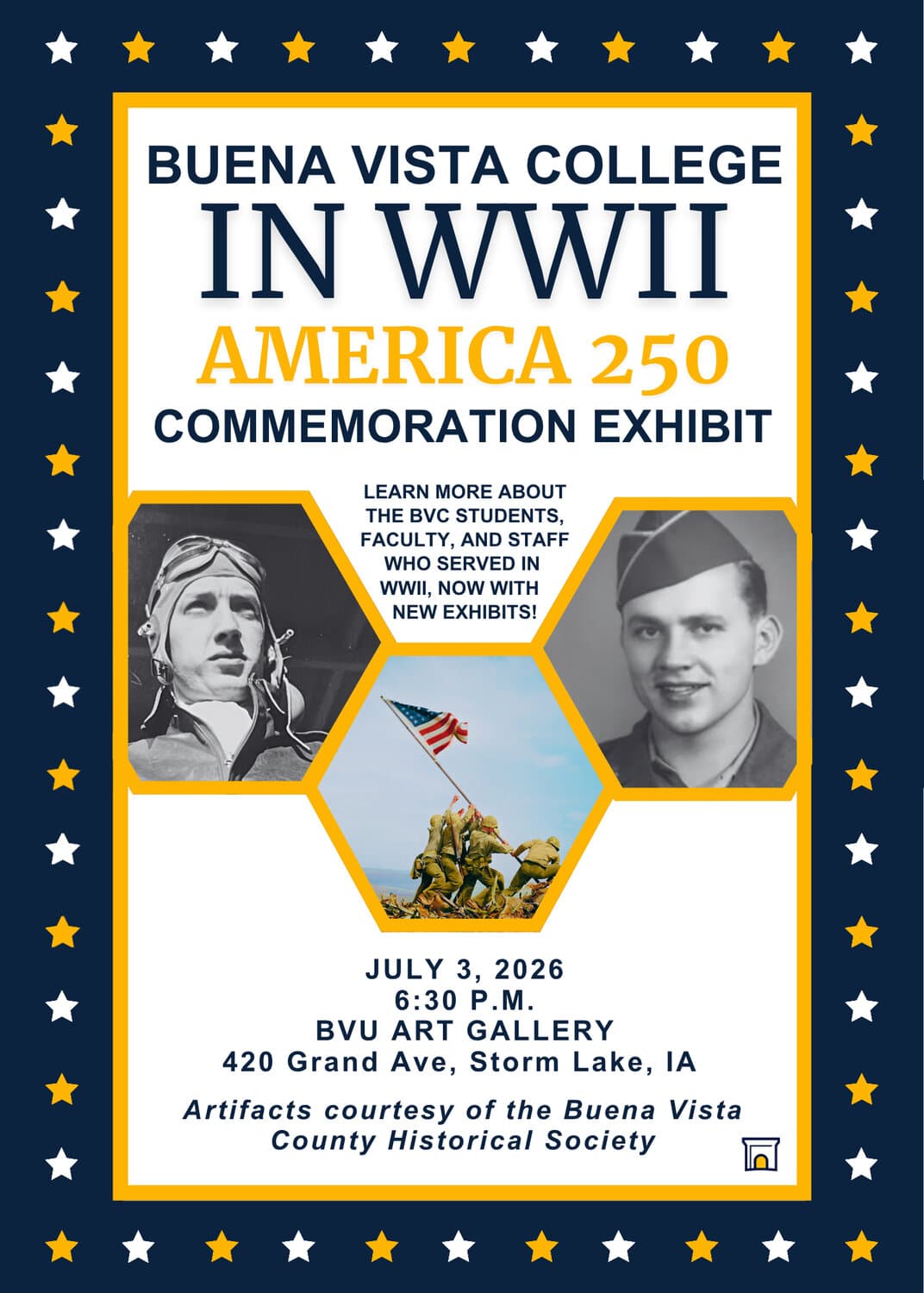
Evalyn Scott and Del Thayer give Buena Vista University’s World War II exhibit its human weight. Their stories return to the Buena Vista University art gallery on July 3, when the BVC in WWII exhibit reopens in Storm Lake and asks families to look again at the campus generation that went to war and, in many cases, never came home.
With summer back in Storm Lake and music drifting through town and across campus, the reopening feels less like a museum refresh than a civic handoff. The point is not simple nostalgia. It is a last local chance to keep firsthand memory alive while the names, faces and campus friendships of the 1930s and 1940s are still being recovered from old paper, old photographs and the people who spent years piecing them together.
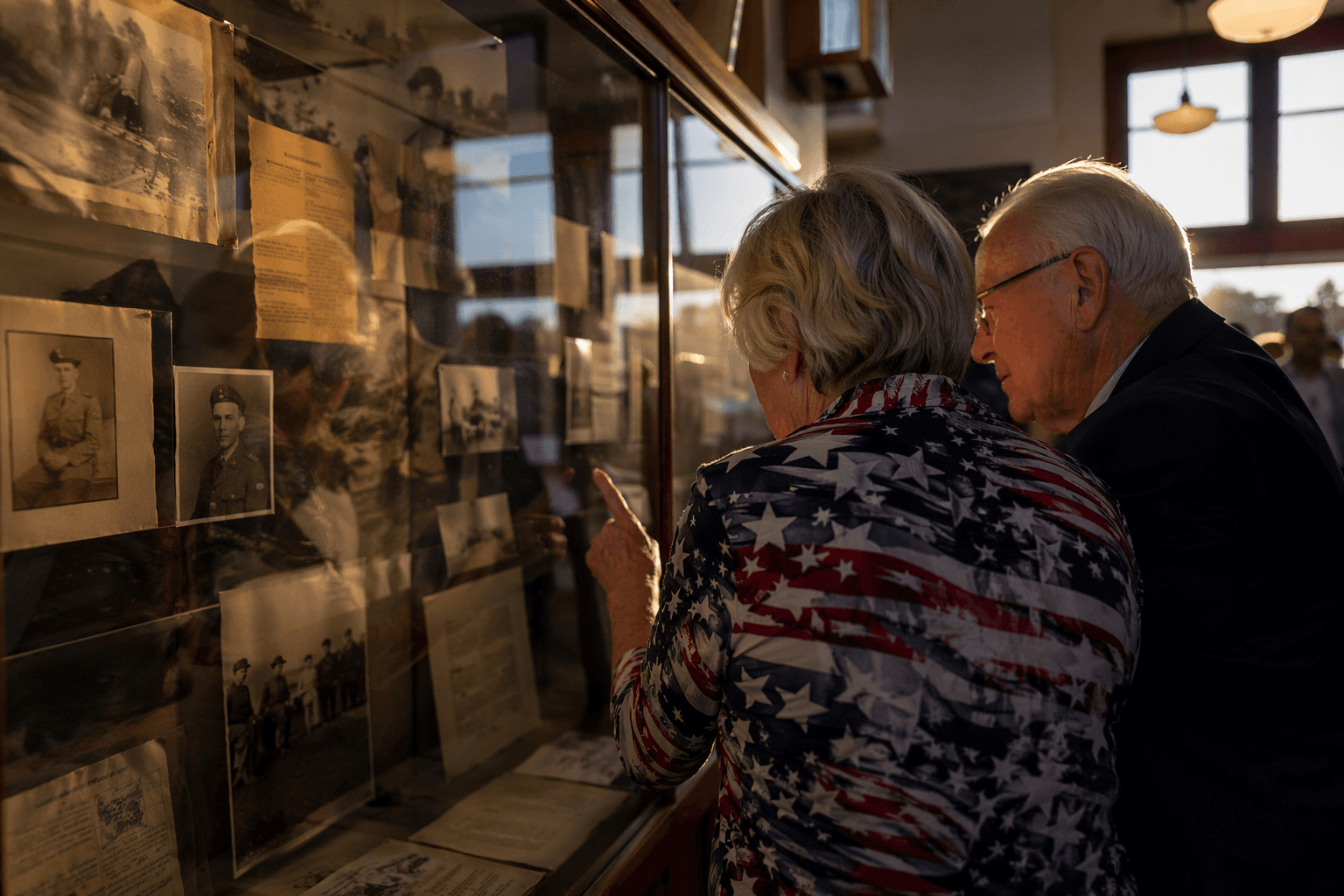
A campus story built around people, not abstractions
The exhibit centers on the 18 young men from Buena Vista College who were killed in World War II, along with a 19th casualty in the school’s wartime story that was not caused by combat but belongs to the same era of disruption and loss. That broader count gives the display its weight, because it shows the war as the students and their families experienced it, not as a distant chapter in a textbook.
Evalyn Scott helps the story feel immediate. She was a Storm Lake native, active and well known before college, and she quickly became part of campus life through sorority work and homecoming activities. Her presence in the exhibit matters because it reminds visitors that the war did not only remove soldiers from the roster. It interrupted friendships, family ties and the ordinary ambitions of a college town that had been full of music and youthful optimism in 1937, even as conflict gathered overseas.
Del Thayer’s story adds another layer of specificity. The Storm Lake Times Pilot series on the project noted that he died aboard the USS Savannah on Sept. 11, 1943. That kind of detail keeps the exhibit from flattening out into a single, generic story of sacrifice. Each Beaver had a different path from Storm Lake to service, and each loss carried a different set of mourners back home.
How the exhibit was assembled
This tribute is the result of more than a year of research by Phoebe Feis, Dixee Bartholomew-Feis and Bill Feis. Their work relied on The Tack, old Storm Lake newspapers and other archival sources, including materials in the Buena Vista University archives, to reconstruct who served, who died and how the campus changed as the war unfolded.
That research matters because the records were scattered. The family’s count of 18 Buena Vista College students killed in the war came from combing through those sources, not from a single official list waiting on a shelf. In a community like Storm Lake, where local memory often lives in yearbooks, newspaper columns and the Buena Vista County Historical Society’s artifacts, the act of reconstruction is itself part of the tribute.
The Feis family also said the project coincided with major wartime anniversaries, including the 80th anniversary of D-Day and the run-up to V-E Day remembrance. That timing gave the exhibit a broader frame, linking the lives of Beavers who left campus for military service with a national story of mobilization, loss and return.
The V-E Day ceremony and the monument at BVU
Buena Vista University had already marked the project with a ceremony and exhibit on the 80th anniversary of V-E Day in May 2025. National Guard members presented the colors, and Bill Feis spoke beside the campus stone monument dedicated to fallen soldiers. That setting gave the tribute a solemn public shape, connecting the campus display to the university’s permanent landscape of remembrance.
The monument matters because it anchors the exhibit in place. Buena Vista University, founded in 1891, has long been part of Storm Lake’s civic memory, and the war years sit deep inside that history. When the colors were presented beside the stone monument, the ceremony linked military service, institutional memory and the physical campus in a way that a gallery display alone cannot do.
For families in Buena Vista County, that combination is important. It means the war is not only remembered through a university project, but through a place where students still pass each day. The exhibit makes the campus itself part of the historical record.
What Phoebe Feis found after the war
The wartime research opened onto a second story that is just as revealing. Phoebe Feis said her work in the BVU archives uncovered the postwar Vet’s Club story, showing how veterans came back to campus life after the fighting ended. By spring 1946, there were 76 veterans on campus, and 55 of them had served overseas.
That detail changes the shape of the story. The war did not end when the shooting stopped in September 1945. For Buena Vista College, the return of veterans changed enrollment, campus culture and the pace of daily life. The 2026 Vet’s Club exhibit expanded the BVU World War II story into the immediate postwar era, showing that the university was not only losing students to war, but absorbing men who came back carrying its effects.
For local readers, that postwar chapter matters because it helps explain the students, alumni and neighbors who rebuilt Storm Lake after the conflict. It also shows how campus memory was preserved, then widened, by later generations willing to ask new questions of the archives.
Why July 3 is the date that matters now
The July 3 reopening in the Buena Vista University art gallery is more than a scheduled event. It is a public act of remembrance at a moment when firsthand memory is thinning and the people who can speak from lived experience are fewer each year. The exhibit keeps the stories of the Beavers who fought, loved and lost in circulation, while also connecting today’s Storm Lake residents to a larger national history as the United States approaches its 250th anniversary.
That is why the exhibit matters now for Buena Vista University families and for the county beyond campus. It turns photos and narratives into a living community record, and it makes the university’s wartime past visible where people in Storm Lake can still stand beside it, read it and carry it forward.
This article was produced by Prism’s automated news system from verified source data, official records, and press releases, then run through automated quality and moderation checks before publishing. The system is built and supervised by the people who set the standards it runs under. Read our full AI policy.
Know something we missed? Have a correction or additional information?
Submit a Tip