County Guidance on Deicing Salt Use Protects Lawns and Health
An advisory issued December 30, 2025 from Iowa State University Extension urged Buena Vista County residents to weigh the trade offs of using deicing chemicals and salts, noting they improve traction but can harm turf and landscape plants when misused. The guidance matters for local safety and environmental health, because choices on sidewalks and driveways affect fall risk, lawn recovery, soil quality, and the cost burden on households and public services.
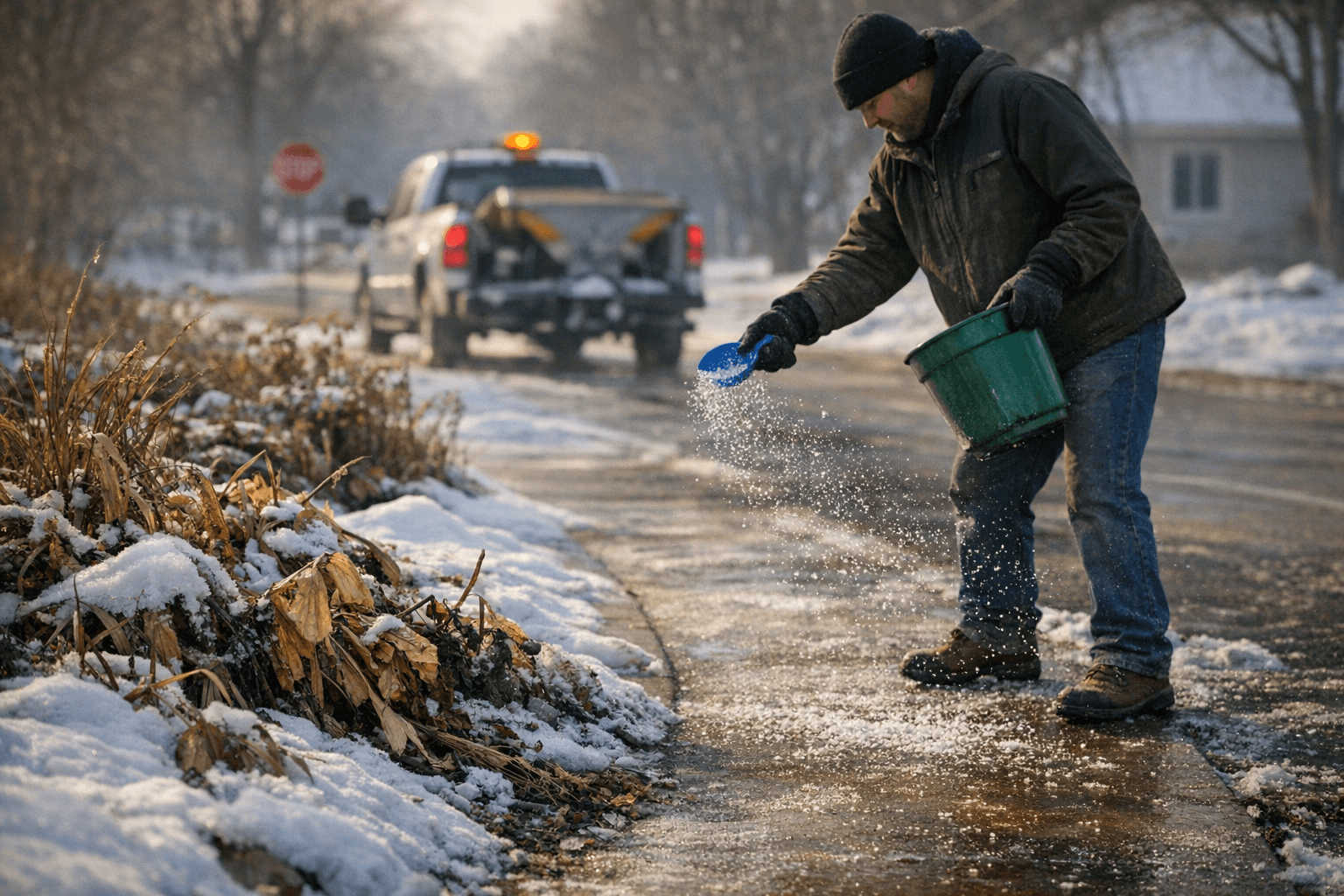
Iowa State University Extension issued an advisory December 30, 2025 that lays out practical steps for homeowners and property managers who are clearing winter walkways and driveways. The advisory emphasizes that deicing salts and chemicals are effective at improving traction and reducing falls, but cautions that some products, and especially overuse, can damage turf, landscape plants, and soil health. The advisory offers concrete best practices to balance safety with environmental and landscape protection.
The guidance recommends applying deicing materials sparingly and selecting products appropriate for the surface and nearby vegetation. Homeowners are advised to protect sensitive plants by shoveling early, creating barriers where possible, and avoiding placing shoveled snow that contains salt near shrubs and ornamental beds. After the thaw, sweeping up accumulated salt from hard surfaces can reduce long term buildup in soils and help lawn recovery. For short term traction where melting is not required, sand or grit can be used to provide traction without the corrosive effects of salts.
For Buena Vista County this advisory has immediate public health and social implications. Salt and chemical use can reduce slip and fall incidents, which are a leading cause of winter injuries among older adults and people with mobility challenges. At the same time, repeated damage to lawns and garden beds increases maintenance costs for homeowners and can strain public budgets when municipal right of way planting suffers. Low income households and renters may face disproportionate burdens if plant damage or soil salinization requires restoration or replacement of green space, or if they cannot afford less corrosive alternatives.
Policy choices by city and county public works departments will shape outcomes across the community. Municipal fleets and private contractors can adopt product selection and application practices that protect public plantings and sidewalks while maintaining safety. Extension offices are available to advise on product alternatives and soil restoration approaches that are less harmful to lawns and soils, and to help residents identify options that meet both safety and environmental goals.
Residents should prioritize clearing snow by shoveling, use deicing materials only as needed, protect sensitive plantings, and sweep up excess salt after ice has melted. For property specific recommendations and alternatives tailored to local soil and plant types contact the Buena Vista County Extension office or Iowa State University Extension for technical assistance and resources.
Know something we missed? Have a correction or additional information?
Submit a Tip