Lower Feed Costs Help Iowa Dairies Move Toward Break-Even in 2026
Iowa dairy farmers experienced modest relief at the start of 2026 as falling crop feed costs and relatively high beef prices eased pressure on farm margins, helping some dairies move back toward breaking even. For Buena Vista County producers, the shift can improve farm cash flows and support related rural businesses, but volatility in milk markets means local farmers should monitor Extension tools and upcoming Crop Advantage events.
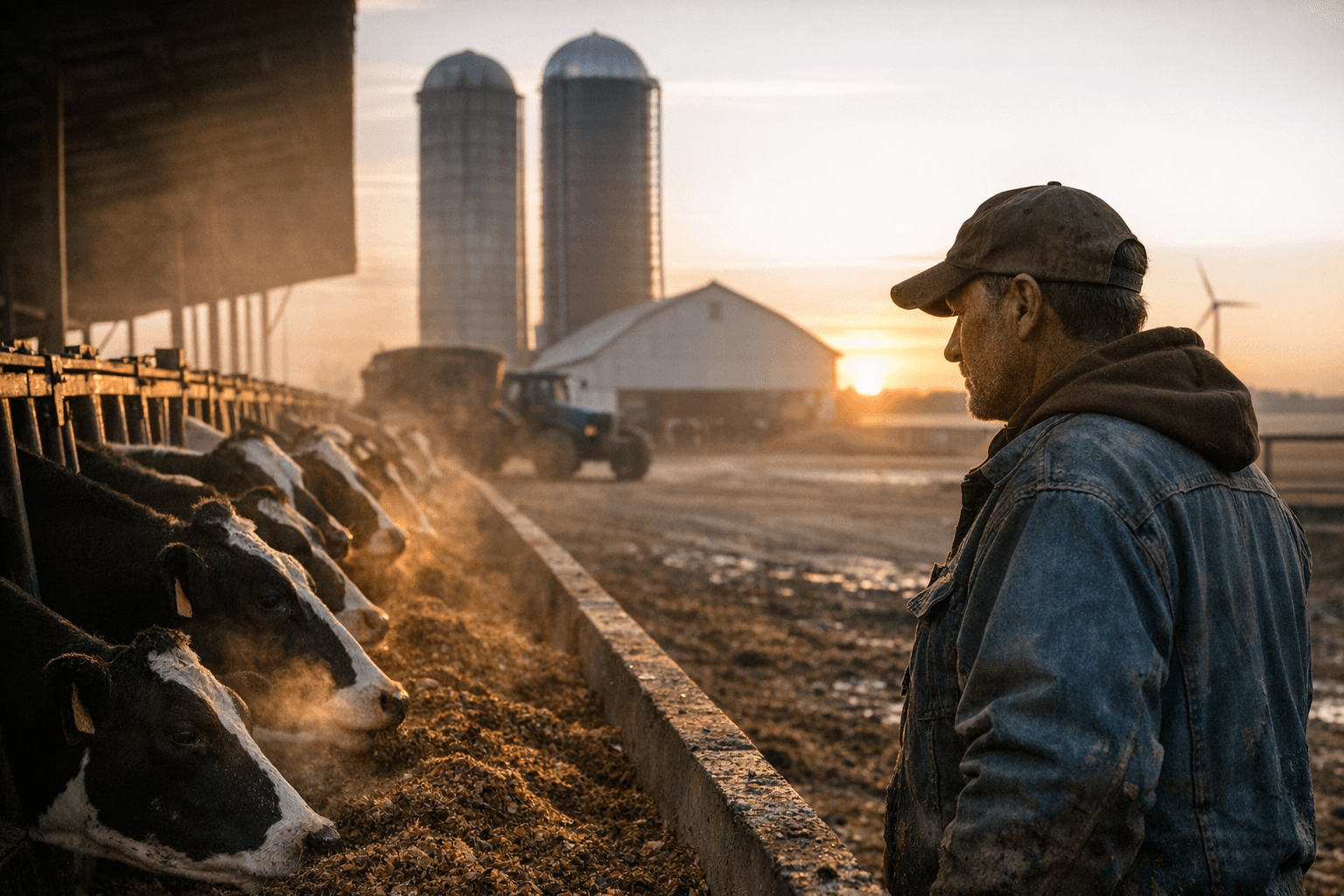
Iowa dairy operations began 2026 with a modest economic lift as input costs for feed declined while beef markets stayed relatively strong. The combination narrowed the gap between revenue and production costs for many herds, allowing some farms that had been losing money to approach break-even territory.
Iowa State University Extension dairy expert Fred Hall noted that reductions in corn and other feed costs were an important offset to persistent pressure on milk prices, and that changes in input costs are a primary driver of dairy margins. Lower feed bills reduce the per-cow cost of production, so even without a sizable rebound in milk prices, some dairies can restore positive cash flow or avoid deeper operating losses.
The statewide market shifts matter for northwest Iowa and Buena Vista County producers because local feed purchasing, milk check variability, and cattle market strength are tightly linked to county-level cash flows. For example, cheaper feed lowers farm operating expenses and can free up liquidity for repairs, debt service, or spring cropping costs. It also affects spending at local businesses such as feed suppliers, equipment dealers, and service providers that depend on farm income.
High cattle and beef prices have provided an additional tailwind by improving income for herds that retain or sell cull cows and for producers with mixed dairy-beef enterprises. That dynamic helped some dairies stabilize finances even as milk price signals remained uneven in late 2025 and early 2026.
Despite the improved margins for some operations, volatility remains a key risk. Milk prices can reverse direction quickly, and weather-driven crop outcomes or shifts in global grain markets could push feed costs back up. That makes active risk management important: producers may need to combine marketing, feed procurement strategies, and cost controls to sustain gains.
Local producers and rural businesses are encouraged to stay engaged with region-specific analysis and decision tools. Follow area Extension meetings and Crop Advantage events for county outlooks, budgeting tools, and practical guidance tailored to northwest Iowa conditions. Those gatherings will be the best source of actionable, localized information as markets continue to evolve.
This article was produced by Prism’s automated news system from verified source data, official records, and press releases, then run through automated quality and moderation checks before publishing. The system is built and supervised by the people who set the standards it runs under. Read our full AI policy.
Did this article answer your question?