Newell farmer turns 25-year goat herd into steady income
Brian Sievers turned a 25-year goat herd into dependable income on his Newell farm, with local demand and auction prices making the niche work.
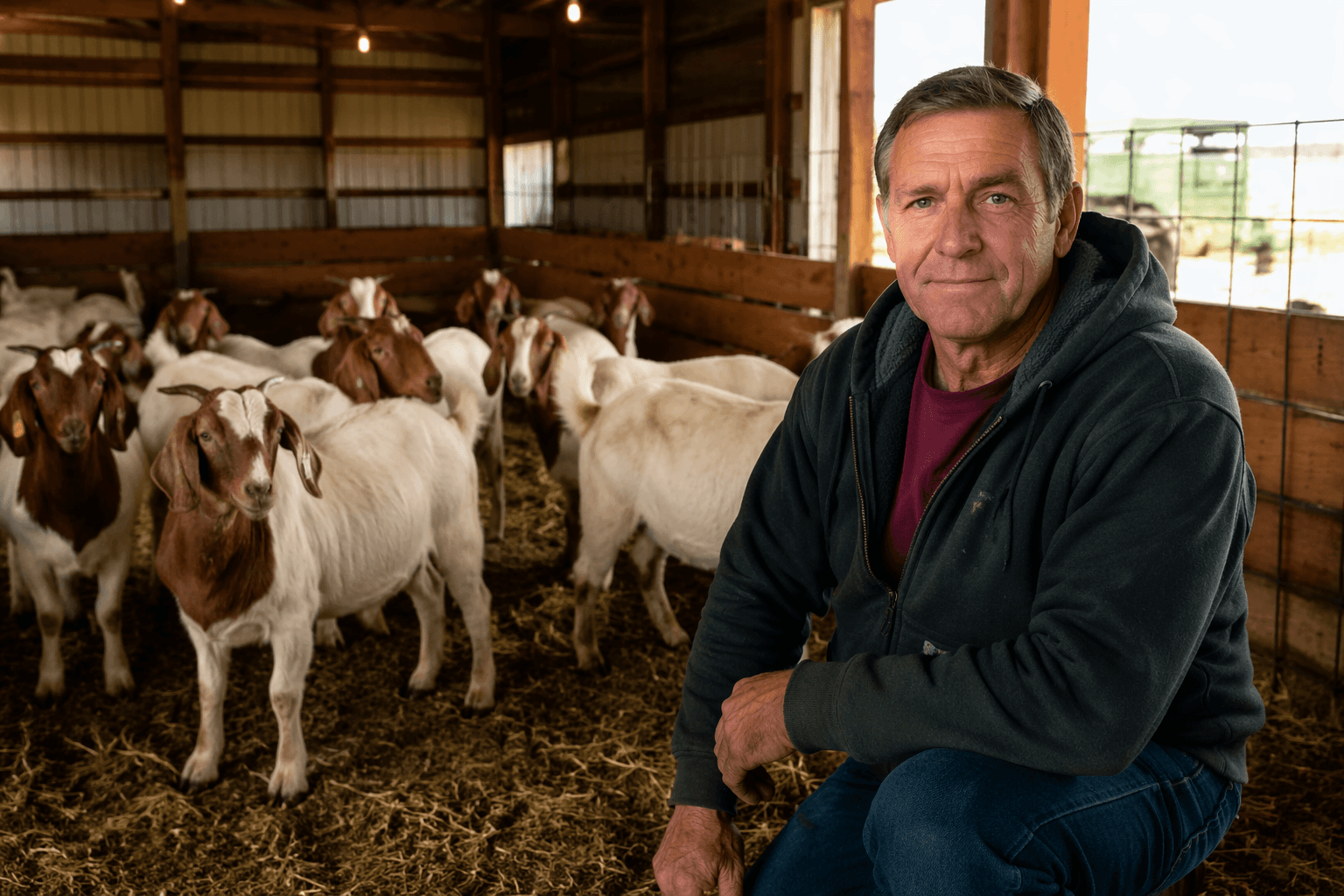
Brian Sievers found a way to make a small livestock niche pay on a Buena Vista County farm built for the usual Iowa staples: corn, soybeans, beef and cattle. After 25 years with goats on the family place near Newell, he has built an operation that is not a side curiosity but a meaningful source of income, and the economics help explain why.
A niche that fits the local market
Sievers did not start with goats. He first tried ostriches, which he later judged a horrible mistake, before a Latino friend persuaded him to look at goats instead. That advice mattered because it matched production to demand: goats are commonly used in the cuisines of Storm Lake’s immigrant population, and that local food market gave Sievers a customer base that commodity livestock producers do not always have.
The broader demographics back up that logic. Buena Vista County had 20,823 residents in the 2020 Census, and the county’s Hispanic or Latino share was 30.8% in the Census Bureau’s current QuickFacts profile. Storm Lake, the county’s population center, had 11,269 people in the 2020 Census, including 4,599 residents identified as Hispanic or Latino. In a place where immigrant households shape food demand and buying patterns, a goat herd can serve a very different market than a conventional cow-calf operation.
That local fit also lines up with national trends. The USDA says the meat goat industry has been one of the fastest-growing segments of U.S. livestock production, and it links rising demand to Hispanic, Middle Eastern, Southeast Asian and Caribbean populations in the United States. In other words, Sievers is not chasing an isolated fad. He is operating in a livestock category that has gained traction where cultural demand and agricultural supply meet.
How Sievers makes the numbers work
The business depends on size, timing and selling into the right auction. Sievers currently keeps about 50 nannies and tries to produce twins and triplets so he ends up with about 100 kids to sell. That scale matters because the herd has to generate enough sale animals each year to make the system pay.
He sells meat goats, or kids, when they are three to five months old, usually through the Pipestone Livestock Auction Market in Minnesota, with occasional trips to Denison. He says his best results have come in Pipestone, and he is considering selling there exclusively. The auction starts at 1 p.m., so he tries to leave between 9:30 and 10 a.m., loading the goats in a 16-foot trailer that fits about 25 animals. Even the travel schedule is part of the profit equation, because arriving in good condition can mean stronger bids.
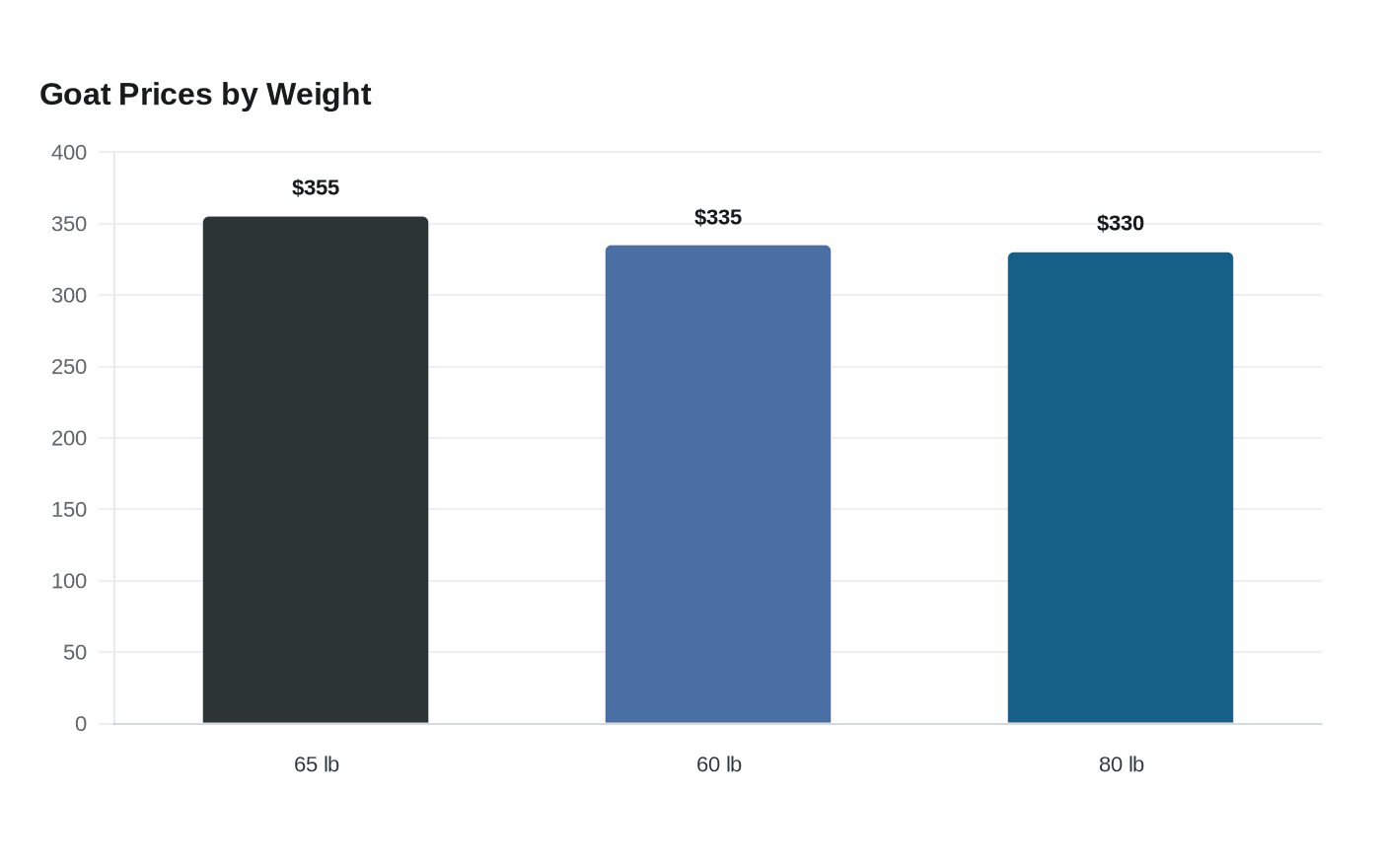
The market data make clear why he targets a specific weight range. Goats generally bring four to six dollars a pound, and animals under 60 pounds usually do not fare well at auction. Sievers aims for 60-to-70-pound kids, which he says can bring about $280 each. Recent Pipestone postings show why that strategy works: 65-pound kids brought $355, 60-pound kids brought $335 and 80-pound kids brought $330. Recent nannies were listed at $165 to $210 and billies at $150 to $250, showing that the auction is still putting real money behind well-sorted goats.
That is the core of the model. Sievers is not trying to win by producing the biggest animal or the most animals. He is trying to hit the weight bracket that buyers want, then move that stock through a market that rewards the right size at the right time.
Why the county matters
Buena Vista County’s livestock mix makes Sievers’s success more notable. The county is better known for conventional crop and cattle production, and Iowa’s agricultural reporting still tracks goats as a distinct category, with separate tables for all goats, milk goats, angora goats and meat goats or other goats in the USDA 2022 Census of Agriculture. That separation is a reminder that goats are no longer an afterthought in U.S. livestock, even if they remain a small part of Midwestern farm portfolios.
The nearby Storm Lake economy also helps explain why a goat business can survive here. Iowa Public Radio reported that Tyson’s Storm Lake pork plant employs more than 2,000 workers, and that the city has long been shaped by immigrant labor. It also reported that the plant was a major economic driver and suffered a COVID-19 outbreak affecting about one-fourth of its workforce. Together, those facts show a regional food economy with a large immigrant workforce and a broad immigrant customer base, both of which help sustain demand for goat meat.
That means Sievers’s farm is not just adapting to agriculture. It is adapting to population change, meat demand and the way local markets actually work. In a county where many producers compete in crowded commodity channels, he found a lane that depends less on volume and more on understanding buyers.
What other producers can take from it
The lesson from Newell is not that every farm should add goats. It is that survival in a tight agricultural economy often comes from matching production to a specific market and then managing every part of the pipeline, from breeding targets to trailer timing. Sievers’s herd shows how a producer can turn a small livestock operation into steady income when the animals, the auction and the customer base all line up.
For Buena Vista County, that is the larger story. A 143-year-old family farm can still produce a modern income stream, but only if it is willing to diversify, read local demand and sell to the buyers already in the market. In Sievers’s case, goats have become proof that the right niche can hold its own beside the county’s more traditional farm business.
This article was produced by Prism’s automated news system from verified source data, official records, and press releases, then run through automated quality and moderation checks before publishing. The system is built and supervised by the people who set the standards it runs under. Read our full AI policy.
Know something we missed? Have a correction or additional information?
Submit a Tip