Storm Lake volunteer drives Red Cross relief in Washington floods, delivers meals and supplies
A late night call on December 11 sent Storm Lake resident Mike Frantz to western Washington where he served as an emergency response vehicle driver delivering meals and supplies to flood survivors. His deployment was part of a larger Red Cross effort covering a 123,000 square mile area with more than 270 volunteers, a mobilization that highlights local civic engagement and the stresses facing national disaster response during holiday periods.
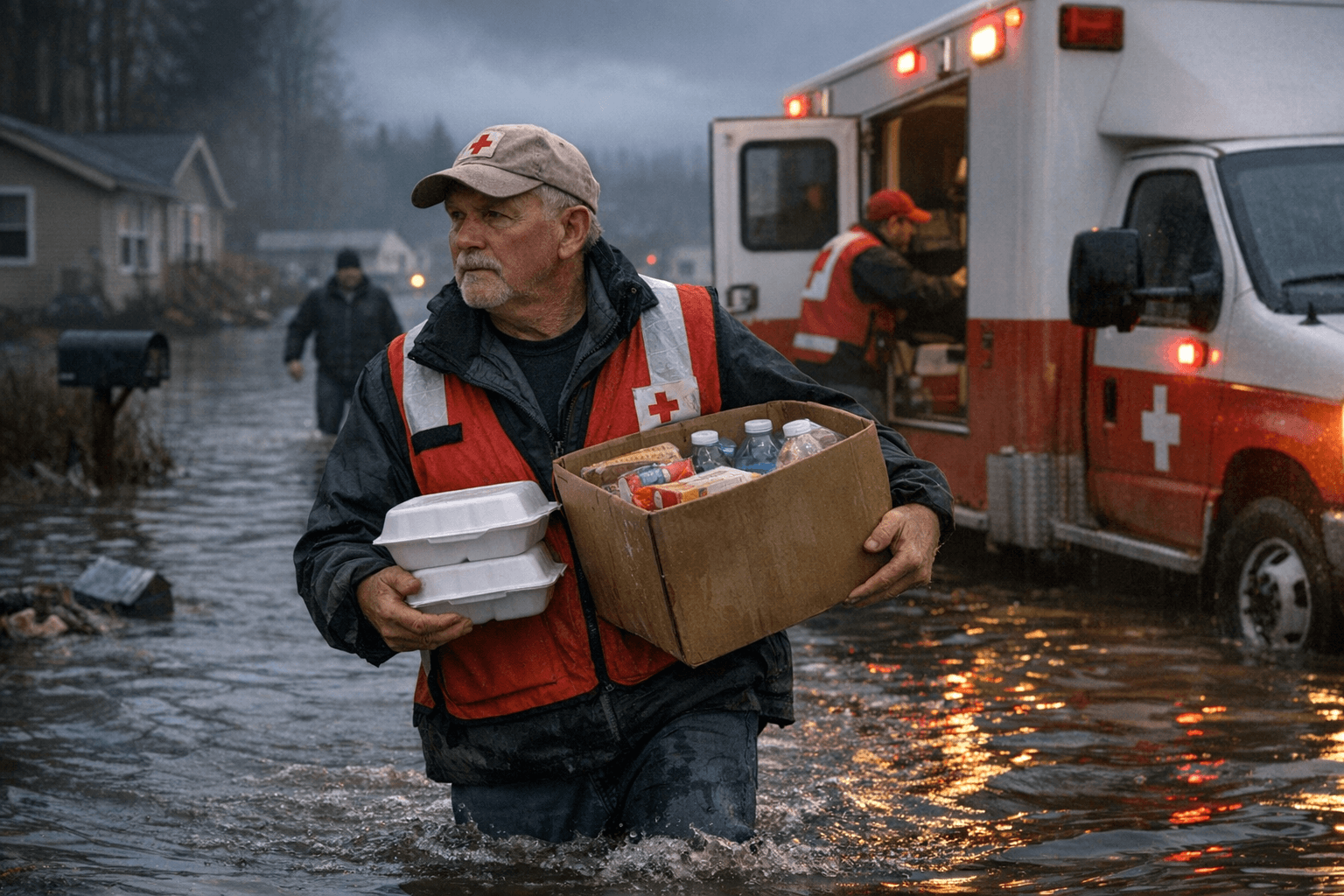
A phone call during the closing minutes of the Iowa versus Iowa State basketball game on December 11 sent Storm Lake resident Mike Frantz from his couch to the airport and into the middle of a major flood response in Washington state. Frantz, a retired college admissions, financial aid, and marketing consultant, was assigned by Red Cross headquarters in Lynnwood as an ERV driver. He described the vehicle as a food truck and spent stretches picking up prepared meals in Monroe and delivering them to shelters in Mount Vernon.
Frantz was part of the first wave of more than 270 Red Cross volunteers deployed across a 123,000 square mile area of western Washington. Working alongside the Southern Baptist Convention, volunteers distributed ready to eat meals, gloves and other basic supplies. During one outlying mission volunteers traveled to Everson where their deliveries helped catalyze the opening of a new shelter for displaced residents.
The mission exposed the logistical realities of large scale emergency response. Frantz said patience and flexibility were essential after he experienced a full day at headquarters with no assigned mission, an outcome that can reflect shifting needs on the ground and the challenge of matching volunteer capacity with operational demand. His two week deployment ran through Christmas Day, though flight schedules and travel arrangements remained uncertain throughout the period.
For Buena Vista County the story is both local and illustrative. The county supplied a volunteer drawn from the ranks of retirees and professionals who can temporarily exit their normal labor market roles to meet urgent needs. That civic contribution comes with costs, including travel uncertainty during peak holiday travel and strain on household income for those not drawing full retirement. The partnership between a national nonprofit and faith based groups underscores how disaster relief in the United States increasingly relies on cross sector coordination.
Policy implications include a need to strengthen funding and logistical capacity for emergency response so volunteers are deployed efficiently and costs are contained. For local residents, Frantz’s deployment is a reminder that small town volunteers play an outsized role in national crises, and that local preparedness and steady charitable support help sustain relief efforts when disasters strike.
This article was produced by Prism’s automated news system from verified source data, official records, and press releases, then run through automated quality and moderation checks before publishing. The system is built and supervised by the people who set the standards it runs under. Read our full AI policy.
Did this article answer your question?