Arboretum's 'Trolls: A Field Study' Drew Families, Highlighted Eco-Art
On December 29, 2025 the North Carolina Arboretum hosted Thomas Dambo's traveling installation "Trolls: A Field Study," a trail of twelve interactive sculptures built from reclaimed wood and natural materials. The family-oriented exhibit showcased sustainable public art free of added admission charges while raising local questions about access, use of public green spaces, and the role of civic institutions in cultural programming.
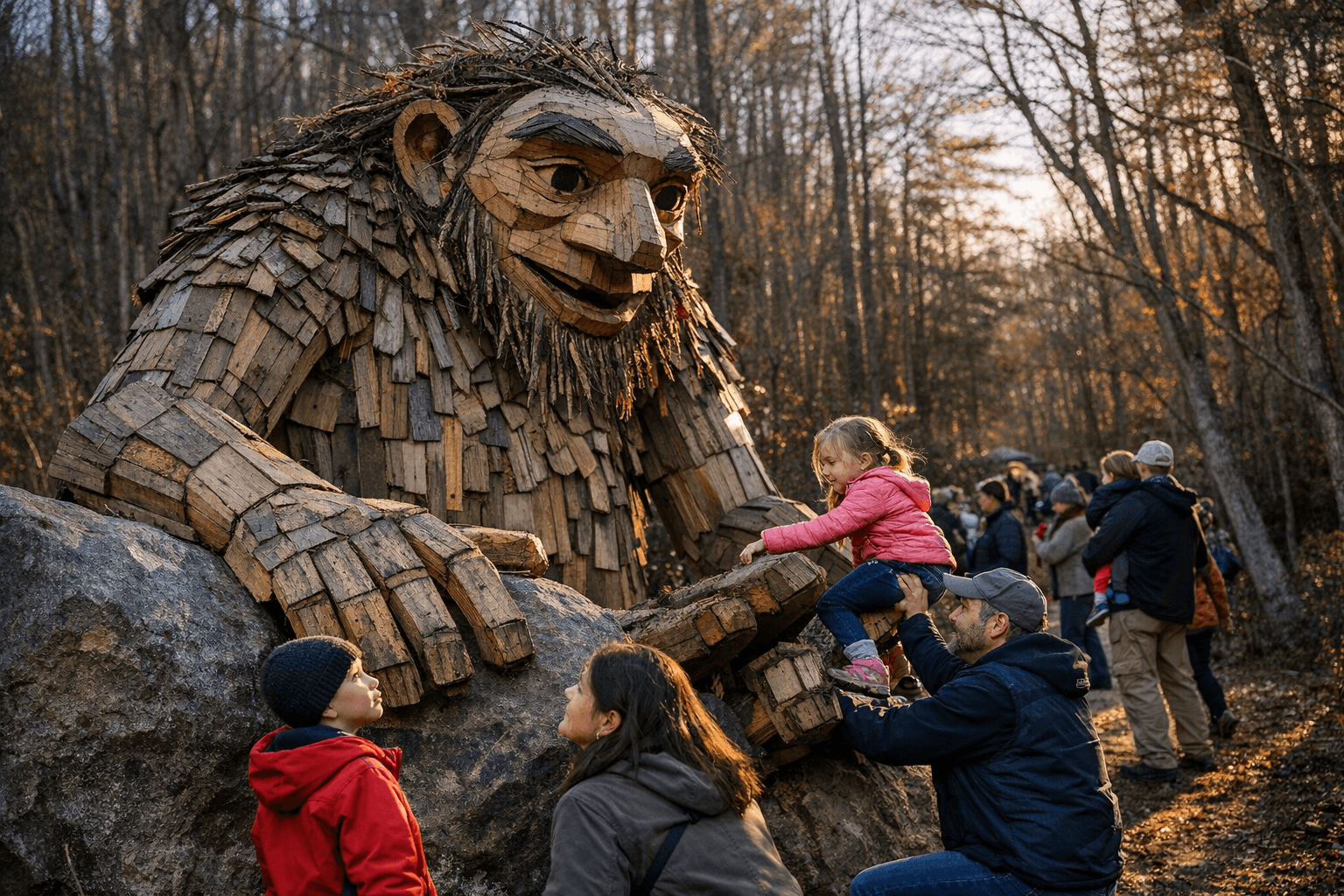
The North Carolina Arboretum welcomed visitors to "Trolls: A Field Study" on December 29, 2025, presenting a trail of twelve interactive troll sculptures by Danish artist Thomas Dambo. The pieces, described as seven-to-nine foot "Baby Trolls," were constructed from fallen branches, wooden pallets and twigs, and invited families and other visitors to walk the Arboretum grounds to discover the whimsical installations.
Organizers charged standard Arboretum parking fees but did not levy any additional admission fee specifically for the sculpture trail. The arrangement lowered one barrier to participation while leaving motorists subject to existing parking costs. For many residents, the combination of outdoor activity and accessible art offered a low-cost option for family recreation during a busy season for cultural programming.
Beyond entertainment value, the installation underscored two policy questions for local officials and cultural institutions. First, public art that emphasizes reuse of materials reinforces community interest in sustainability and environmental education. Thomas Dambo’s sculptures made of reclaimed wood provided a visible example of creative reuse and offered interpretive opportunities for schools and informal learning groups that visit Arboretum grounds.
Second, the event highlighted equity and access issues tied to how cultural programming is funded and delivered. While no extra admission fee was required for the sculpture trail, parking fees remained in effect. That arrangement prompts choices for county and institutional leaders about whether routine fees create unintended barriers for lower-income residents, and whether temporary waivers or targeted transportation supports are appropriate during community-focused exhibitions.
The Arboretum’s hosting of a traveling installation also carries implications for tourism and local commerce. Exhibits that draw families and out-of-town visitors can increase foot traffic in surrounding neighborhoods and support nearby businesses, but they require institutional capacity for crowd management, site maintenance and ongoing stewardship of both art and landscape.
As Buncombe County continues to balance cultural investment, public access and environmental stewardship, installations like "Trolls: A Field Study" provide tangible examples of how public spaces can serve multiple civic goals. The exhibit invited residents to explore nature through art while prompting a practical conversation about who can access those experiences and how local policy can shape inclusive cultural programming.
This article was produced by Prism’s automated news system from verified source data, official records, and press releases, then run through automated quality and moderation checks before publishing. The system is built and supervised by the people who set the standards it runs under. Read our full AI policy.
Did this article answer your question?