Asheville, Buncombe County preservation commission shapes historic district changes
A window swap or addition in Montford can trigger city review before any permit is issued. The Historic Resources Commission decides those cases under published standards, not on the fly.
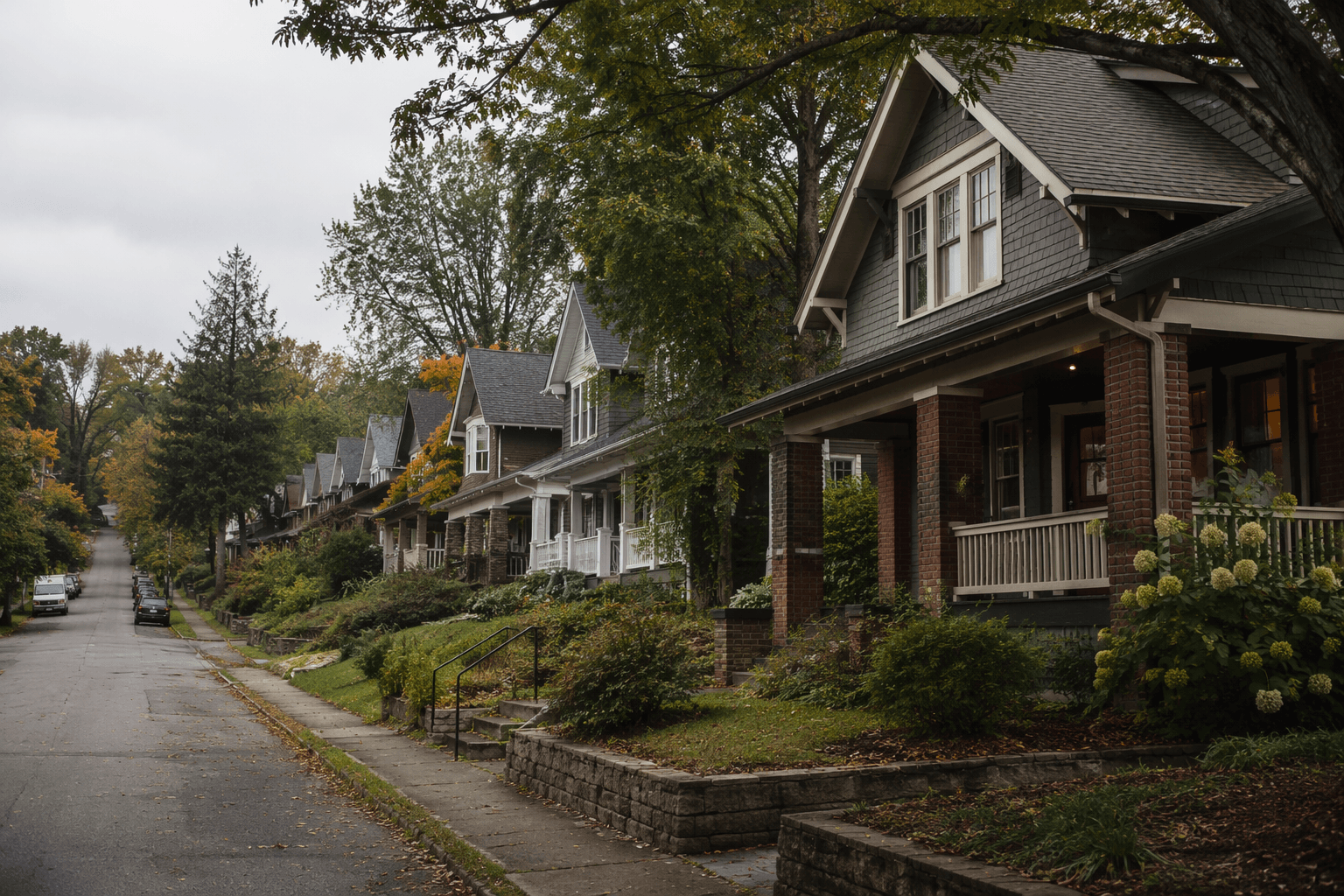
Replacing windows, adding onto a house, or tearing down part of a building inside one of Asheville’s historic districts can trigger a formal review before other permits move ahead. In Asheville and Buncombe County, that process runs through the Historic Resources Commission, a joint city-county body that reviews changes to designated historic properties under published design standards and a Certificate of Appropriateness system.
What triggers review
The key question is not whether a building looks old. It is whether the property sits inside a local historic district or is a locally designated landmark. Projects in Montford, St. Dunstan’s, Albemarle Park, Biltmore Village, or at a locally designated historic landmark use Asheville’s digital Certificate of Appropriateness application, which is the first signal that the work may need commission review.
A Certificate of Appropriateness is needed when an owner of a local historic landmark or a resident within a historic district wants to make exterior changes. The certificate comes in addition to other permits that may apply. In Asheville, that typically covers work that changes what neighbors can see from the street, including windows, roofs, additions, demolition proposals, and other visible alterations.
Asheville separates the rules into two related pieces: Historic Districts and Design Standards on one side, and the Design Review and COA process on the other. The city uses written standards and a permitting track that property owners can follow.
Who sits on the commission
The Historic Resources Commission of Asheville and Buncombe County was created in 1979 through a local ordinance adopted by both the City of Asheville and Buncombe County under North Carolina law. It has also been certified by the State Historic Preservation Office, which places the local body inside the state preservation framework rather than outside it.
The commission is a 12-member joint body, with six appointments from the Asheville City Council and six from the Buncombe County Board of Commissioners. A majority of members must have demonstrated special interest, experience, or education in history, architecture, archaeology, or related fields.
The HRC’s 2015 annual report calls it a quasi-judicial body. Quasi-judicial hearings are not casual design chats. They are decision-making proceedings in which a commission weighs evidence, standards, and the specifics of a proposal before approving or denying a request. The HRC meets on the second Wednesday of each month.
What the commission can do
The commission’s main power is design review through the Certificate of Appropriateness process. If a project is in a covered district or landmark area, the HRC can require the owner to obtain approval before moving ahead with exterior work. A certificate of appropriateness must be issued before a building permit for construction, alteration, moving, or related work in the protected system.
That means the commission can shape what a project looks like, not just whether it happens. In practical terms, that can affect materials, window patterns, rooflines, additions, and demolition plans, especially where a project would alter the historic character of a street or block. Those decisions are guided by written criteria, not by whether a reviewer personally likes a proposal.
The commission does not replace every other part of development regulation. The preservation process sits alongside other permits and codes, which is why a project can require both a COA and other approvals before work starts. Preservation review is one layer of the process, not the only one.
What it does not do
The HRC is not a citywide veto over all building activity in Asheville. Its authority is tied to local historic districts and landmarks, not to every parcel in the county. The city tracks local historic districts, landmarks, and National Register properties, but review is triggered for property owners in the local districts and landmarks covered by the COA application.
A house across the street from a district can be visible from it without automatically falling under the same review rules. The boundary line is what determines whether the HRC gets a formal vote, which is why district maps and designation records matter in development fights.
Why boundaries and designations change the stakes
Historic district boundaries are not frozen in place. A Downtown Asheville Historic District boundary increase was listed in the National Register on Dec. 28, 2011. When boundaries move, the list of affected properties changes with them, and so does the reach of design review.
Preservation fights in Asheville often turn on maps as much as on architecture. A property owner may see a renovation; a neighbor may see a precedent for the whole block; a developer may see a delay and extra design requirements. The commission’s job is to decide those conflicts under a formal process that weighs the historic character of places such as Montford, Biltmore Village, Albemarle Park, and Downtown Asheville against proposed changes.
This article was produced by Prism’s automated news system from verified source data, official records, and press releases, then run through automated quality and moderation checks before publishing. The system is built and supervised by the people who set the standards it runs under. Read our full AI policy.
Did this article answer your question?