Asheville City Schools Board Tackles AI, Funding, Community Engagement at Retreat
ACS board unanimously demanded more state special-ed funding at its March retreat, while AI rules and a spring budget vote loom for families tracking district finances.
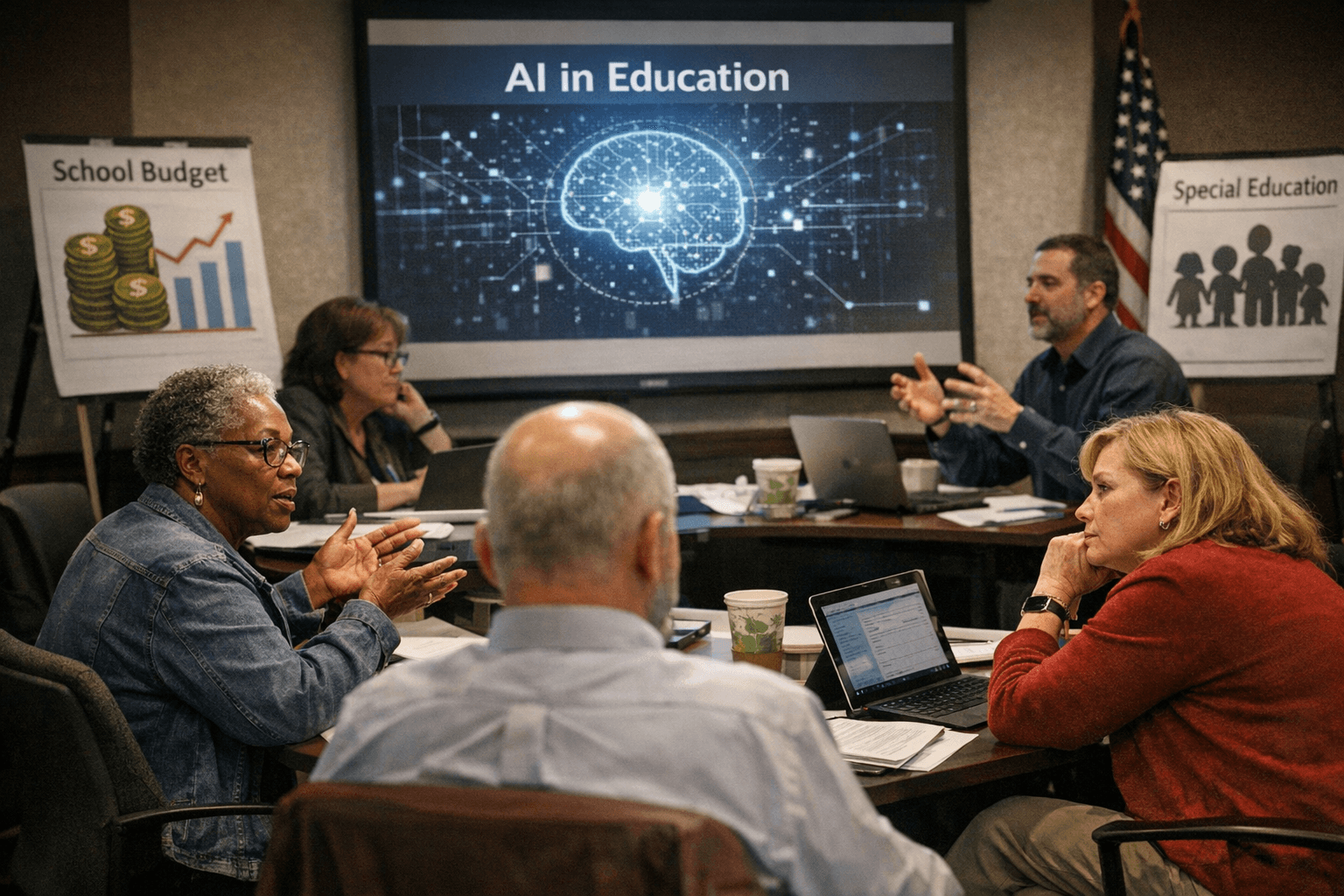
Maggie Fehrman and the Asheville City Schools board left their March 19 annual retreat with one unanimous action already on record: a formal resolution urging North Carolina to increase funding for Exceptional Children programs, a move that mirrors a parallel push by Buncombe County Schools and signals growing alarm over special-education costs falling to local budgets.
The daylong session brought together the full seven-member board, including Jesse Warren, Amy Ray, Sarah Thornburg, Rebecca Strimer, Pepi Acebo, George Sieburg and Liza Kelly, along with Fehrman, Chief Financial Officer Heidi Kerns and outside consultant Kathleen Osta.
Kerns delivered a notably clean financial picture: the district's 2024-25 audit came back without findings, and ACS secured $2.3 million in grant funding during the last school year. But she framed the 2026 financial priority as discipline rather than celebration, telling the board the district needs to realign its budget to match the strategic plan the full board expects to finalize this spring. That alignment process will shape whether current programs survive intact or face consolidation.
The EC resolution carries the most immediate weight for families. State shortfalls in special-education funding have forced districts across North Carolina to absorb costs locally, and without increased state support, Asheville City Schools could face pressure to reallocate funds away from other services. The board's unanimous vote to formally ask legislators for relief puts the district on record ahead of ongoing state budget negotiations.
Midyear academic assessments showed measurable growth across grade levels and demographics, though board members pressed on persistent disparities and the need for what they called a "systematic approach" to ensure programs deliver results rather than exist on paper.
Artificial intelligence emerged as its own policy pressure point. The board spent time exploring how AI tools intersect with classroom instruction and what guardrails the district should put in place, a conversation with direct consequences for student technology use and data privacy. No formal AI policy was voted on at the retreat, but the discussion signals formal rules are likely headed to a future agenda.
Osta helped the board compare its three-year goals against student recommendations directly, a side-by-side exercise intended to close the distance between board priorities and what students themselves want changed or preserved. The strategic plan vote expected this spring will be the first concrete test of whether that student input shaped policy or simply informed a presentation.
This article was produced by Prism’s automated news system from verified source data, official records, and press releases, then run through automated quality and moderation checks before publishing. The system is built and supervised by the people who set the standards it runs under. Read our full AI policy.
Did this article answer your question?