Asheville Declares Code Purple, Emergency Shelters Open Overnight
On December 30, 2025 the Asheville Homelessness Coalition announced a Code Purple for Tuesday and Wednesday, activating emergency overflow shelter for people experiencing homelessness during extreme weather. The move matters to Buncombe County residents because it expands immediate shelter access, waives common entry barriers and coordinates transit service to reduce exposure to cold-related illness.
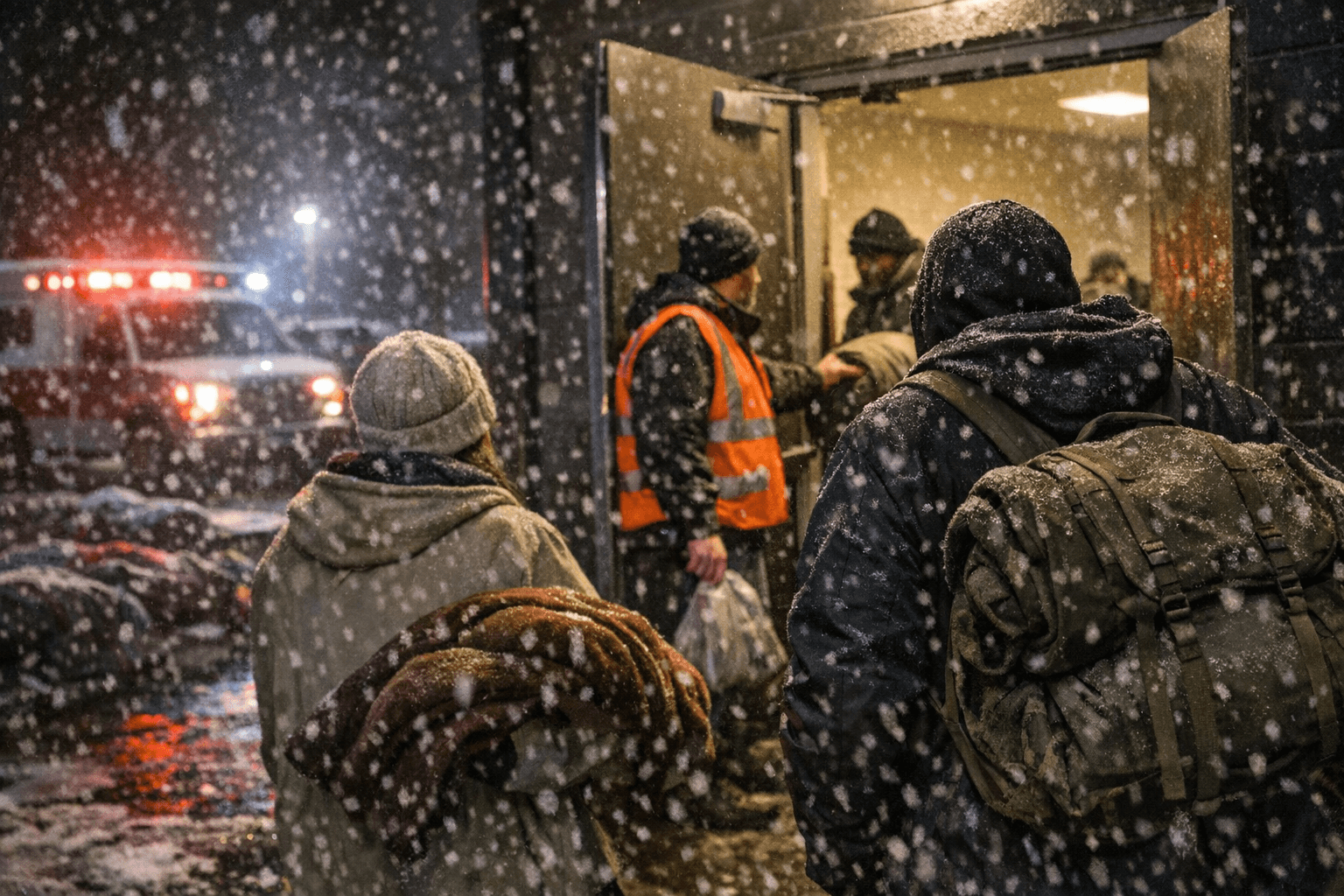
The Asheville Homelessness Coalition activated a Code Purple on December 30, 2025 to provide emergency overflow shelter across Asheville and Buncombe County during extreme winter weather. The coordinated effort brings additional capacity through existing shelters and outreach partners so people experiencing homelessness can find a safe place overnight without typical barriers.
Shelter entry was available from 6 p.m. to 8 p.m. at multiple sites. For women, options included Safe Shelter at 27 Balm Grove (transit routes W2, W1, W6) and ABCCAM Transformation Village at 30 Olin Haven Way, which also accepted women with children (transit route W2). Men could access Safe Shelter at 91 New Leicester Hwy (transit route WE1 West) and the Salvation Army at 204 Haywood Street (transit routes W5, WE1 West and WE2 West). Couples and people with pets were directed to Homeward Bound - AHOPE at 19 N. Ann Street (transit routes W5, WE1 West and WE2 West). The coalition said sobriety and identification were not required for entry, and that entry after 8 p.m. must be facilitated by public safety or outreach staff.
Public transit through ART was provided free to all shelter sites beginning at 5:20 a.m. and to downtown the following morning, easing travel to and from shelters. For further information, the coalition listed its Code Purple and Winter Shelter Coordinators’ phone number at 828-785-4855 and email homelessnessstrategy@ashevillenc.gov, and a recorded information line at 828-398-6011.
The rapid activation highlights immediate public health priorities. Extreme cold increases the risk of hypothermia, frostbite and other cold-related medical emergencies, especially among people who are unsheltered or lack adequate heating. Removing requirements for identification and sobriety lowers barriers that often prevent people from seeking shelter, a practice aligned with harm-reduction approaches that can reduce emergency department visits and prevent serious illness.
At the same time, a Code Purple underscores persistent gaps in permanent housing and shelter capacity in Buncombe County. Reliance on overflow responses during extreme weather points to systemic needs for expanded affordable housing, sustained funding for crisis services, and stronger links between health care, behavioral health, and housing supports. Outreach and public safety staff play a critical role when shelters reach capacity or when people need assisted entry after designated intake hours.
For anyone seeking shelter or information during future extreme weather activations, use the coordinators’ number 828-785-4855, email homelessnessstrategy@ashevillenc.gov, or call the recorded line at 828-398-6011. Community coordination during Code Purple nights reduces immediate health risks, but advocates say longer-term policy changes are necessary to prevent repeated crises.
This article was produced by Prism’s automated news system from verified source data, official records, and press releases, then run through automated quality and moderation checks before publishing. The system is built and supervised by the people who set the standards it runs under. Read our full AI policy.
Did this article answer your question?