Asheville Diesel Prices Hit $4.93, Up $1.57 in One Month
Asheville diesel hit $4.93 a gallon, $1.57 more than a month ago, as Middle East tensions disrupted supply chains and pushed fuel costs well above the national average.

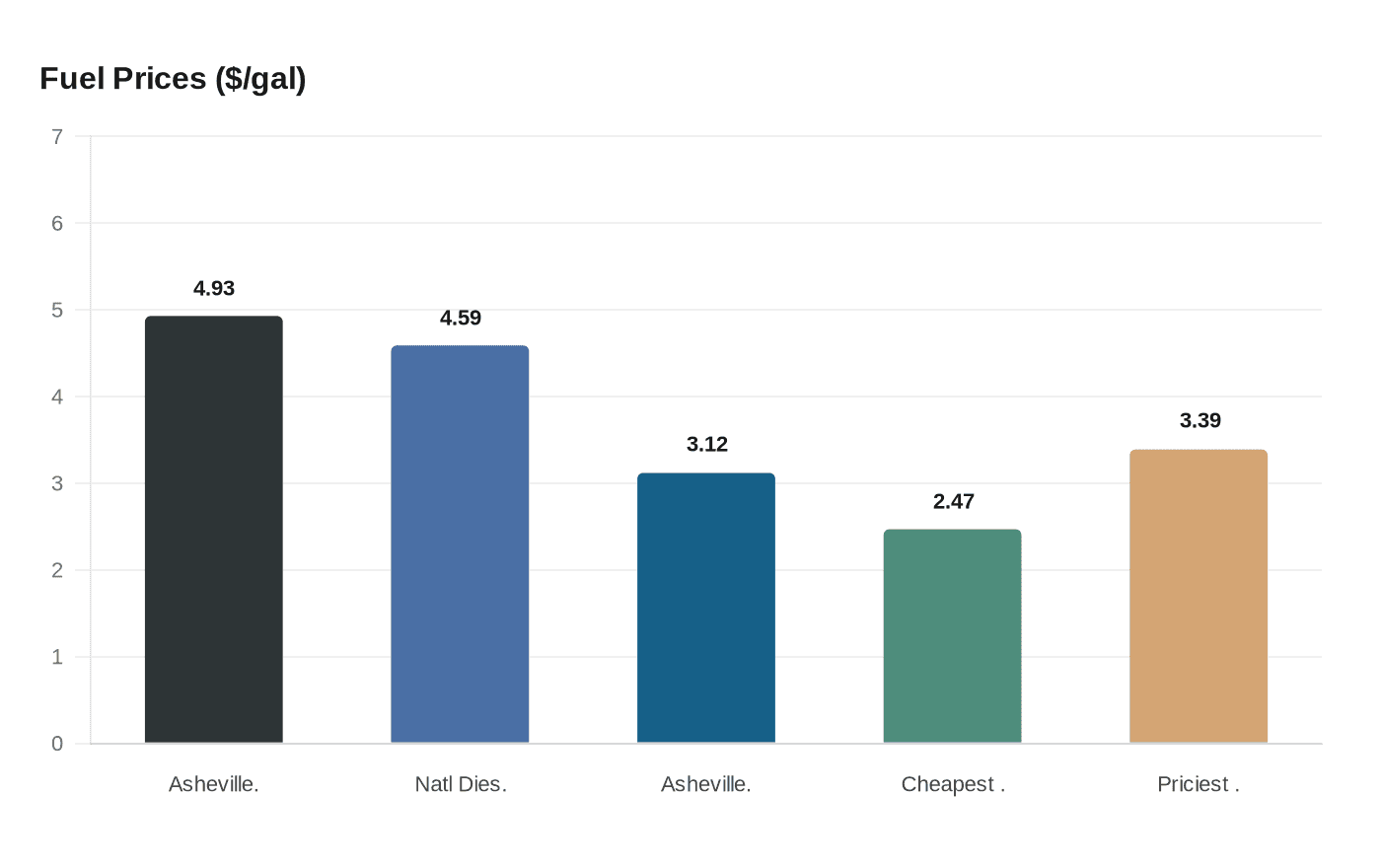
Diesel fuel in Asheville climbed to $4.93 per gallon, $1.57 higher than it stood just one month earlier and 24 cents above where it sat the previous week, as Middle East tensions disrupted supply chains and deliveries reaching Western North Carolina.
The Asheville price sits 34 cents above the national average. GasBuddy put the national diesel figure at $4.59 per gallon, itself a staggering jump of 85.9 cents compared to the prior week, signaling that the pressure hitting local truckers, delivery drivers, and construction contractors is part of a broader national surge rather than a regional anomaly.
Gasoline prices in Asheville rose sharply as well, though they remain well below diesel. GasBuddy's March 9 report, drawn from a survey of 259 Asheville-area stations, put the average at $3.12 per gallon, up 42.7 cents in a single week and 43.6 cents higher than a month prior. Compared to the same period a year ago, Asheville drivers are paying 34.8 cents more per gallon at the pump.

The spread between stations in Asheville on March 8 reached 92 cents, with the cheapest station in the city priced at $2.47 per gallon and the most expensive at $3.39. Statewide, the range was even wider: North Carolina's lowest price that day was $2.47 while the highest climbed to $3.99.
Patrick De Haan, head of petroleum analysis at GasBuddy, described the speed of the increase as historically unusual. "In just one week, consumers have seen gasoline prices surge at one of the fastest rates in years," De Haan said, linking the spike to oil price movements after United States strikes on Iran and the effective closure of the Strait of Hormuz. "While the situation remains highly fluid, consumers are already beginning to feel the impact as energy markets adjust to this sudden escalation," he added.
Analysts noted prices could continue climbing as the conflict in the Middle East persists, with energy markets still processing the full implications of disrupted shipping routes through the Strait of Hormuz.
This article was produced by Prism’s automated news system from verified source data, official records, and press releases, then run through automated quality and moderation checks before publishing. The system is built and supervised by the people who set the standards it runs under. Read our full AI policy.
Did this article answer your question?


