Asheville Faces Millions in Budget Shortfall, Fee Increases Possible for FY27
Asheville faces a budget gap as large as $26.4 million for FY27 after a federal disaster loan propped up this year's spending.

Asheville finance staff delivered a stark warning to City Council during a March 10 budget work session: the city is on track to operate with roughly $3.4 million less in its General Fund for fiscal year 2026-27 unless elected officials act, and the full gap between projected revenues and expenses could reach $26.4 million or more.
The numbers have shifted throughout the early budget process. Staff presented an estimate of roughly $30 million at a January work session, a figure Councilmember Bo Hess later characterized as $31 million in a social media post. By Feb. 24, Budget and Performance Manager Lindsay Spangler had revised the projected gap down to $26.4 million, while cautioning that even that figure remains preliminary and subject to change as projections are refined.
The single largest driver of the shortfall, according to Spangler, is the loss of $5.6 million in one-time revenue the city used to balance its current budget, most of it from a federal disaster loan accepted this year. Sales taxes, which Spangler said will be essentially flat year-over-year, will not offset the hit. Neither will the modest growth in property taxes from new construction.
Rising recurring costs compound the problem on the expense side. Finance and Management Services Director Tony McDowell identified employee health care, transit contracts, public safety staffing, debt service tied to voter-approved general obligation bonds, and community center security as primary cost pressures. The voter-approved bonds alone carry a 2.58-cent property tax increase embedded in projected expenses. Spangler also noted that the Asheville Police Department currently carries 42 unfunded positions, and improved hiring to fill them could require adding at least $500,000 back into the budget.
Lingering effects from Tropical Storm Helene are woven throughout the fiscal picture. Occupancy tax collections, generated by overnight visitors staying in Buncombe County hotels, vacation rentals, and inns, remain below pre-storm levels. Regional unemployment is still higher than pre-Helene numbers. One public commenter identified in reporting only as Cohen urged the council to dip into fund balance reserves, describing Helene's revenue damage as an emergency that warranted extraordinary measures.
McDowell said the city is evaluating a combination of approaches: spending reductions, holding the line on some expenses, and new revenues including fee increases and a potential property tax rate increase. He acknowledged the annual nature of the challenge while noting its unusual scale. "We typically have a budget gap every year when we start the process," McDowell said. "This year was just a little bit larger than normal."

Complicating any property tax decision is the state-required calculation of a revenue-neutral rate following Buncombe County's upcoming property revaluation. State law mandates that local governments publish that revenue-neutral figure before adopting any increase, constraining the timeline for action.
Residents who spoke during the Feb. 24 public comment session pressed the council to protect essential services. An unidentified speaker made the case for transit funding in direct terms: "It's how people get to work, it's how they get to doctor's appointments, it's how they get to the grocery store. When we talk about what's essential or not essential, we believe that transit is essential." Vicky Meath of Just Economics called on the city to maintain its commitment to a living wage, citing the 2026 Buncombe County living wage of $24.10 per hour. "Budgets demonstrate values," Meath said.
Several council members drew comparisons to the severity of the Great Recession and called for multi-year budgeting strategies and state-level revenue reform. Hess, in his social media post, warned against relying solely on property tax increases to close the gap.
The city adopted a $256.4 million budget last fiscal year, which included a 3.26-cent property tax increase. Property taxes account for roughly 50 percent of General Fund revenue, with sales and other taxes making up another 23 percent. Personnel costs, covering salary, overtime, and benefits, represent the largest single expense category.
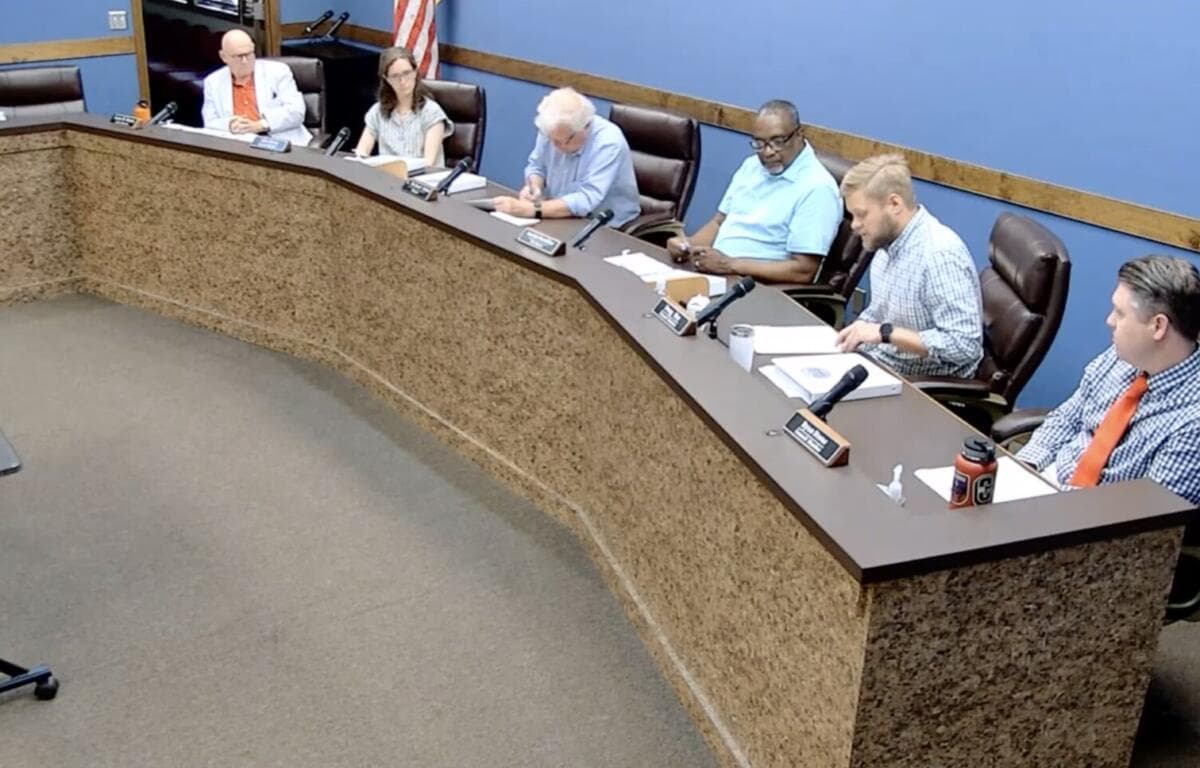
City Manager D.K. Wesley is scheduled to release the proposed FY27 budget in May, with Council targeting adoption in June. City Council meets the second and fourth Tuesday of each month at the Council Chamber on the second floor of City Hall, 70 Court Plaza, at 5 p.m.; the next scheduled meeting is March 24.
This article was produced by Prism’s automated news system from verified source data, official records, and press releases, then run through automated quality and moderation checks before publishing. The system is built and supervised by the people who set the standards it runs under. Read our full AI policy.
Did this article answer your question?