Asheville Firefighters Help Return Injured Owlet to Zillicoa Street Nest
An injured great horned owlet received a blood transfusion and three weeks of care before Asheville's Ladder 4 crew returned it to its Zillicoa Street nest Thursday.
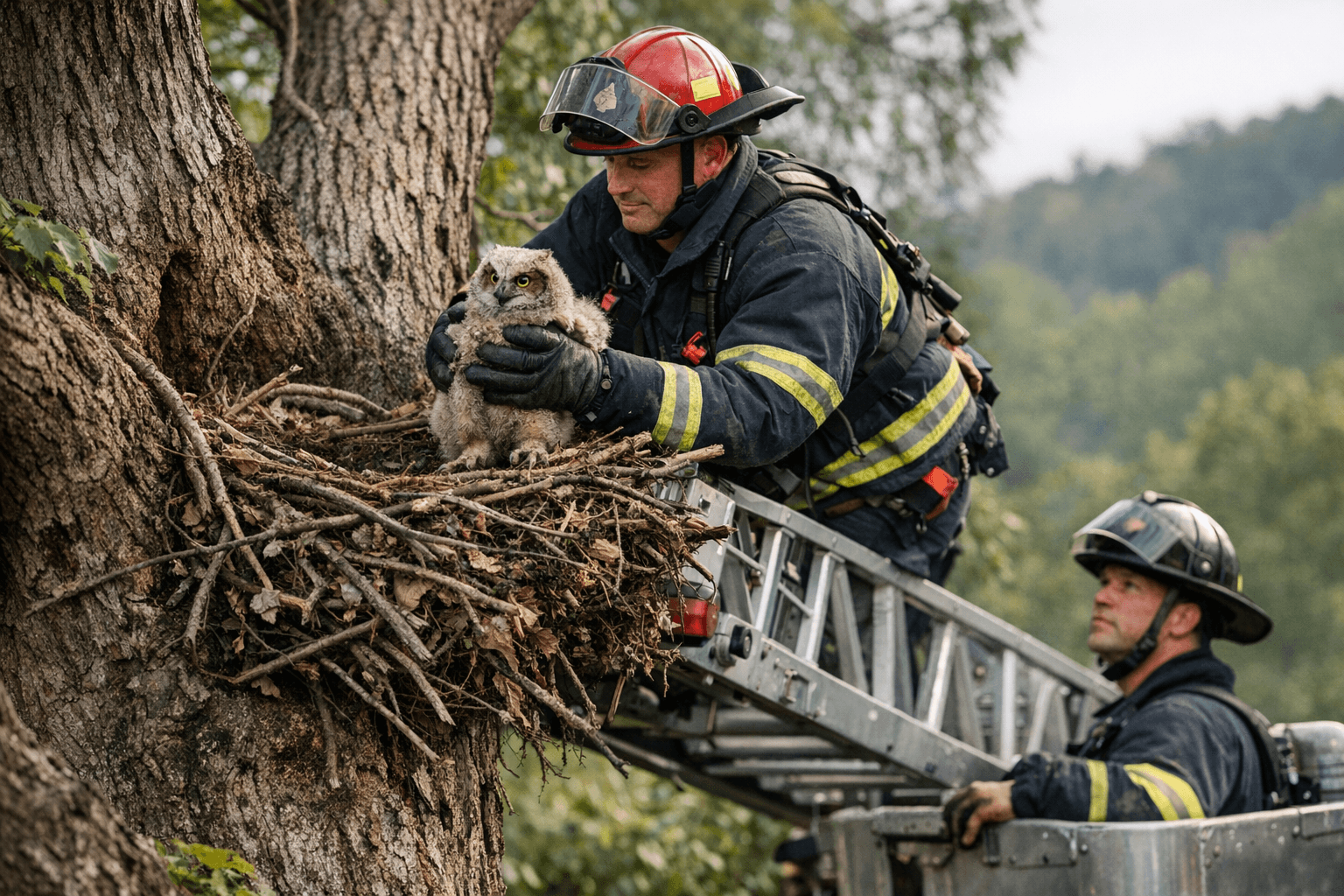
An injured great horned owlet that required a blood transfusion and three weeks of intensive medical care was returned to its Zillicoa Street nest Thursday, carried aloft by the Ladder 4 crew of the Asheville Fire Department in a cross-agency rescue that stretched from a city fire station to a wildlife rehabilitation center in the Blue Ridge foothills.
The bird was treated at the Dan and Dianne May Wildlife Rehabilitation Center at Lees-McRae College in Banner Elk, where staff administered a blood transfusion and medications over the three-week recovery. The center takes in more than 1,500 injured and orphaned wild animals each year from across western North Carolina, and raptors form a significant portion of its caseload during spring nesting season. Once the owlet had stabilized and recovered sufficiently, rehabilitators coordinated with the Asheville Fire Department to arrange the return.
Getting the owlet back required more than a gentle hand-off at the base of a tree. The Zillicoa Street nest sits high in the canopy, beyond the reach of any rehabilitator on the ground. The Ladder 4 crew brought their aerial apparatus to the street, positioned the truck, and extended the ladder to nest level so the owlet could be placed back with its waiting parents. The bird is expected to take flight soon.
The timing of the rescue reflects how active April is for great horned owls across Buncombe County. In North Carolina, owls may lay eggs as early as December, with the average nesting period running from December through March. By early April, owlets are still dependent on their parents but beginning to venture onto branches outside the nest cup, a stage called branching that significantly increases the risk of a fall or collision. An injury at this point, before the bird is capable of flight, is nearly always fatal without intervention.
The Asheville Fire Department's Ladder 4 crew is not trained as wildlife handlers, but their aerial equipment fills a specific gap that no wildlife organization can replicate: safe access to nest cavities and tree hollows that sit well above ground. The partnership with May Wildlife Center allowed each agency to contribute what the other could not.
If you find an injured raptor or wild bird on the ground in Buncombe County, do not attempt to pick it up without thick leather gloves, do not offer food or water, and contact a licensed wildlife rehabilitator before moving the animal. Keep pets and children at a distance. Great horned owls are powerful birds even when weakened, and improper handling can injure both the person and the bird. The Dan and Dianne May Wildlife Rehabilitation Center at Lees-McRae College accepts injured wildlife from across the western part of the state and can be reached through the Lees-McRae College website.
Know something we missed? Have a correction or additional information?
Submit a Tip