Asheville mayoral and council candidates cautious on reparations recommendation before March primary
Five days before the March 3 primary, a Blue Ridge Public Radio report published Feb. 26, 2026 found many Asheville mayoral and city council candidates hesitant to advance the Community Reparations Commission recommendation.
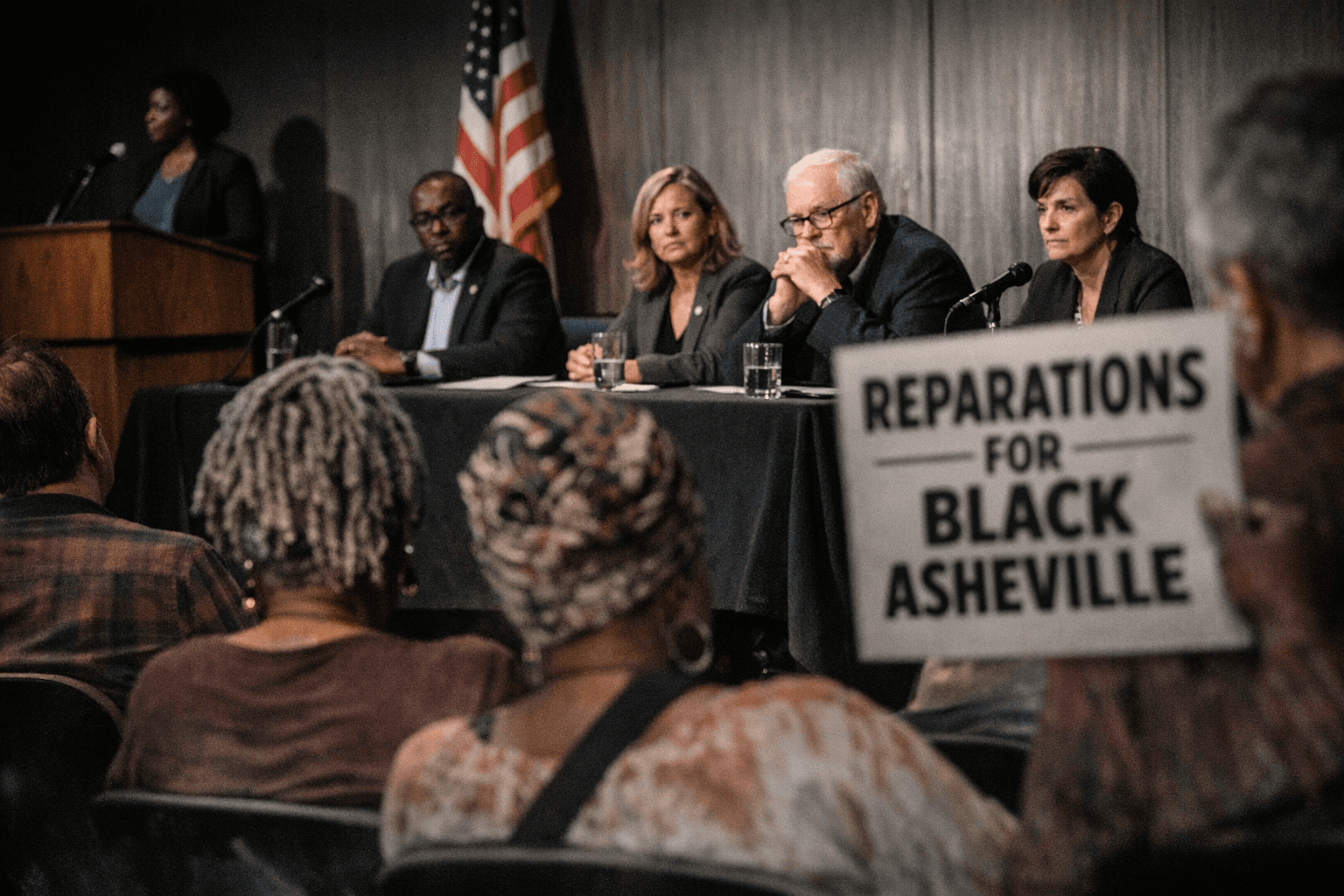
Five days before the March 3 primary, Blue Ridge Public Radio published a Feb. 26, 2026 report finding that many Asheville mayoral and city council candidates were cautious or noncommittal about advancing the City of Asheville’s longstanding Community Reparations Commission recommendation. The BPR reporting focused on candidate responses in the run-up to the March 3 primary that will winnow the mayoral and council contests.
The Community Reparations Commission recommendation has remained a point of discussion at City Council meetings and in neighborhood forums across Buncombe County; BPR’s Feb. 26 coverage highlighted that, despite the commission’s lengthy presence in municipal debate, several contenders for mayor and for city council declined to endorse specific steps to implement the recommendation ahead of the primary. That reticence came from candidates running in contested races that will be decided on March 3.
Asheville’s mayoral and city council nominees emerging from the March 3 primary will carry the authority to set City Council agendas and to schedule votes on commission proposals. With voters heading to the polls in Buncombe County on March 3, the BPR finding on Feb. 26 raises a timing question: whether the next City Council term will prioritize moving the commission’s recommendation from report to ordinance or delay action further.
Local activists and commission members have for months urged City Hall to adopt a clear timeline for the commission’s recommendation; BPR’s reporting on Feb. 26 underscored that many candidates are offering cautious public positions instead of concrete implementation timelines. That posture could shape when, or if, the City of Asheville takes a binding step on reparations after the March 3 primary narrows the field.
For voters in Asheville and across Buncombe County, the Feb. 26 BPR report crystallizes a choice on March 3 between candidates who have signaled readiness to advance the Community Reparations Commission recommendation and those who remain noncommittal. The primary outcome will determine which leaders will carry the recommendation forward to City Council debate and potential action in the months after March 3.
This article was produced by Prism’s automated news system from verified source data, official records, and press releases, then run through automated quality and moderation checks before publishing. The system is built and supervised by the people who set the standards it runs under. Read our full AI policy.
Did this article answer your question?