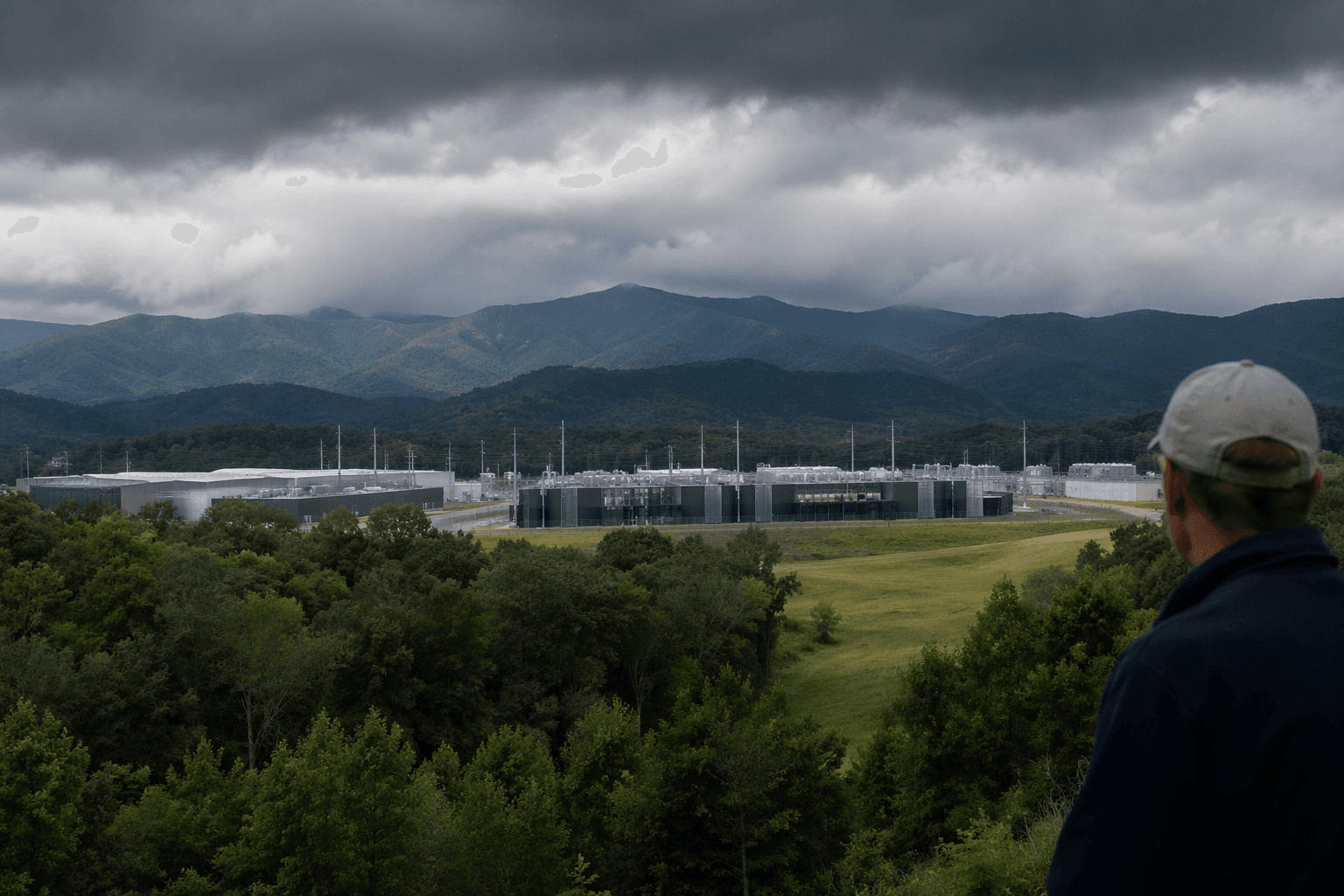
Asheville officials weigh pause on data center development
Asheville may pause data center development before any big project gets too far, putting power, water and neighborhood impacts up for debate on June 16.

Asheville officials are preparing to consider a framework that could slow or halt data center development before a large project gets too far into the pipeline. The proposal is set for the Planning, Economic Development and Environment Committee on June 16, putting the city’s next growth fight squarely on electricity use, water demand, land use and neighborhood impact.
That committee matters because it helps guide land use, transportation, economic recovery, climate action and resilience planning. If members advance the framework, Asheville could begin writing rules that define what counts as a data center, how long any pause would last and whether related uses such as data processing facilities or cryptocurrency mining operations should be included.

The timing reflects a wider state-level scramble over how to handle a fast-growing industry that promises investment but can strain local systems. North Carolina lawmakers advanced a data-center regulation bill on June 2. The proposal would not ban data centers, but it would tighten rules around electricity use, water use, noise pollution and land-use planning. A Senate Bill 730 committee substitute would require closed-loop cooling systems for larger facilities using at least 100 megawatts in a month, along with site assessments for noise, water resources, air quality, heat, agricultural resources, parks, historic sites and nearby forests. It would also block local governments from offering subsidies or incentives to lure developers.
That tension is what is driving the Asheville discussion. Data centers are often pitched as modern infrastructure tied to jobs and capital spending, but they also raise concerns about who pays for the power lines, water systems and road impacts they need. Duke Energy told regulators last October that data centers could account for as much as 80% of the energy it needs to add for economic-development projects, even though they represent only about 30% of the projects looking at its service territories. For cities like Asheville, that kind of imbalance sharpens the question of whether the promised business upside is worth the long-term cost to nearby residents.
Other North Carolina communities have already moved first. Apex unanimously approved a 12-month moratorium on data centers, data processing facilities and cryptocurrency mining operations on April 14, with the pause taking effect April 28 and running through April 2027. Harvey County, Kansas imposed its own moratorium on January 13 and extended it through the end of 2028. Across the country, lawmakers in at least 12 states have introduced temporary-ban legislation this year.
Asheville’s June 16 hearing now places Buncombe County in that same national debate, with city leaders weighing whether to study the issue before the next big proposal arrives or risk confronting its costs after the ground has already been disturbed.
This article was produced by Prism’s automated news system from verified source data, official records, and press releases, then run through automated quality and moderation checks before publishing. The system is built and supervised by the people who set the standards it runs under. Read our full AI policy.
Know something we missed? Have a correction or additional information?
Submit a Tip