Asheville parking mandates face new push to free downtown land
Downtown Asheville could reclaim hundreds of acres from parking lots as city rules ease and a state bill looms. Advocates say the shift could reshape housing and storefronts.
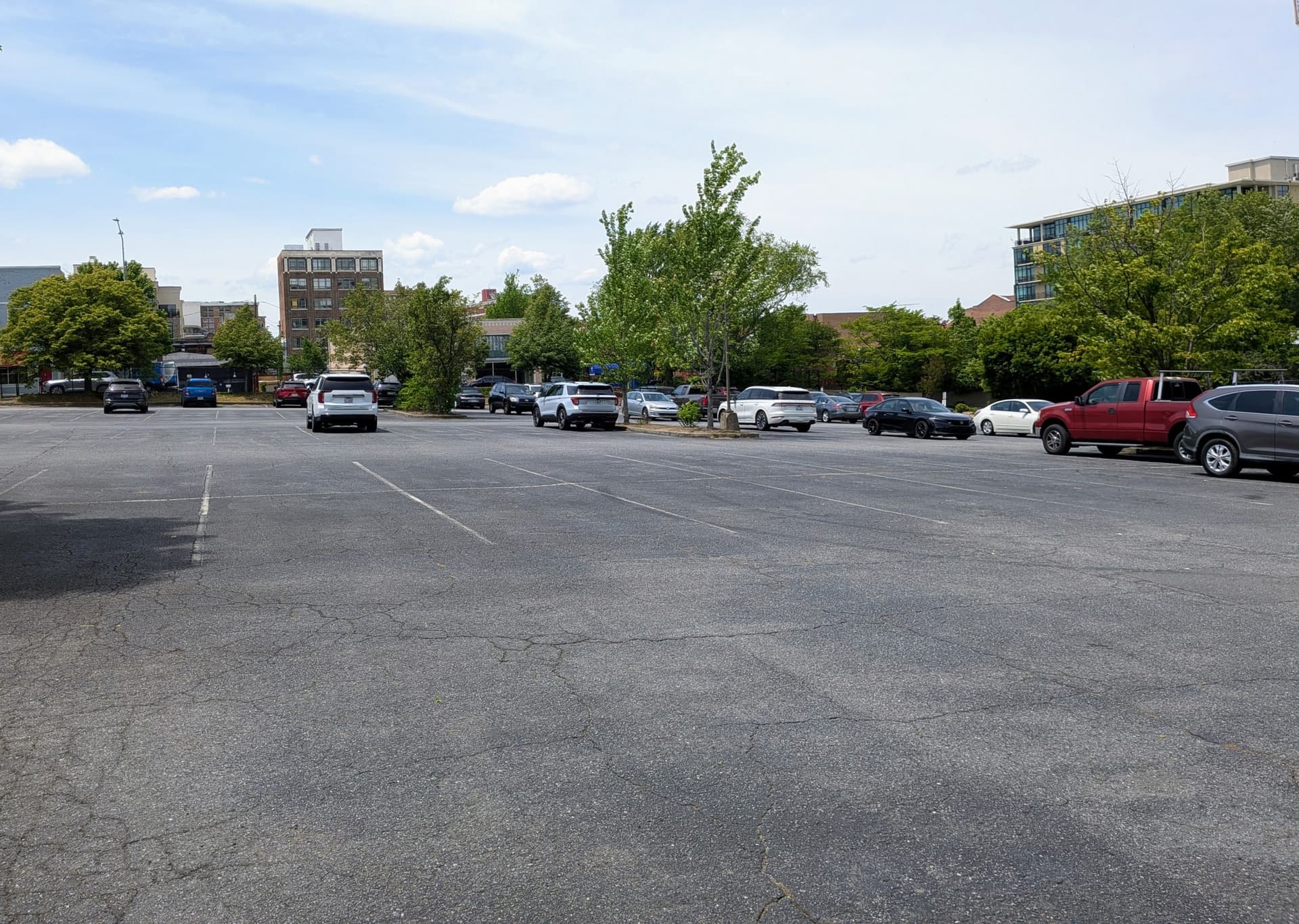
Downtown Asheville is still giving a huge share of its core to cars. A French Broad River Metropolitan Planning Organization estimate puts 39 percent of downtown land in surface lots and parking-related uses, and a table cited in the same reporting says about 156 acres, or 41 percent of downtown property, is devoted to off-street parking, mostly open lots.
That is the tradeoff Marty Benson wants Asheville to confront. The land-use lawyer and affordable housing advocate has argued that minimum parking requirements force new projects to spend valuable land on spaces that often sit underused. Near his West Asheville home, south of Haywood Road around Michigan Street, Benson counted 220 on-street parking spaces on seven blocks and said the city should stop requiring developers to reserve so much land for off-street parking. Councilmember Maggie Ullman made a similar point, saying large lots near City Hall could support more housing, economic activity and enterprise if the city eased the mandate.

Asheville has already moved in that direction, at least in part. On March 11, 2025, Asheville City Council approved UDO amendments that removed minimum off-street parking requirements for residential and other development in certain zoning districts, especially along transit-supportive corridors. The city said in April 2025 that the changes were meant to encourage more housing and reduce barriers to development, while also raising minimum bicycle parking from 5 percent to 10 percent. Even so, Asheville’s code library still contains parking, loading and access standards, including rules on when on-street spaces can count toward off-street requirements.
The local debate now sits against a state bill that could go further. North Carolina House Bill 369, the Parking Lot Reform and Stormwater Control measure, would prohibit local governments from requiring a minimum number of off-street parking spaces. The bill advanced through the legislature in 2025 and was still active in the Senate as of June 10, 2026, putting Asheville’s parking rules in the crosshairs of a broader state-level push.
Parking is also a maintenance problem, not just a land-use one. The City of Asheville says a comprehensive parking facility assessment was completed in August 2023. Public city materials identify four downtown garages, at Harrah’s Cherokee Center, Wall Street, Rankin Avenue and Biltmore Avenue, and a 2023 local media report said the garages needed about $11.3 million in repairs. The city also posts real-time availability for six downtown garages, underscoring that it still manages parking as a public service even as it trims mandates for new development.
The policy question is no longer abstract. If Asheville keeps reducing parking minimums, downtown projects could devote more land to homes, storefronts and public space instead of asphalt. If it does not, scarce central land will keep serving the storage of cars over the growth of the city’s core.
This article was produced by Prism’s automated news system from verified source data, official records, and press releases, then run through automated quality and moderation checks before publishing. The system is built and supervised by the people who set the standards it runs under. Read our full AI policy.
Did this article answer your question?