Asheville recovery featured in Washington museum exhibit on disasters
Asheville’s Helene recovery is on the National Mall, where a Washington exhibit is pairing Buncombe County’s losses with disaster stories from across the country.
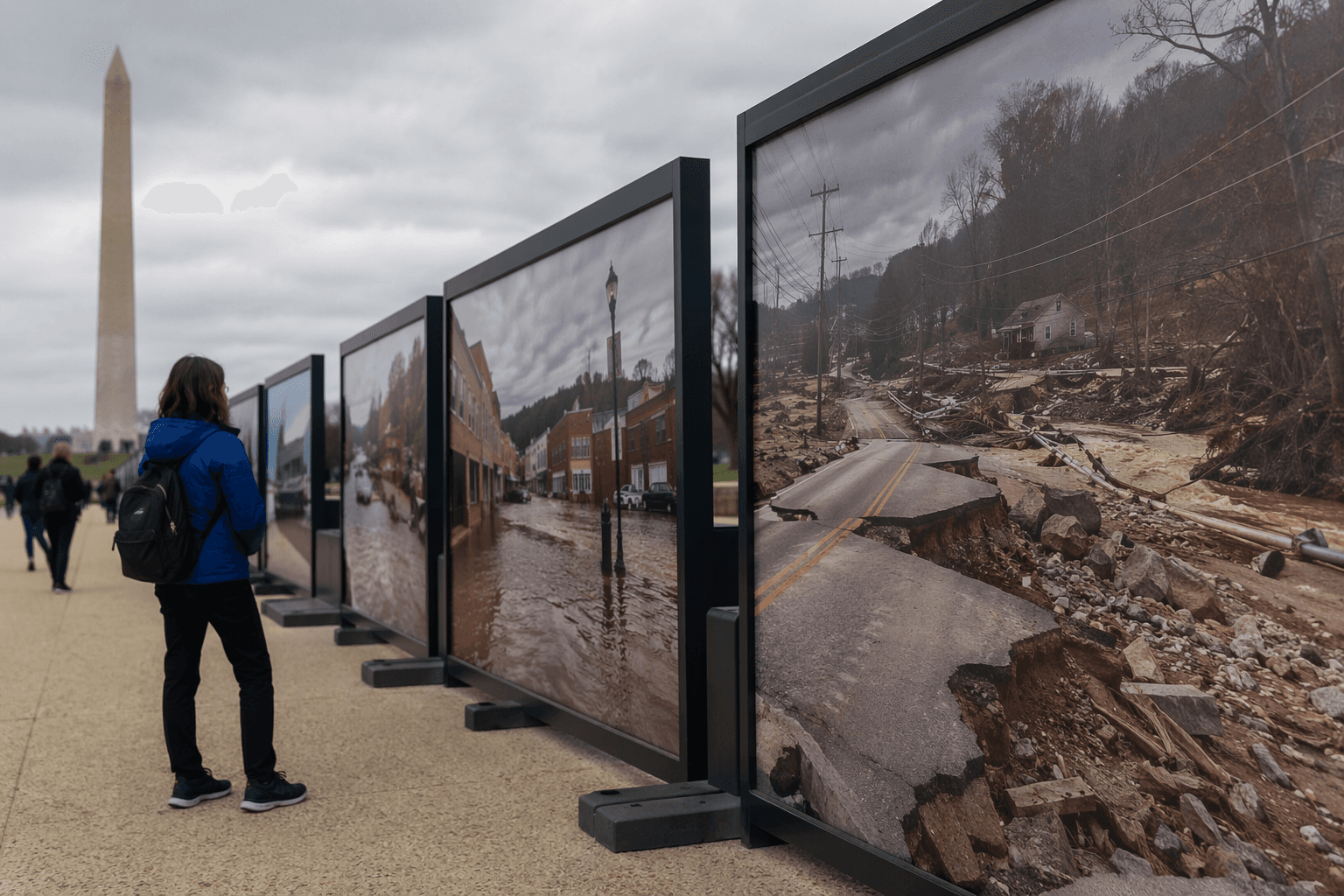
Asheville’s Helene recovery has reached the National Mall, where the Museum of Unnatural Disasters is placing Buncombe County’s losses inside a national exhibit about climate-driven disasters. The free pop-up is open at Constitution Gardens East End Plaza, near 17th Street and Constitution Avenue NW, through June 14, with hours Monday through Friday from 9 a.m. to 5 p.m. and Saturday and Sunday from 12 p.m. to 5 p.m.
The exhibit is a Climate Action Campaign project created with the Center for American Progress, Climate Power and Extreme Weather Survivors. It uses photographs, artifacts, personal testimonies and interactive displays to show what disaster recovery looks like after the cameras leave. Alongside Tropical Storm Helene, the exhibit includes stories from survivors of catastrophic flooding in central North Carolina, record-breaking heat in the Southwest and the 2025 Los Angeles wildfires.
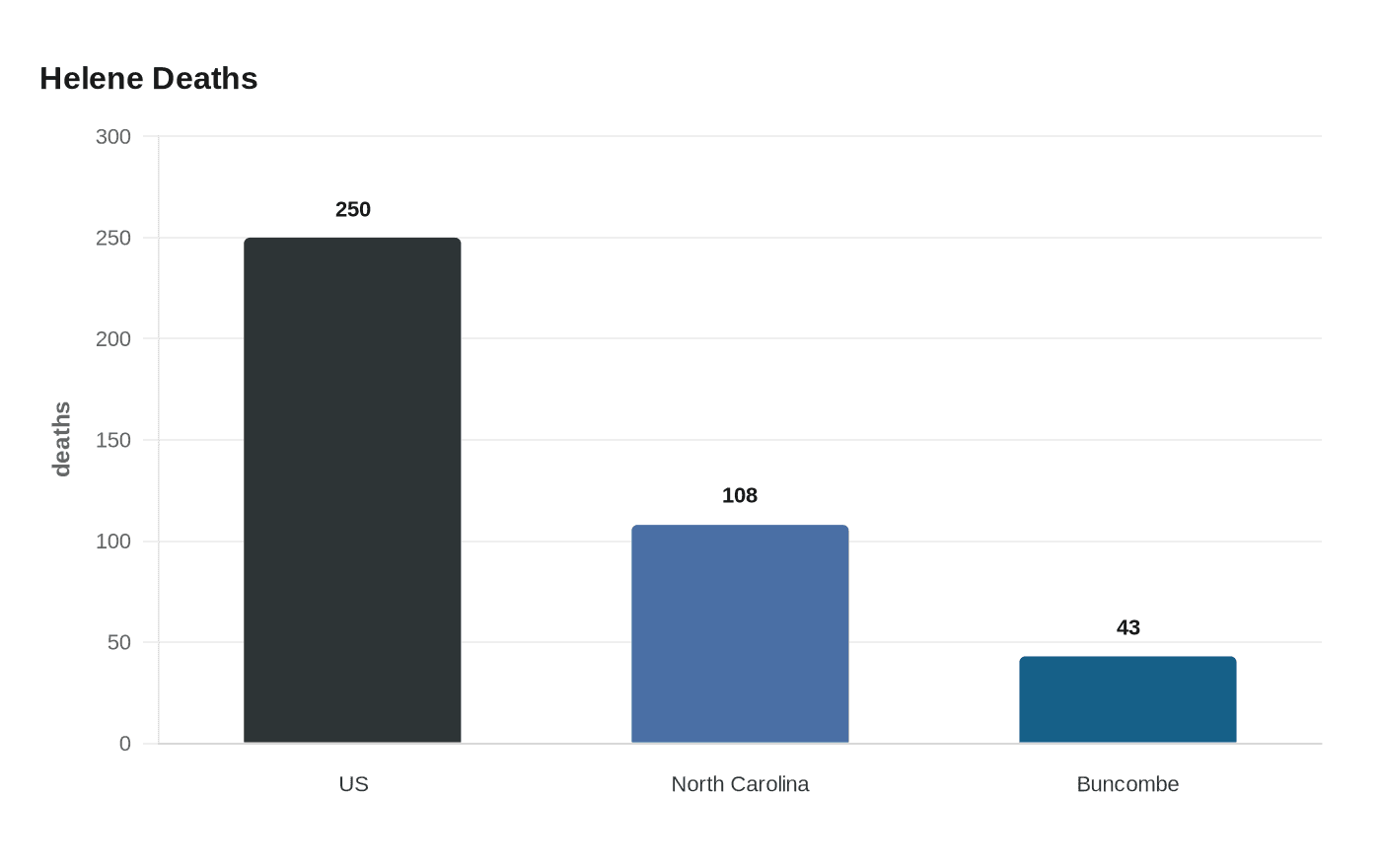
That framing matters in Asheville because Helene was never just a storm story about downed trees and washed-out roads. Helene made landfall near Perry, Florida, on Sept. 26, 2024, then struck western North Carolina on Sept. 27. It left at least 250 people dead across the United States, including 108 confirmed deaths in North Carolina and 43 in Buncombe County. National estimates put the damage at about $78.7 billion across several states, with nearly $60 billion of that total in North Carolina.
Federal forecasters warned of significant to catastrophic inland flooding before the storm reached western North Carolina, and the National Weather Service compared the expected Asheville-area flooding to the historic 1916 floods. That warning proved grimly accurate as the mountains took catastrophic flooding and landslides, and thousands of residents were displaced across Asheville and neighboring counties.
Putting Asheville in a Washington museum changes the shape of the story. It moves Helene from a local recovery conversation into a national one, where the region is presented not only through damage photos or government meetings, but through the lived experience of survivors and the objects they carried through the disaster. For Buncombe County, the exhibit offers a short but meaningful stretch of national visibility, while recovery from Helene continues to define life in Western North Carolina.
This article was produced by Prism’s automated news system from verified source data, official records, and press releases, then run through automated quality and moderation checks before publishing. The system is built and supervised by the people who set the standards it runs under. Read our full AI policy.
Know something we missed? Have a correction or additional information?
Submit a Tip