Asheville schools post strong graduation and reading results in state report cards
Asheville City Schools posted a 93% graduation rate and 61.5% third-grade reading proficiency, while seven Buncombe campuses still landed on the state support list.

Asheville City Schools posted a 93 percent four-year graduation rate. Thirty-one Buncombe County Schools campuses met or exceeded state growth expectations.
The N.C. Department of Public Instruction’s 2024-25 accountability data include end-of-grade and end-of-course tests, academic growth, School Performance Grades, long-term goals, graduation rates and required support designations. State Superintendent Mo Green said North Carolina students hit a three-year high in most standardized tests, and statewide performance grades improved as more schools earned A, B or C and fewer earned D or F.

Asheville City Schools, which serves about 3,800 students in eight schools, outperformed the state in several key areas. Its four-year graduation rate beat the statewide average of 88 percent, and its dropout rate of 1.08 percent stayed below the state rate of 1.34 percent. At Asheville High School, about 72 percent of students met the ACT benchmark, compared with 55 percent statewide. Third-grade reading rose from 57.1 percent in 2022-23 to 61.5 percent in 2024-25, well above the state’s 47 percent mark.
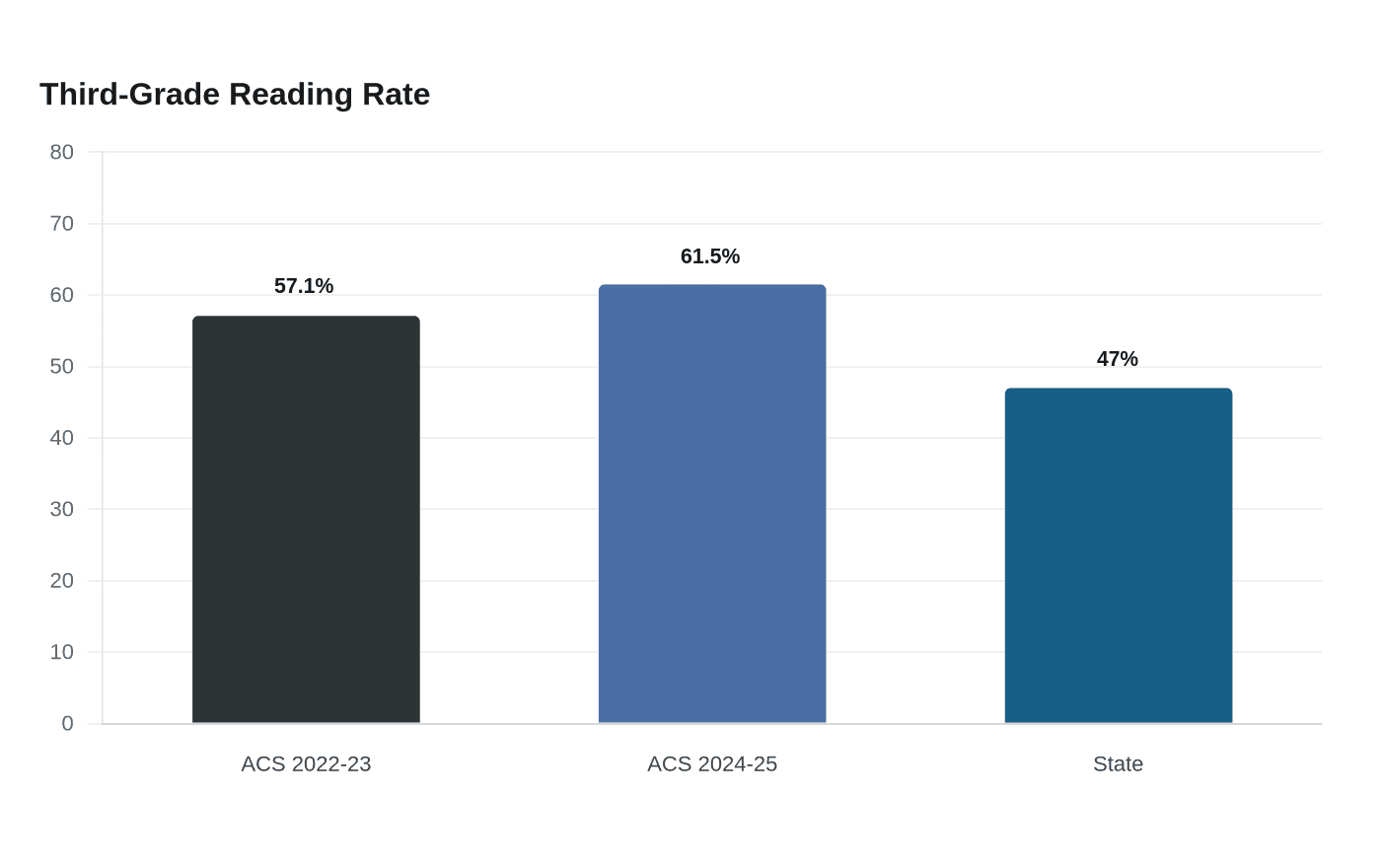
District leaders linked that reading progress to deep community partnerships and a unified K-5 reading curriculum grounded in evidence-based phonics.
Buncombe County Schools, which educates more than 21,000 students in 45 schools, had 31 schools meet or exceed state growth expectations, 25 of 27 elementary and intermediate schools met or exceeded reading growth goals, 19 schools improved their overall proficiency rates, four schools improved by a full letter grade and one school came off the state’s low-performing list.
The district’s 2025-26 Targeted Support and Improvement list still includes Emma Elementary, Enka High, North Buncombe Middle, Oakley Elementary, Owen High, Roberson High and Williams Elementary. Statewide, North Carolina had 735 low-performing schools and 23 low-performing districts in 2023-24, and the number of continually low-performing traditional schools fell by 60 in the next reporting cycle.
This article was produced by Prism’s automated news system from verified source data, official records, and press releases, then run through automated quality and moderation checks before publishing. The system is built and supervised by the people who set the standards it runs under. Read our full AI policy.
Did this article answer your question?