Asheville Seeks Public Input on Long Term Urban Forest Plan
On November 20, 2025, Asheville launched a public engagement survey to shape its first ever Urban Forest Master Plan, a 10 to 20 year roadmap for protecting and expanding the city tree canopy. The effort matters to Buncombe County residents because it responds to documented canopy decline and recent storm losses, and will guide priorities that affect flooding, heat, property values, and neighborhood character.
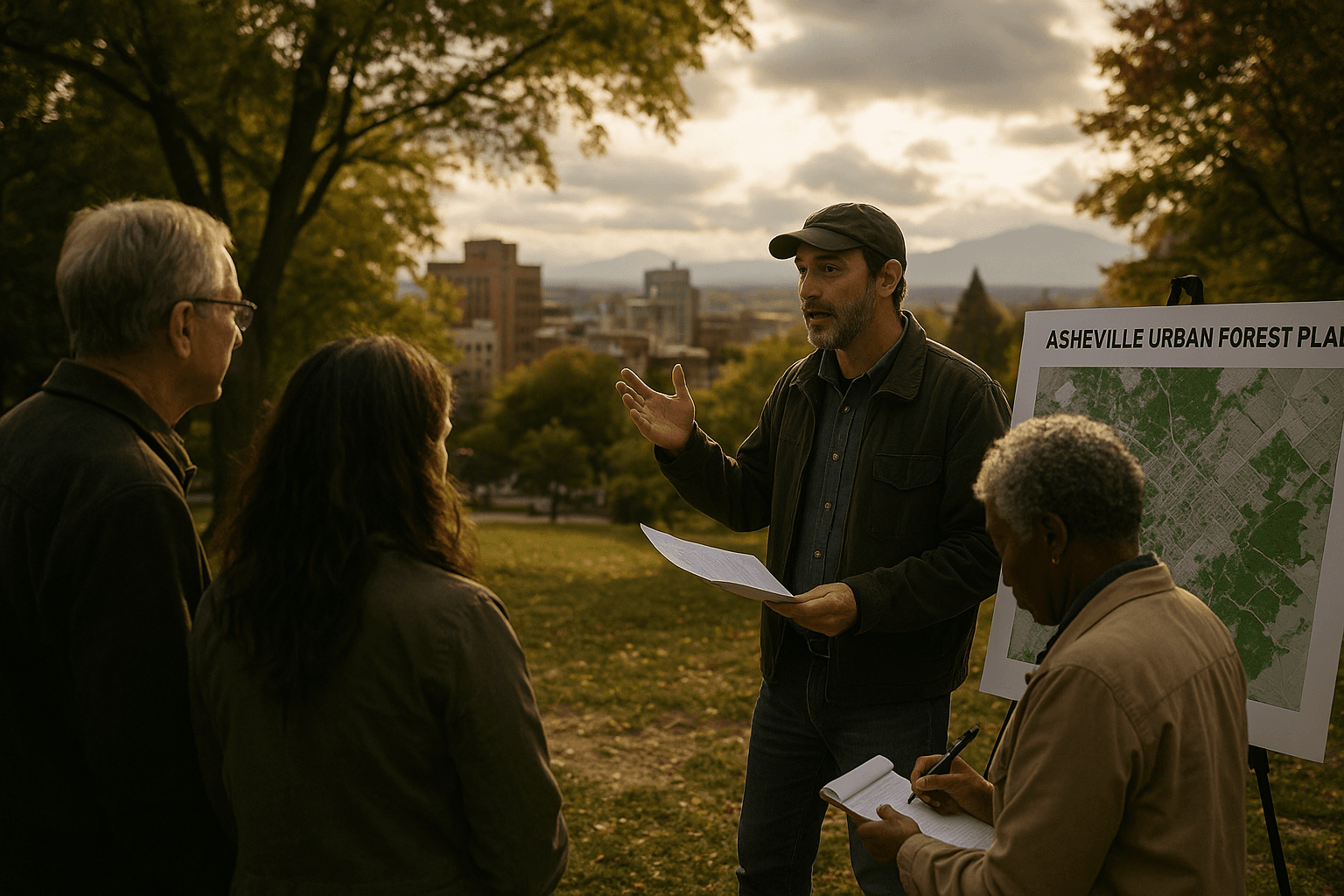
Asheville moved forward this month with a public engagement survey for its first ever Urban Forest Master Plan, announcing the outreach at the end of November and opening the process to resident input on November 20, 2025. The master plan is intended to produce a 10 to 20 year roadmap for protecting, managing, and enhancing the city tree canopy, and the survey will inform recommendations on how the city responds to long term canopy trends and acute losses from recent storms.
The planning effort follows prior studies that identified tree canopy decline, including a 2019 analysis cited by city officials. Work on urban forestry planning and recovery began in 2024 and the city previously hired an urban forest consultant to assist with assessment and strategy development. Officials expect a new analysis of canopy change after Tropical Storm Helene in 2026, which will be layered into planning and recovery priorities. Tropical Storm Helene caused significant tree loss across the region, underscoring the need for coordinated long term management.
The engagement process will remain open through early 2026 and invites residents to share priorities, concerns, and local knowledge that can shape where investments and protections are focused. According to the city’s urban forester, the survey is a key step in translating technical assessments into community driven actions and policies. The consultant and city staff will use public responses to help draft recommendations for tree planting, maintenance, equity in canopy distribution, and storm resilience.
For Buncombe County residents this plan has direct consequences. Urban trees influence stormwater management, street and park shade, energy use in buildings, and the appearance and livability of neighborhoods across Asheville. How the city chooses to allocate resources over the next decade or two will affect property owners, renters, neighborhood associations, and public works planning.
City leaders say residents who participate now can help shape the priorities that will guide investments in trees and green infrastructure for years to come. The engagement survey and related planning documents are part of a longer recovery and resilience process that will continue as new canopy data becomes available in 2026.
Know something we missed? Have a correction or additional information?
Submit a Tip

