Asheville shifts disaster funds to home repairs amid Helene gap
Asheville wants to steer $19.2 million from housing and infrastructure into home repairs, a shift that could help 55 to 65 households but leaves other recovery work waiting.

Families still waiting on roof patches, furnace fixes or rent help may get first claim on Asheville’s remaining Helene dollars, as city leaders moved $19.2 million toward single-family repairs and away from projects meant to build long-term housing and infrastructure. The tradeoff is stark in Buncombe County, where every dollar shifted to one recovery need pushes another one further down the line.
At a public hearing on June 9 at City Hall, Asheville officials advanced a proposal to amend the city’s disaster recovery action plan and send more money into the state-run Renew NC Single-Family Housing Program. The plan would move $9.2 million from the Affordable Multi-Family Housing Construction Program and $10 million from the infrastructure allocation, lifting the single-family repair total to $22.2 million. City officials said that amount could repair an estimated 55 to 65 homes.
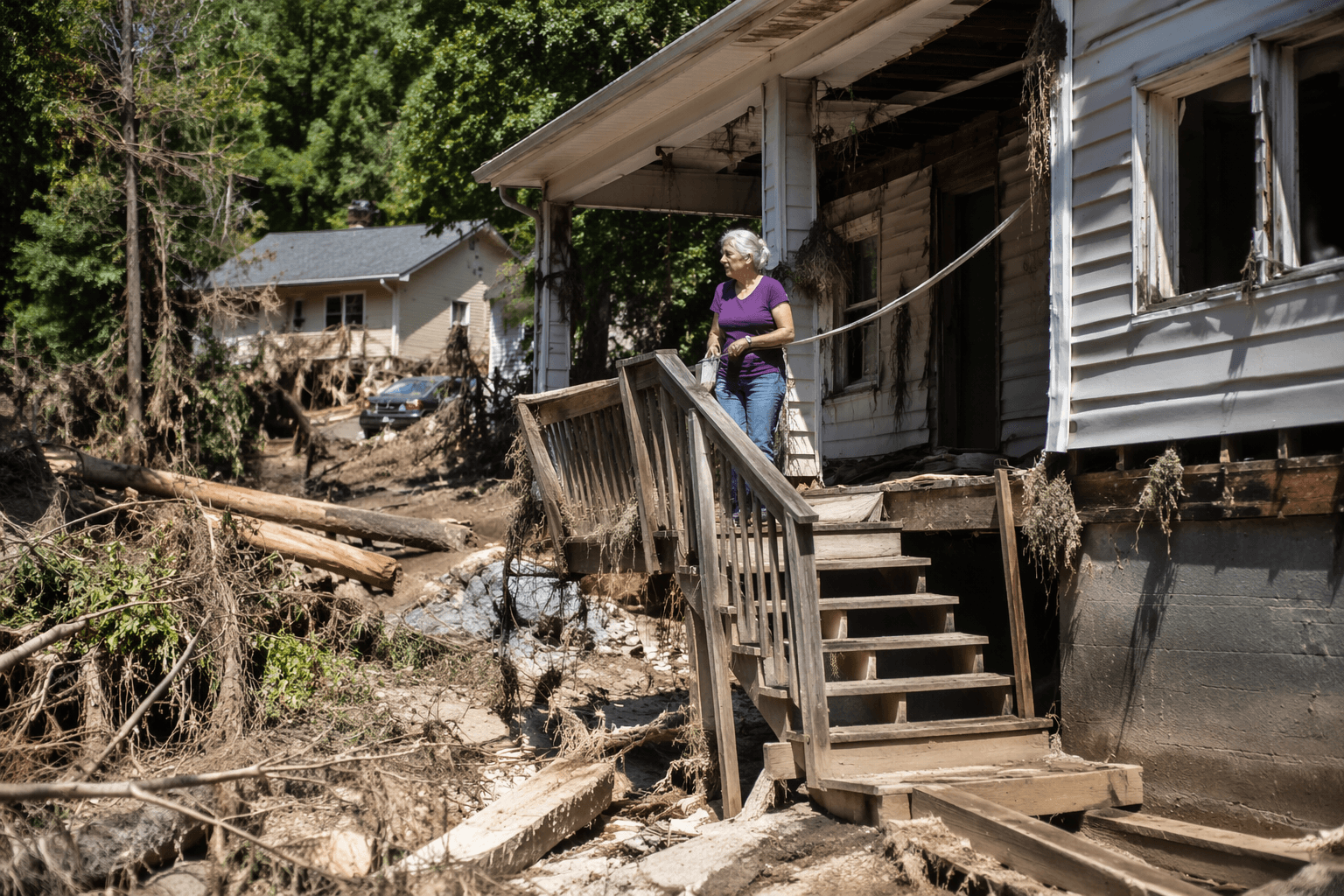
That is a major departure from the city’s original setup, which had enough Renew NC money to help only eight homes in Asheville. The city’s June 9 meeting summary showed the same reallocation would cut Affordable Multi-Family Housing funding from $28 million to $18.8 million and reduce infrastructure dollars from $125 million to $115 million. The city said the change would help families safely return home sooner while it continues to look for additional resources for roads, utilities and other recovery work.
Housing advocates are pushing back. The Buncombe Affordable Housing Network, a coalition of 10 local nonprofits, argues that Asheville’s $225 million Community Development Block Grant-Disaster Recovery award is better used to create or preserve affordable housing at scale rather than repair a relatively small number of homes. In its view, the city should spend scarce federal recovery money on permanent housing supply, not just short-term stabilization.
The debate comes as Western North Carolina continues to face a larger recovery shortfall. Congress has funded only about 14% of the estimated Helene recovery costs, according to The Citizen-Times, and North Carolina’s broader disaster recovery award totals $1,428,120,000, with 80% set aside for the most affected counties. HUD announced a nationwide $12 billion disaster recovery pool on Jan. 16, 2025, and the state submitted its draft Helene action plan on Feb. 18, 2025, before HUD approved it on April 24, 2025.
Asheville also approved $9.5 million in federal disaster-recovery housing money for Terrace at River Hills, a 126-unit affordable rental project led by Mountain Housing Opportunities and South Creek Development. That decision, alongside the home-repair shift, shows the city trying to do both: get residents back under their own roofs now, and keep new affordable apartments moving, even as the money runs thin. The council’s broader decision point on the amendment is June 23.
This article was produced by Prism’s automated news system from verified source data, official records, and press releases, then run through automated quality and moderation checks before publishing. The system is built and supervised by the people who set the standards it runs under. Read our full AI policy.
Know something we missed? Have a correction or additional information?
Submit a Tip