Asheville symposium spotlights rural colleges, federal policy, public trust
As Buncombe County weighed school funding and a higher tax bill, Asheville hosted rural college leaders focused on public trust, federal policy and local economic value.
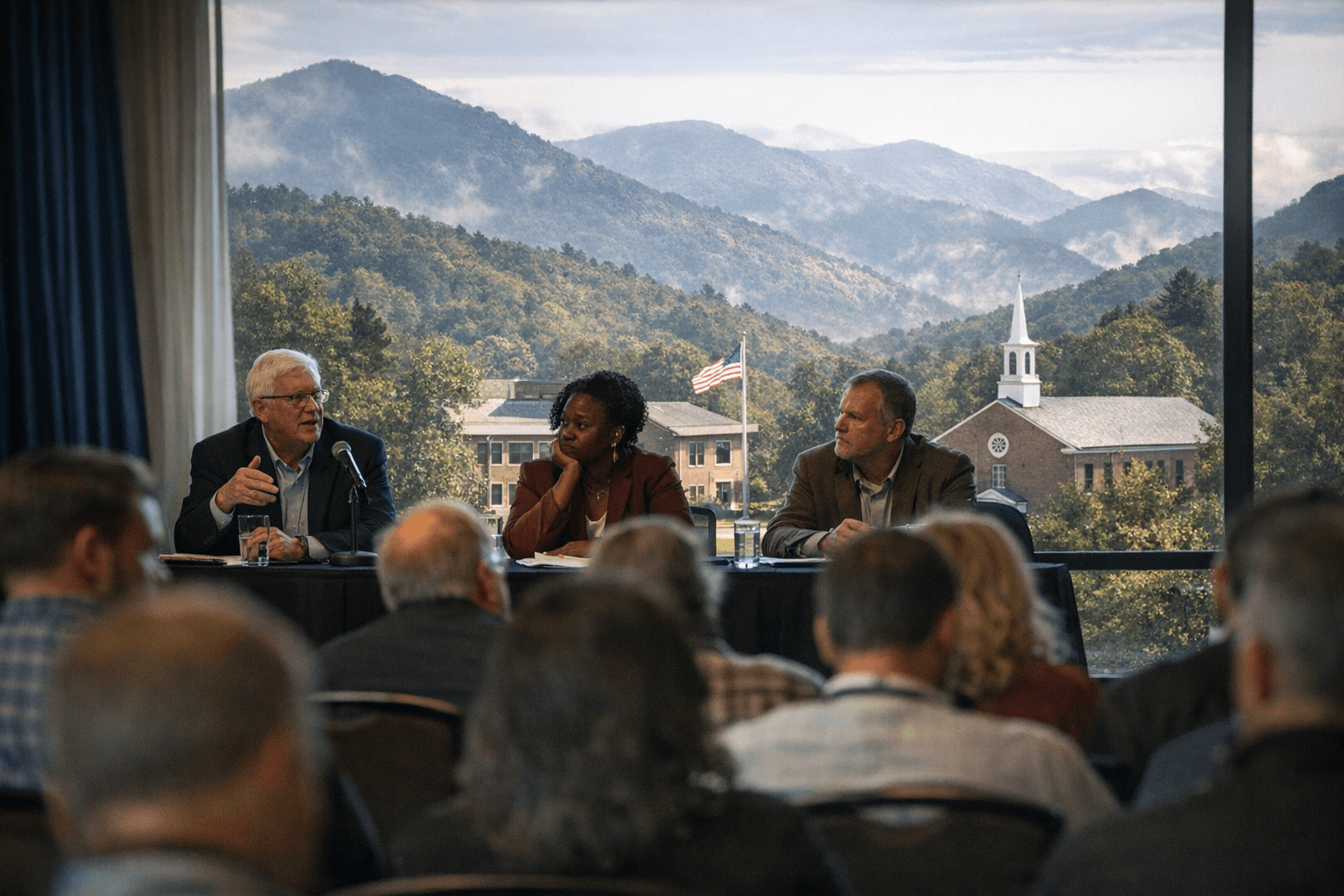
As Buncombe County wrestled with school funding, property taxes and a post-Helene budget squeeze, Asheville became the backdrop for a national conversation about whether rural colleges can still persuade the public they are worth the investment.
The American Association of State Colleges and Universities brought its “Transforming Local Communities: A Symposium for Rural Presidents and Chancellors” to Asheville for April 20-21, drawing presidents and chancellors from rural-serving institutions. AASCU said the meetings were built around how those campuses bolster local workforce pipelines, promote sustainability and deliver postsecondary value, while also giving leaders a chance to help shape the association’s action agenda and advocacy strategy for rural institutions and students.
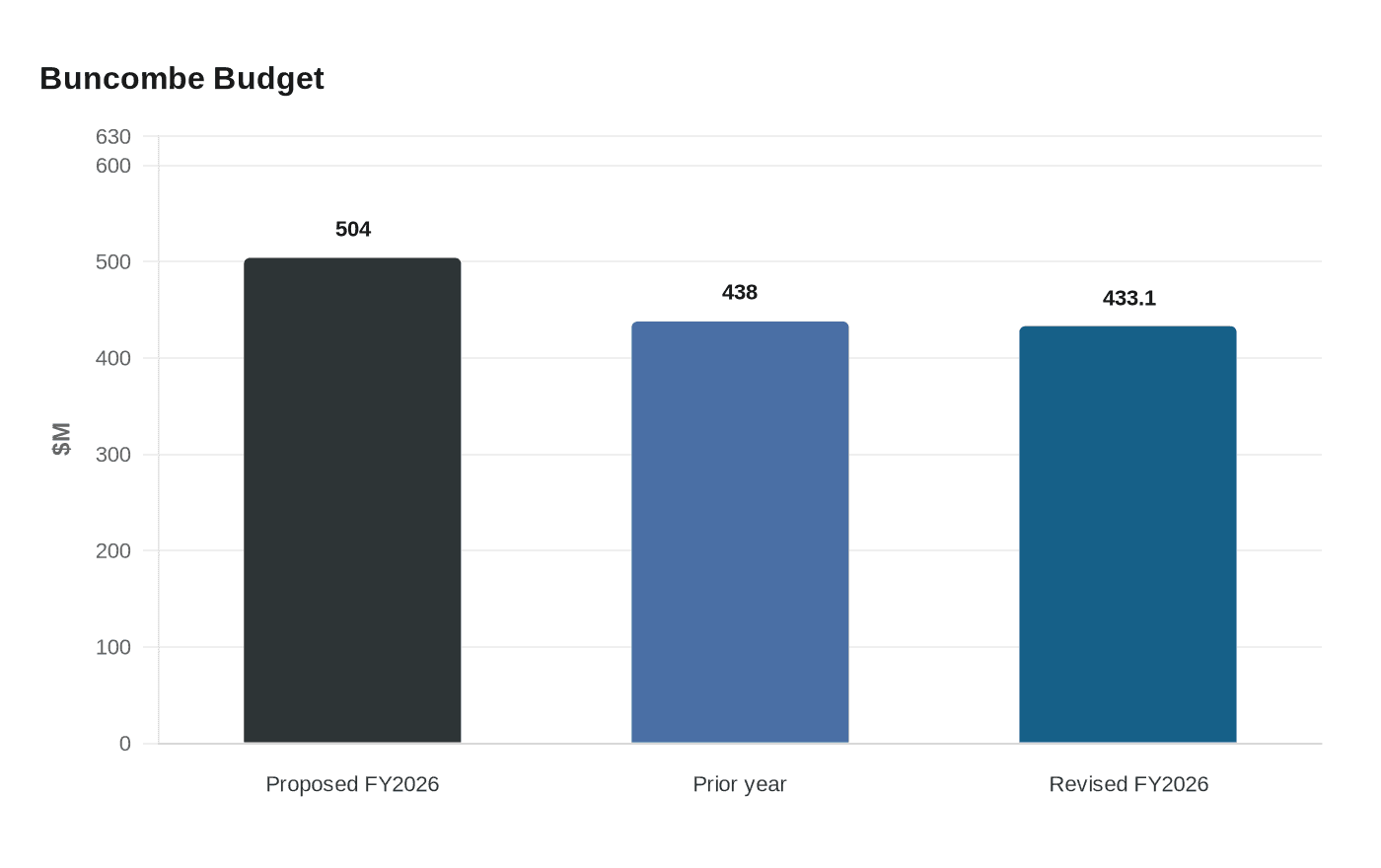
The local significance was hard to miss. Buncombe County commissioners spent months debating a proposed FY2026 budget that at one point topped $504 million in general-fund spending, more than 15% above the prior year’s $438 million budget. A later revision lowered operating costs to $433.1 million, but still included a 2.90-cent property tax increase. Education drove much of the pressure, with Buncombe County Schools asking for $105.9 million in local funding and Asheville City Schools seeking a 1.38-cent increase in its supplemental tax rate plus $2.41 million in additional local support. Public comment, town halls and rallies, including a march in Asheville before the commission vote, showed how closely residents were watching.
That made Asheville a fitting place for sessions on “Rural Regional Public Universities & Federal Policy” and “State of Rural-Serving Institutions and Public Perspectives on Higher Education.” Another session, “Owning the Narrative: How FHSU is Reclaiming Local Agency through a Systematic Data Workhorse,” pointed to a central theme for local governments and colleges alike: data is no longer just a back-office tool. It is part of the argument for public trust.
The symposium also tied national policy to a local campus. An optional April 20 tour of Western Carolina University’s main campus was led by Chancellor Kelli R. Brown, who discussed WCU’s partnership with the community it serves. A fireside chat brought together AASCU president and CEO Charles L. Welch and University of North Carolina System president Peter Hans, adding state-level perspective to a meeting that centered on rural institutions.
For Buncombe County, the practical lesson was clear. Whether the issue is school funding, county taxes or the role of Asheville-Buncombe Technical Community College and Western Carolina University in the regional workforce, the pressure is moving toward institutions that can show measurable results and explain them in plain language.
This article was produced by Prism’s automated news system from verified source data, official records, and press releases, then run through automated quality and moderation checks before publishing. The system is built and supervised by the people who set the standards it runs under. Read our full AI policy.
Did this article answer your question?