Asheville Urban Forest Master Plan Targets 2027 Publication, Guides Tree Canopy Goals
Asheville's urban forest plan, due in 2027, will set replanting priorities for neighborhoods stripped of trees by Helene and guide decades of canopy investment.
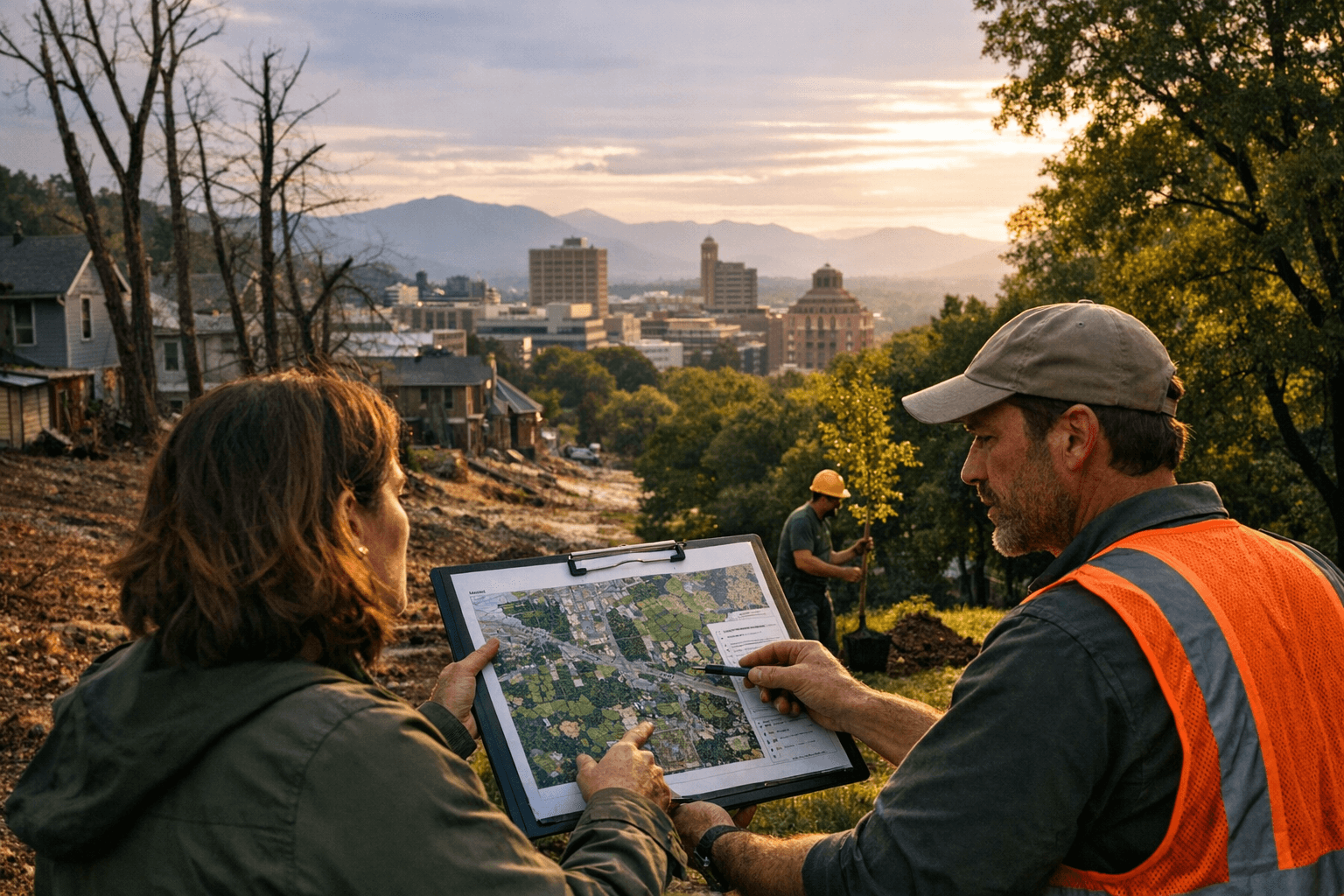
Neighborhoods across Asheville that lost trees to Tropical Storm Helene will have a formal framework guiding replanting decisions as the city works toward publishing an Urban Forest Master Plan in 2027.
The multi-year planning effort, led by City of Asheville staff alongside urban foresters, community groups and consultants, will produce a comprehensive document covering tree canopy goals, planting and stewardship priorities, and policies for public trees and right-of-way plantings. A canopy assessment will quantify tree cover across Asheville's neighborhoods, paired with an inventory of public trees, species selection recommendations and analysis of how canopy coverage has shifted over time.
The plan's reach extends well beyond planting schedules. Its recommendations could drive municipal budget decisions for tree care and storm recovery, reshape development and subdivision landscaping requirements, and create homeowner incentive programs for planting and maintaining trees on private property. For communities with documented histories of underinvestment, the plan will address canopy equity directly, with officials intending to prioritize neighborhoods that have historically seen less tree cover.
Trees provide measurable returns on that investment: shade reduces urban heat, roots and canopy intercept stormwater, and green corridors support air quality and biodiversity. As heat events become more frequent across Western North Carolina, the shade and cooling functions of a healthy canopy carry direct consequences for residents' health and energy costs.
Public input will shape the plan before it reaches adoption. The city intends to hold community engagement sessions where residents, neighborhood associations and local nonprofits can weigh in on planting priorities, maintenance standards and long-term canopy goals. Draft materials are expected to go through a public review period before formal adoption in 2027.
For Asheville and surrounding Buncombe County communities, the master plan represents decisions with consequences measured in decades: which streets get shade, which neighborhoods recover their canopy, and how the city balances tree investment against competing budget pressures.
This article was produced by Prism’s automated news system from verified source data, official records, and press releases, then run through automated quality and moderation checks before publishing. The system is built and supervised by the people who set the standards it runs under. Read our full AI policy.
Did this article answer your question?