Asheville Venues Report Strong Early 2026 Attendance Despite Softer Hotel Demand
74% of Harrah's Cherokee Center concert tickets went to out-of-market buyers, yet Asheville hotel occupancy still trails, quietly draining the city's occupancy-tax revenue.
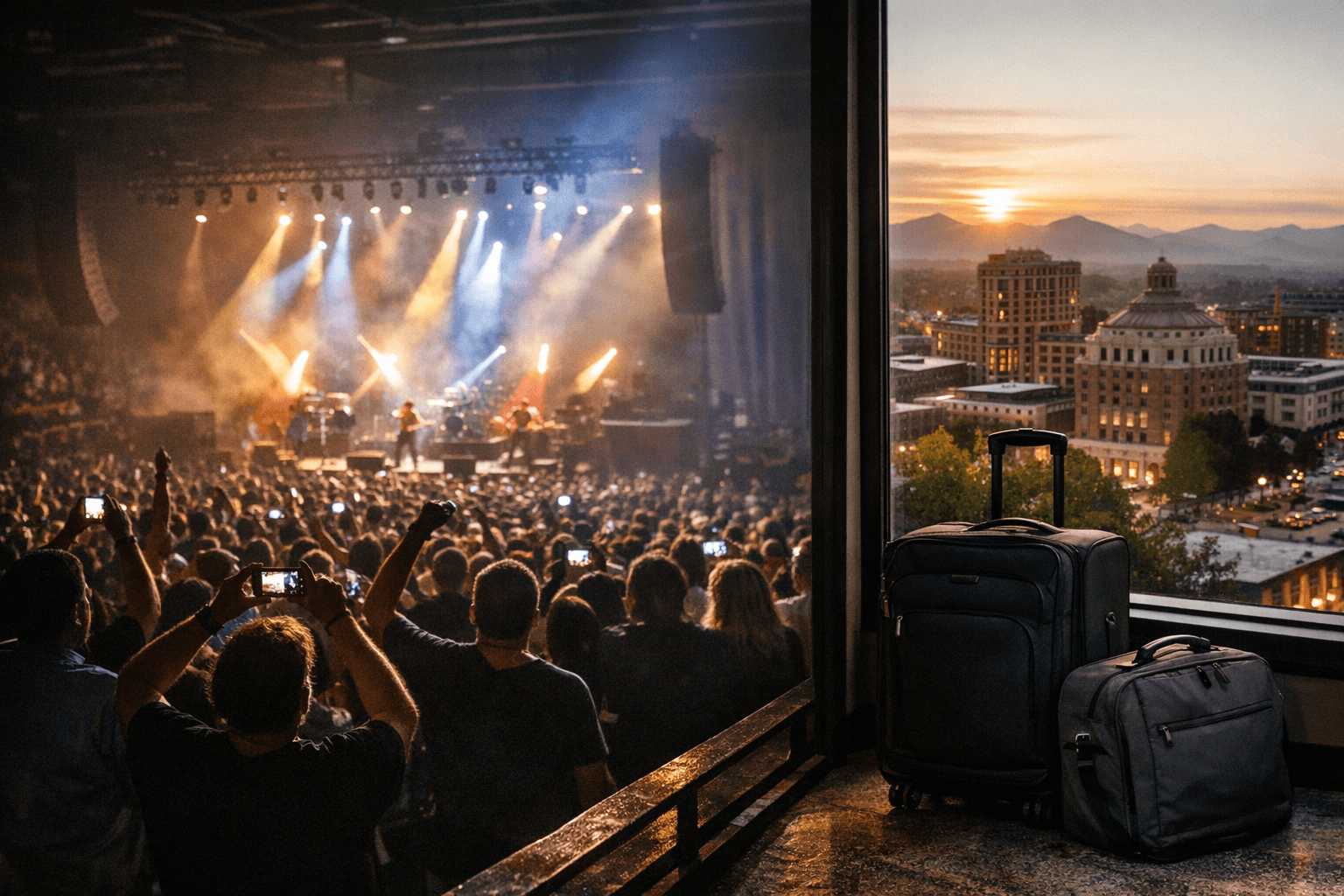
Asheville's cultural venues packed in crowds through the first three months of 2026, but the visitors filling seats at Harrah's Cherokee Center and the Western North Carolina Nature Center are largely driving home at night rather than checking into hotel rooms, creating a split that carries real consequences for the city's tax base and the broader downtown economy.
The WNC Nature Center recorded more than 32,000 visitors between January and March, closing in on the 33,000 to 34,000 it drew in comparable pre-Helene quarters. Director Chris Gentile credited tangible upgrades, including restored parking and a new butterfly garden, for helping the venue absorb the return of visitors after storm-related disruptions. "Usually the first quarter is a good indication of how the year's going to go," Gentile said. Thomas Wolfe Auditorium also reported strong event numbers for the quarter.
At Harrah's Cherokee Center, a string of sold-out concerts in April is drawing the kind of out-of-market traffic that historically spills into restaurants, parking garages and shops in downtown Asheville and the Biltmore and West Asheville corridors. A notable shift in who is buying those tickets points to why hotel occupancy has not kept pace: 74 percent of large-event tickets sold in the recent period were purchased by out-of-market visitors, up from an average of 66 percent in prior years. That increase reflects a concert-going base traveling farther for events but not necessarily staying overnight.
The divergence matters because Buncombe County's occupancy tax, which funds tourism promotion and arts and cultural programs, is tied directly to hotel revenue, not venue gate receipts. A day-tripper who buys a concert ticket, parks downtown and eats dinner generates sales-tax revenue but contributes nothing to occupancy-tax coffers. When overnight stays lag, that funding gap accumulates across every sold-out show.
On the lodging side, Pinecrest Bed and Breakfast in Montford reported flat bookings year-over-year, though the property has managed to raise weekday rates compared to last year. That combination suggests the softness in demand is real, but that remaining travelers are spending more per night; the recovery is uneven rather than absent.
For county and tourism officials, the venue-versus-hotel gap points toward a specific strategy: keep building on what is working. Attraction infrastructure investments, like the Nature Center's parking and garden improvements, are producing measurable returns. Events that draw out-of-market audiences create foot traffic for downtown businesses even when those visitors don't stay the night.
The more urgent question heading into summer is whether Asheville can convert the day-tripper surge into multi-night bookings. Sold-out April shows at Harrah's Cherokee Center provide the clearest near-term test: if hotels and short-term rentals see corresponding occupancy spikes on those event nights, the city will have evidence that the venue recovery is broad enough to pull lodging along. If those shows continue to fill and hotel occupancy still trails, local leaders will need to examine what is keeping visitors from extending their stays.
This article was produced by Prism’s automated news system from verified source data, official records, and press releases, then run through automated quality and moderation checks before publishing. The system is built and supervised by the people who set the standards it runs under. Read our full AI policy.
Did this article answer your question?


