Biltmore Estate and River Arts District Highlights for Buncombe Visitors
Visitors can pair Biltmore Estate tours and gardens with River Arts District studio visits, a draw for Buncombe tourism and local artists' livelihoods.

Visitors to Buncombe County can plan a single outing that combines a mansion tour at the Biltmore Estate with strolls through formal gardens and a stop in Asheville’s River Arts District, offering both a curated historical experience and up-close encounters with working artists. That blend of history, landscape and live creative labor matters for local businesses, artists and residents who rely on tourism dollars while also raising questions about access and affordability.
The Biltmore Estate remains a major draw: the private residence of George Washington Vanderbilt, it "is an incredible achievement of architecture, landscape design, and forestry." First-time visitors are advised to buy tickets in advance and reserve a self-guided house tour, which takes about 90 minutes at a comfortable pace. Ticketing choices include a Gardens and Grounds option priced between $70 and $100 that includes complimentary wine tasting, parking, access to the Winery and Antler Hill Village, and daytime access to gardens and grounds. An Audio-guided Visit runs from $79 to $109 and adds daytime access to the Mansion with a portable audio guide.
Practicalities matter for planning. "Buy your tickets in advance. You will save up to $8 by purchasing at least a week in advance," and "the time on your ticket is your entry to the house, NOT your entry to the grounds." Visitors should book a specific entry time for the house tour and remember that grounds access is separate. Expect a line if you arrive at opening; it moves quickly, and staff plan for bag checks with a metal detector.
The estate’s formal outdoor spaces reward the extra time. Italian Gardens are formal water gardens where three ponds are filled with goldfish and koi. The Shrub Garden is a walking path featuring several types of large deciduous trees. The Spring Garden offers a walking path with hemlock, pines and blooming shrubs. The Conservatory is a large glass-roofed building full of exotic plants and has space for small gatherings. The Azalea Garden spans fifteen acres and is described as one of the largest displays of native azaleas in the country; it began as a passion project of Chauncey Beadle, a horticulturist who became the estate superintendent. Visitors are advised to follow signage at the main house to find the formal gardens and the Conservatory, since these areas are hidden from view of the main house.
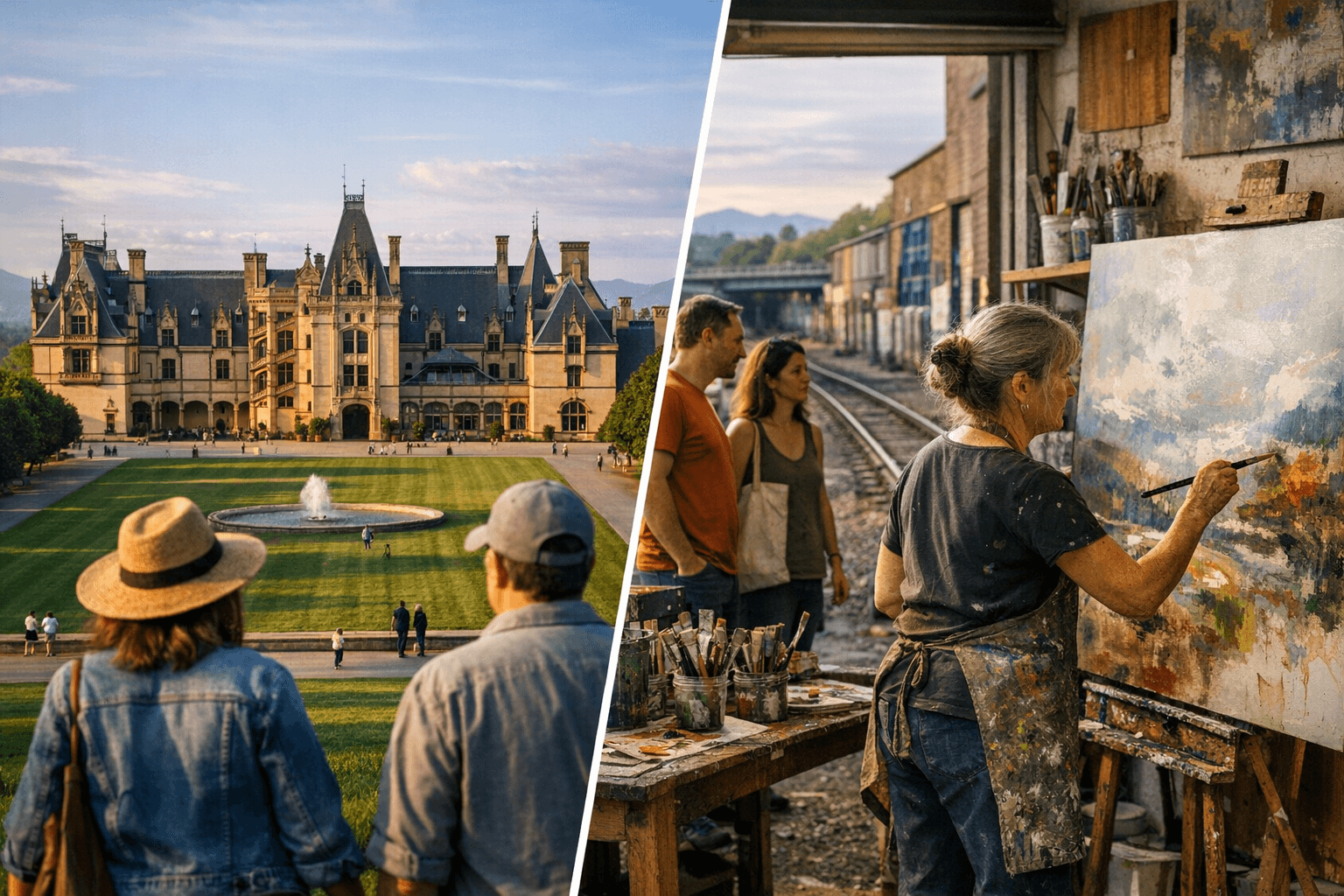
Beyond the Biltmore, the River Arts District offers a different, often more accessible kind of engagement. "The River Arts District is a living, breathing creative corridor shaped by former warehouses, working studios, and the river that runs alongside it," where artists fire kilns, stretch canvases, weld, weave, and throw clay in spaces that welcome visitors to watch the process up close. Cafés, breweries and galleries sit steps apart, making it easy to move between studios and local small businesses.
For Buncombe residents and planners, the two sites highlight complementary opportunities: the Biltmore brings visitor spending into larger estate operations and hospitality jobs, while the River Arts District circulates income directly to individual artists and neighborhood businesses. Ticket costs, required entry times, and security screenings can create barriers for some neighbors; consider these factors when recommending visits to family or guests, and verify discounts and accessibility options before arrival.
Plan ahead, book direct for best rates when possible, and balance a mansion tour with time in the River Arts District to support both the county’s flagship attraction and the working artists who make Asheville’s creative economy distinct.
This article was produced by Prism’s automated news system from verified source data, official records, and press releases, then run through automated quality and moderation checks before publishing. The system is built and supervised by the people who set the standards it runs under. Read our full AI policy.
Did this article answer your question?