Black Mountain Dog Sniffs Out Hidden Mold, Moisture in Local Homes
Gus, a shelter dog from Burke County, can sniff out 16 mold types across thousands of variants. Jay Barham launched Mountain Mold Dog in Black Mountain after Helene.
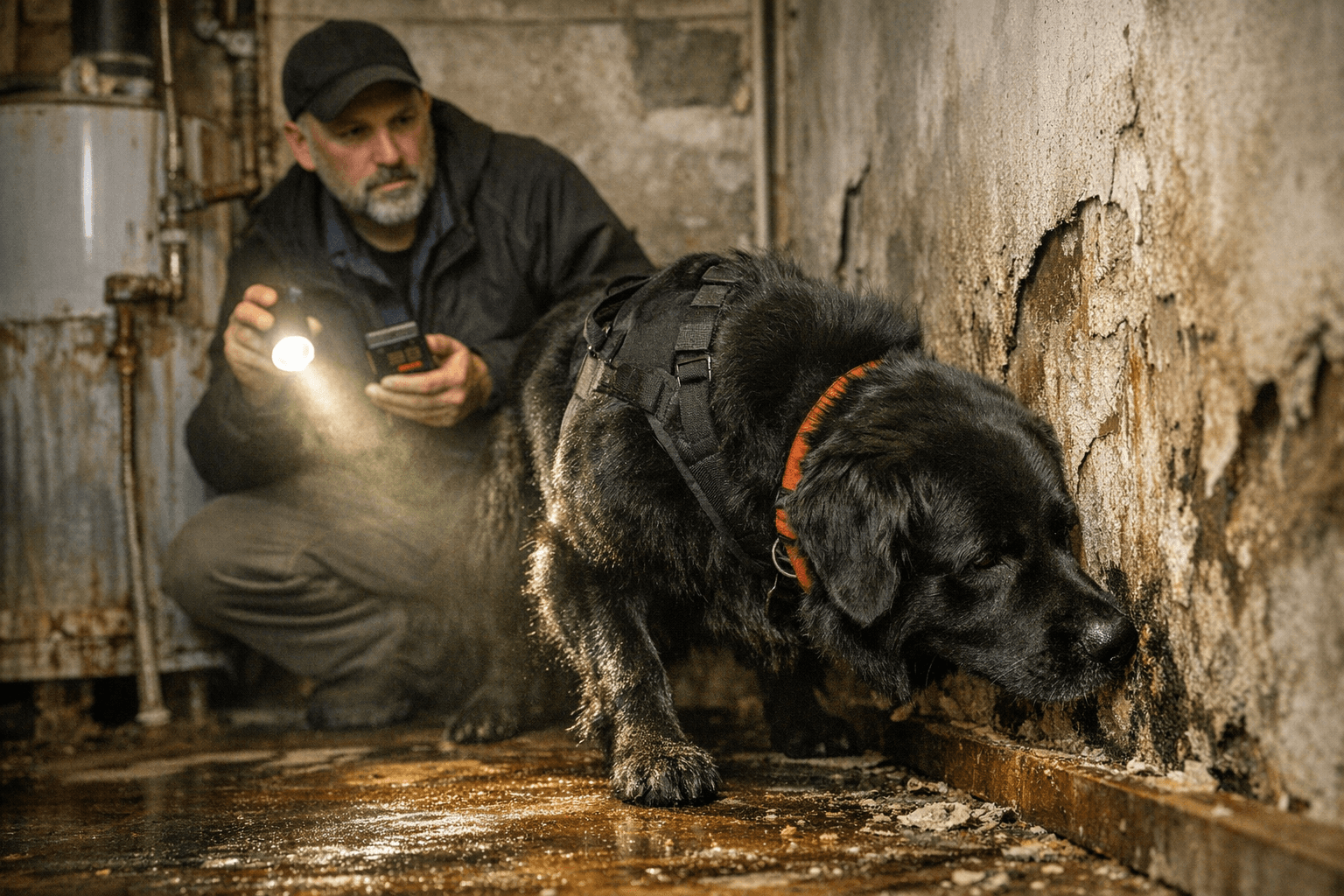
Gus, a schnauzer-poodle mix pulled from a Burke County animal shelter, has become one of Western North Carolina's more unconventional property inspectors. The dog can identify 16 distinct types of mold, which translates to sensitivity across thousands of mold variants, and he does it without opening a single wall.
Gus is the centerpiece of Mountain Mold Dog, a Black Mountain-based inspection service launched in July 2025 by Jay Barham. The idea took shape after Tropical Storm Helene hit Western North Carolina in September 2024. Barham's daughter had spent years struggling with mold sickness in various living situations, and watching the flood's aftermath spread across Buncombe County's already aging housing stock made the need feel urgent.
"My wife and I said, after Helene, I bet we could be of help by having a mold dog here," Barham said.
Barham found Gus at a Burke County shelter, then sent him to the Florida Canine Academy for three months of detection training under Bill Whitstine, a certified master trainer whose facility produces dogs trained to find bombs, drugs, termites, and mold. Barham trained as a handler himself over two weekends, then spent additional time running Gus through practice inspections in spaces he already knew contained mold, calibrating his own ability to read Gus's signals before accepting paying clients.
When Gus alerts, he signals by pawing and focusing his attention on a specific area. Barham then deploys moisture meters, borescopes, or targeted air sampling at that exact spot rather than conducting invasive whole-house testing. The approach spares homeowners unnecessary demolition and cuts the cost and disruption of broad-spectrum sampling. The service is diagnostic: when Gus finds something, Barham connects the homeowner with local remediation contractors and restoration firms rather than performing the cleanup himself.
That referral chain matters in Buncombe County, where Helene's flooding left hidden water intrusion in crawlspaces, behind drywall, and inside insulation that may still be feeding mold growth months after the storm. Unchecked, that growth can reach structural framing and HVAC systems, driving repair costs well beyond what early detection would have cost. Occupants with allergies or respiratory conditions face health consequences before the damage becomes visible.
One homeowner reported calling Mountain Mold Dog after suspecting a problem and described Gus arriving the next day. "Our house is old and we expected Gus to find mold and he did," the homeowner wrote in a Yelp review. "Now we know exactly where the mold is located." Gus also flagged mold in the family's camper, a secondary find they hadn't anticipated. The homeowner noted the service "is not inexpensive" but called it less costly and less invasive than traditional alternatives.
Real estate agents and landlords have begun using canine detection as a pre-sale and pre-lease screening tool as well. Mountain Mold Dog covers Western North Carolina, upstate South Carolina, East Tennessee, East Kentucky, Southwest Virginia, and Northeast Georgia, with pricing quoted individually and a free consultation available through MountainMoldDog.com.
This article was produced by Prism’s automated news system from verified source data, official records, and press releases, then run through automated quality and moderation checks before publishing. The system is built and supervised by the people who set the standards it runs under. Read our full AI policy.
Did this article answer your question?


