Black Mountain stroke survivor builds support nonprofit for recovery
After a stroke at 35, Matt McCoy rebuilt his life and turned that recovery into a Black Mountain nonprofit for survivors and caregivers.
A second recovery path after the hospital
Matt McCoy’s stroke at 35 did not just change his health. It forced him to rebuild the basics of daily life, from driving and working to managing weight, mobility and isolation. That long road is now the blueprint for Stronger Together Wellness, a Black Mountain nonprofit designed to help stroke survivors and caregivers navigate the gap between hospital discharge and real-world recovery.
McCoy’s story matters in Buncombe County because it turns a public-health issue into a practical local service. After the acute medical crisis ends, survivors still have to live with medication schedules, physical limitations, emotional strain and family stress. Stronger Together Wellness exists to make that stretch less lonely and less overwhelming.
What McCoy learned the hard way
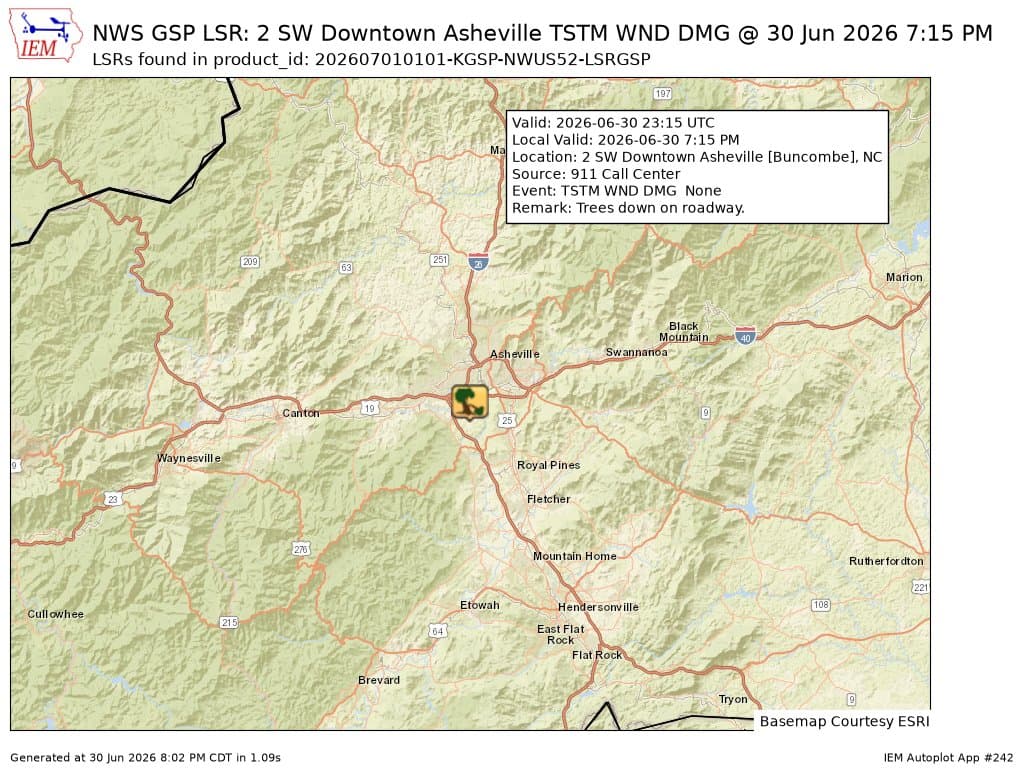
Before his stroke, McCoy was living an active Western North Carolina life. Then he suddenly lost control of the left side of his body and learned he had suffered a stroke. The aftermath was severe and long: months in and out of care, an inability to work or drive, rapid weight gain, depression and isolation. He eventually moved to Florida to live with his parents, rebuilt his mobility there, then returned to Asheville and later Black Mountain.
That arc is central to why the nonprofit looks the way it does. McCoy did not build it from theory. He built it from the realities that many families discover only after the hospital phase ends, when the emergency care is over but the recovery work is far from finished.
Why this fills a real gap for Buncombe County families
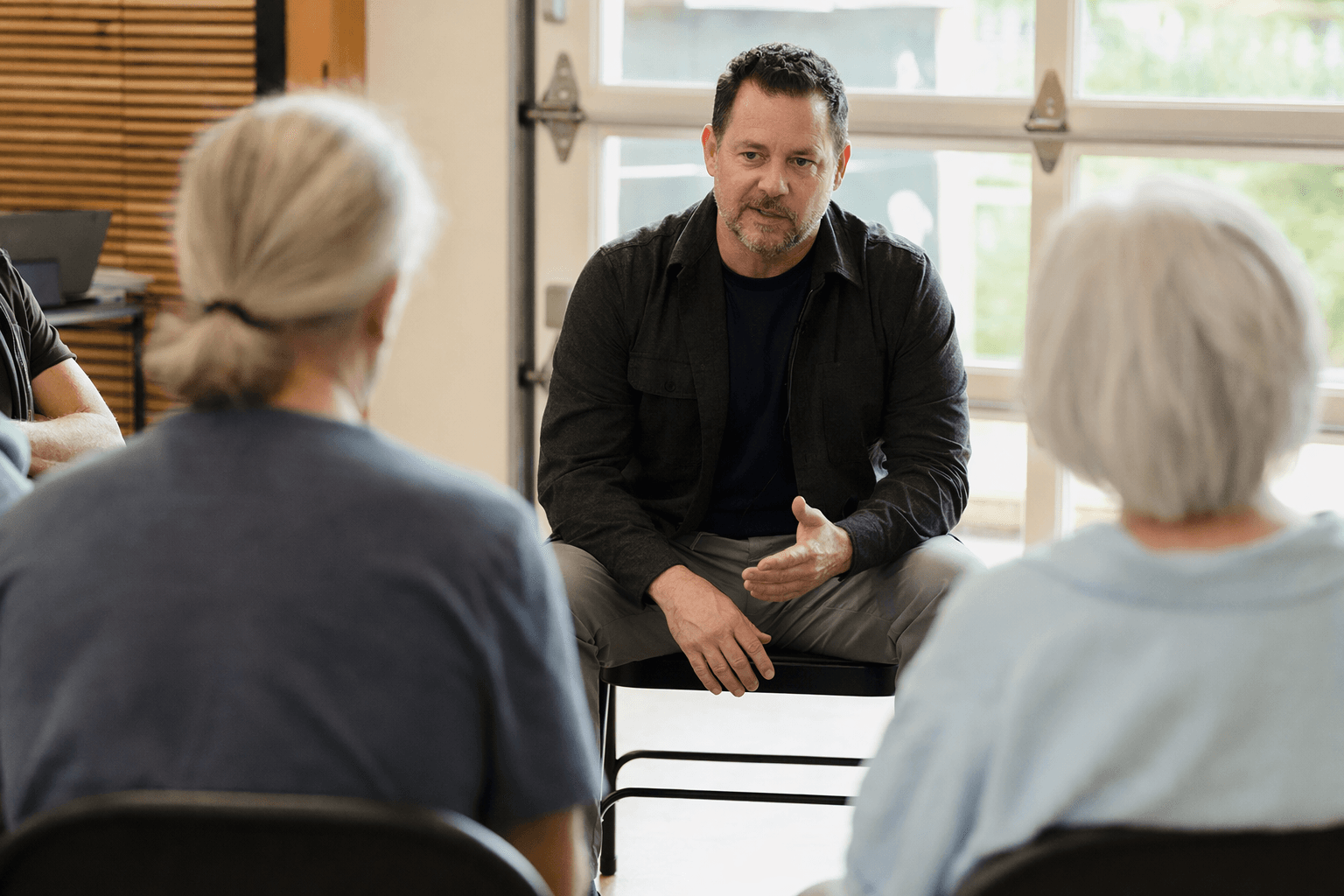
Stronger Together Wellness is based in Black Mountain and was launched in July 2025 after McCoy had spent years volunteering with support groups. The organization now hosts support groups twice a month for stroke survivors and caregivers, and it also uses a peer mentorship model that pairs someone early in recovery with a survivor who has already been through the process.
That combination addresses a common break point in stroke care. Hospital teams can stabilize a patient quickly, and Mission Hospital in Asheville describes its stroke service as a comprehensive stroke center focused on rapid treatment that can reduce long-term impacts. But once survivors go home, families are often left to manage the hard parts alone. They have to track medications, coordinate follow-up care, adjust to new physical limits and cope with the emotional fallout that can accompany a life-altering event.
McCoy’s nonprofit is built for that transition. It is not just about information. It is about showing survivors and caregivers what day-to-day recovery actually looks like when someone else has already lived it.
Who these sessions are for
The support groups are aimed at both stroke survivors and caregivers, which matters because stroke changes the lives of whole households. Survivors may be dealing with weakness, fatigue, speech changes or depression. Caregivers may be trying to balance therapy schedules, transportation, medication routines and their own fear about another stroke.
The American Heart Association says stroke recovery support should address not only rehabilitation, but also the financial and social fallout that comes with stroke. It also notes that emotional reactions such as shock, helplessness and worry are common among survivors and loved ones. That makes a peer-based group especially valuable: it gives people a place where those reactions do not have to be explained from scratch.
Why peer mentorship can matter as much as therapy
McCoy’s mentorship model is one of the most practical parts of Stronger Together Wellness. Pairing someone early in recovery with a survivor who is further along offers something formal care often cannot: lived proof that progress is possible, setbacks are normal and recovery is not a straight line.
That matters because stroke can be emotionally isolating. American Stroke Association reporting says about one-third of stroke survivors experience depression, and recent American Heart Association coverage found that survivors who felt unable to share their feelings with close friends or family reported more loneliness and worse physical and mental recovery one year later. A peer who understands the frustration of slow progress or the fear of another setback can help reduce that isolation.
For Buncombe County readers, the practical value is clear. This is a community-based way to help people stay engaged with recovery when motivation is low and confidence is fragile.
The larger public-health picture behind one local nonprofit
McCoy’s work sits inside a much bigger stroke burden. The Centers for Disease Control and Prevention says 7.8 million adults in the United States have ever had a stroke. It also reports that the U.S. stroke death rate declined slightly, from 39.5 per 100,000 in 2022 to 39.0 per 100,000 in 2023. In 2022, 1 in 6 cardiovascular deaths was due to stroke.
Those numbers show why recovery support cannot stop at the hospital door. Better emergency treatment saves lives, but survivors still need help living well afterward. Rehabilitation is a key step in stroke recovery, and the American Heart Association says a committed team and a clear plan can help most survivors prevent another stroke and thrive. Caregivers, it adds, also need support and should make their own health a priority.
That is where McCoy’s nonprofit fits into the broader care ecosystem. It gives local families a bridge between medical treatment and daily life.
Why Buncombe County should care now
Buncombe County has been tracking health needs through its 2024 Community Health Assessment with local partners including Mission/HCA and AdventHealth. North Carolina’s public-health system says those county assessment cycles occur every three to four years, which is one way local leaders keep major health priorities on the radar.
Stronger Together Wellness adds a grassroots layer to that same effort. It does not replace clinical care, but it helps make clinical care usable once people are home. In a county where health planning, hospital capacity and community support all intersect, McCoy’s nonprofit offers a concrete answer to a problem many families recognize: recovery does not end when the discharge papers do.
For survivors and caregivers in Black Mountain, Asheville and across Buncombe County, that means there is now a place built by someone who knows exactly how long the road back can be, and how much easier it is to walk it with help.
This article was produced by Prism’s automated news system from verified source data, official records, and press releases, then run through automated quality and moderation checks before publishing. The system is built and supervised by the people who set the standards it runs under. Read our full AI policy.
Did this article answer your question?