Bridge Meals turns Asheville restaurants into a community food safety net
Bridge Meals lets donors buy no-cost meals at Asheville restaurants, starting with Rosetta’s, Gypsy Queen Cuisine and Finest. It turns familiar dining rooms into a local hunger-response network.
How Bridge Meals works
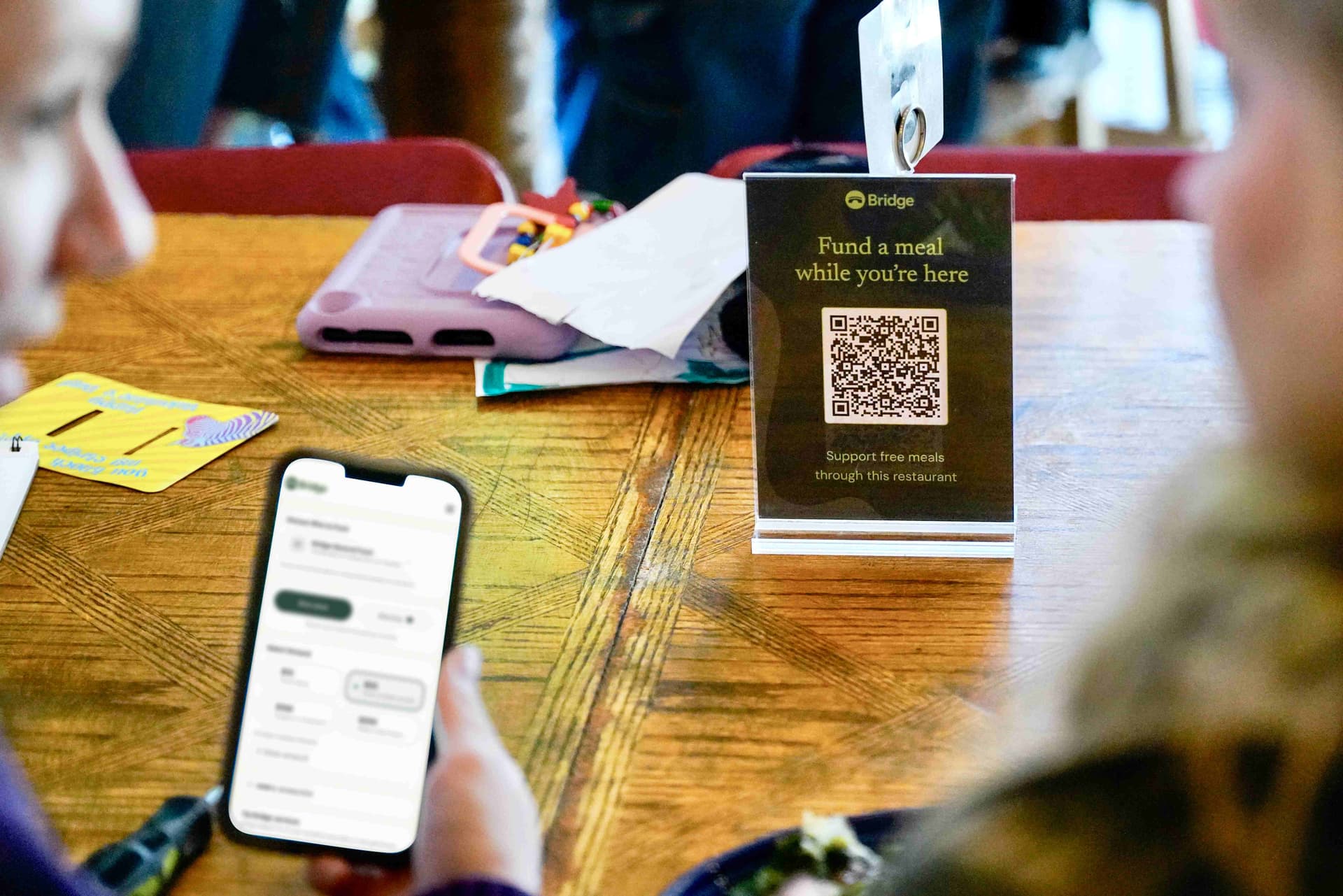
A donated meal at Rosetta’s, Gypsy Queen Cuisine or Finest can now move from a QR code to a hot plate with no questions asked. Bridge Meals, launched in early January by Will Oseroff and Nick Aralin, lets people fund meals online or by scanning QR codes at participating restaurants, then lets neighbors who need food order those meals in person at the restaurant itself.
That simple handoff is the point. Instead of creating a separate distribution site, Bridge Meals uses restaurants as the delivery point, which means the food is cooked in a real kitchen, served by staff who already know the rhythm of a dining room, and placed in front of a guest without paperwork or a public test of need. The project’s own design emphasizes reliability for donors, restaurants and community partners, making it easier to turn small acts of giving into something that feels steady enough to count on.
Why restaurants are part of the answer
Bridge Meals is built on the idea that Asheville’s restaurants are more than businesses. They already have kitchen capacity, suppliers, staff and neighborhood ties, which makes them unusually well suited to help feed people when hunger spikes and public systems are stretched. Oseroff and Aralin appear to have built the program after seeing how many local restaurants were already stepping up after Tropical Storm Helene, then deciding to organize that instinct into a structure that could last beyond a single crisis.
That matters in Buncombe County because the region is still living with the aftereffects of Helene. Buncombe County’s public health report says the storm caused major flooding, landslides and widespread infrastructure disruption, and the county’s recovery plan now includes 114 projects aimed at rebuilding housing, repairing infrastructure, restoring natural resources, strengthening disaster preparedness and improving resilience. Bridge Meals fits into that landscape as a practical, neighborhood-level tool that can sit alongside those larger recovery efforts.
Why Rosetta’s is the clearest example
Rosetta’s Kitchen makes the logic of Bridge Meals easy to see. The restaurant says it has been serving vegetarian and vegan food in Asheville since 2002, and its long-running “Everybody Eats” policy has made inclusivity part of its identity rather than a temporary response to hardship. On its own site, Rosetta’s says, “EVERYONE EATS!” which matches the spirit of the new program almost exactly.
After Helene, Rosetta’s was already operating like a community pantry with a kitchen attached. Coverage after the storm described the restaurant serving one hot meal a day on a pay-what-you-can basis, with much of the work carried by Rosetta Starr’s four grown kids and their friends volunteering. Bridge Meals builds on that same ethic, but gives it a repeatable funding path so support does not depend entirely on emergency goodwill or a few exhausted volunteers.
For Asheville readers, that is the most important local detail: the program is not asking restaurants to become something they are not. It is taking an existing community habit, feeding people with dignity, and giving it a clearer route for donors who want to help.
Why this matters in a post-Helene food economy
The need is real. On October 18, 2024, the North Carolina Department of Health and Human Services opened Disaster Supplemental Nutrition Assistance Program applications for residents in 25 western counties, including Buncombe County, along with eligible Eastern Band of Cherokee Indians households in ZIP code 28719. That step came because food insecurity had become serious enough to require a formal disaster response.
At the same time, Feeding America said food banks in unaffected areas sent vehicles, food and staff into Helene-hit communities. That kind of help is essential, but it also shows how strained the broader system became. Bridge Meals does something different: it offers a low-friction, restaurant-based option that can meet people where they already are, especially in a city where hospitality workers, displaced residents and struggling households have all felt the pressure of the storm’s aftermath.
The program also fits Asheville’s civic reality. Hospitality was one of the hardest-hit industries after Helene, but it was also among the first to organize relief, from restaurant association coordination to direct meal giving. Bridge Meals gives that impulse a name, a structure and a way for ordinary diners to support it in real time.
How to use it or support it now
Bridge Meals is built for two kinds of people: those who need a meal and those who want to help fund one. The process is intentionally plain.
- To receive a meal, go to a participating restaurant and order a donor-funded meal in person.
- To support the program, donate online or scan a QR code at a participating location.
- Start with the first restaurant partners named in the program: Rosetta’s, Gypsy Queen Cuisine and Finest.
The bigger takeaway for Buncombe County is that Bridge Meals tries to turn familiar places into part of the safety net without stripping away what makes them local. In a county still repairing homes, roads and livelihoods after Helene, that kind of practical generosity is not a side story. It is part of how recovery now works in Asheville.
This article was produced by Prism’s automated news system from verified source data, official records, and press releases, then run through automated quality and moderation checks before publishing. The system is built and supervised by the people who set the standards it runs under. Read our full AI policy.
Did this article answer your question?