Buncombe County, Asheville Take Different Paths in 2026-27 Budget Planning
Buncombe County's proposed budget jumped 15% in a single year, topping $504 million, while Asheville charts a different course for 2026-27 spending.
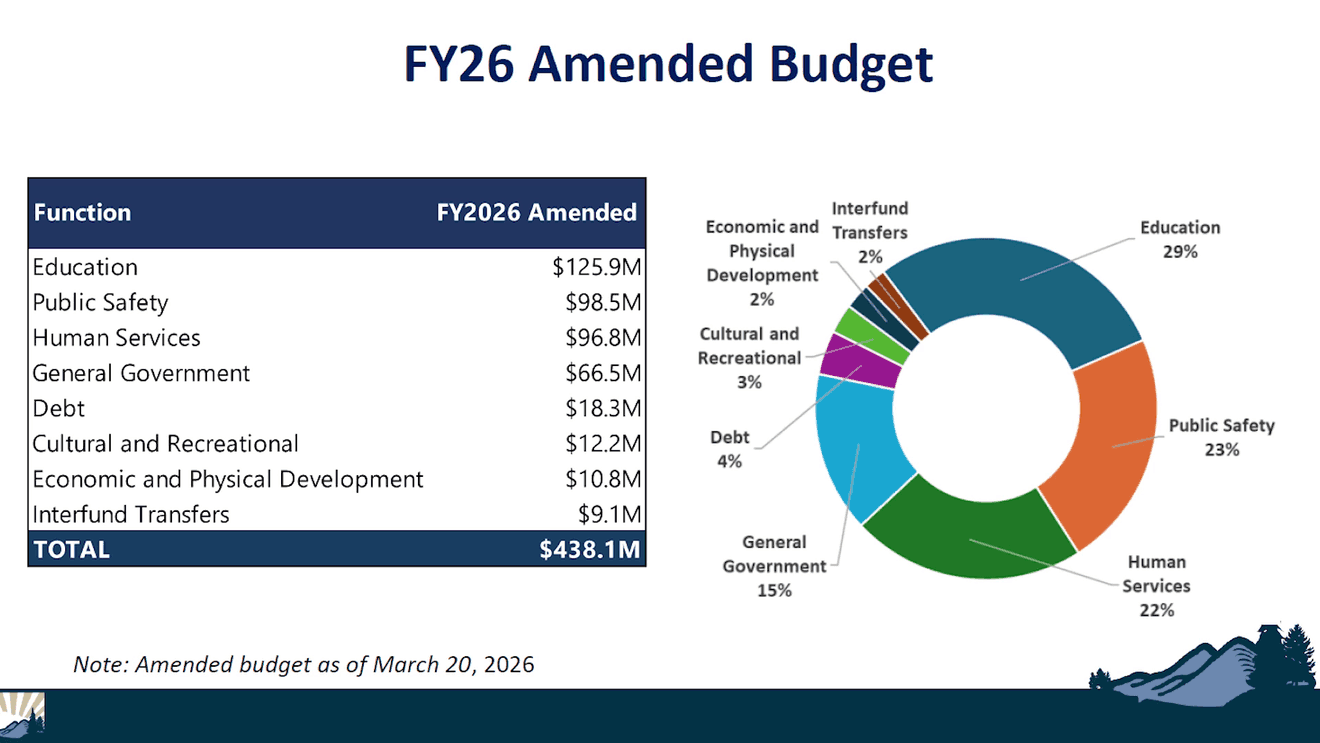
Buncombe County's proposed general-fund budget surged more than 15 percent over last year, hitting $504 million in a "first pass" spending plan that county staff presented at a March 24 Board of Commissioners work session. The figure represents roughly $66 million in new spending above the prior year's $438 million budget, fueled by Helene recovery projects, public-safety staffing investments, and infrastructure repairs.
Asheville's city government is pursuing a separate set of priorities and revenue constraints, creating a notable divergence in how the two governments plan to allocate taxpayer money for fiscal year 2026-27.
The split carries real consequences. County dollars fund public health, courts, social services, and countywide road maintenance; city dollars, supported in part by Asheville's tourism-related revenues, cover municipal services including parks, transit, and housing programs. Where the two governments pull apart on spending, residents who pay taxes to both may find gaps in the services that depend on coordinated funding.
Helene recovery is the dominant new variable reshaping the county's financial picture. The storm pushed county planners to absorb recovery investments alongside mandatory costs like debt service and public-safety operations, contributing to what is an unusually large year-over-year increase for a county of Buncombe's size.

Both governments are still in public-hearing and work-session phases. The Buncombe County Board of Commissioners and Asheville City Council will each hold additional review sessions before formal adoption, and specific line items remain subject to revision. Draft budget documents are accessible through each government's public-records process, and both bodies accept written and in-person comment before final votes.
The final decisions will determine not just tax rates and service levels for 2026-27 but also how much financial capacity each government brings to shared regional challenges: affordable housing, emergency response infrastructure, and the longer recovery arc from Helene.
This article was produced by Prism’s automated news system from verified source data, official records, and press releases, then run through automated quality and moderation checks before publishing. The system is built and supervised by the people who set the standards it runs under. Read our full AI policy.
Did this article answer your question?