Buncombe County holds public photo to mark trafficking prevention month
County and partner agencies gathered Jan. 14 outside the Family Justice Center to raise awareness and spotlight services for trafficking survivors. Local coordination matters for survivor support and long-term community costs.
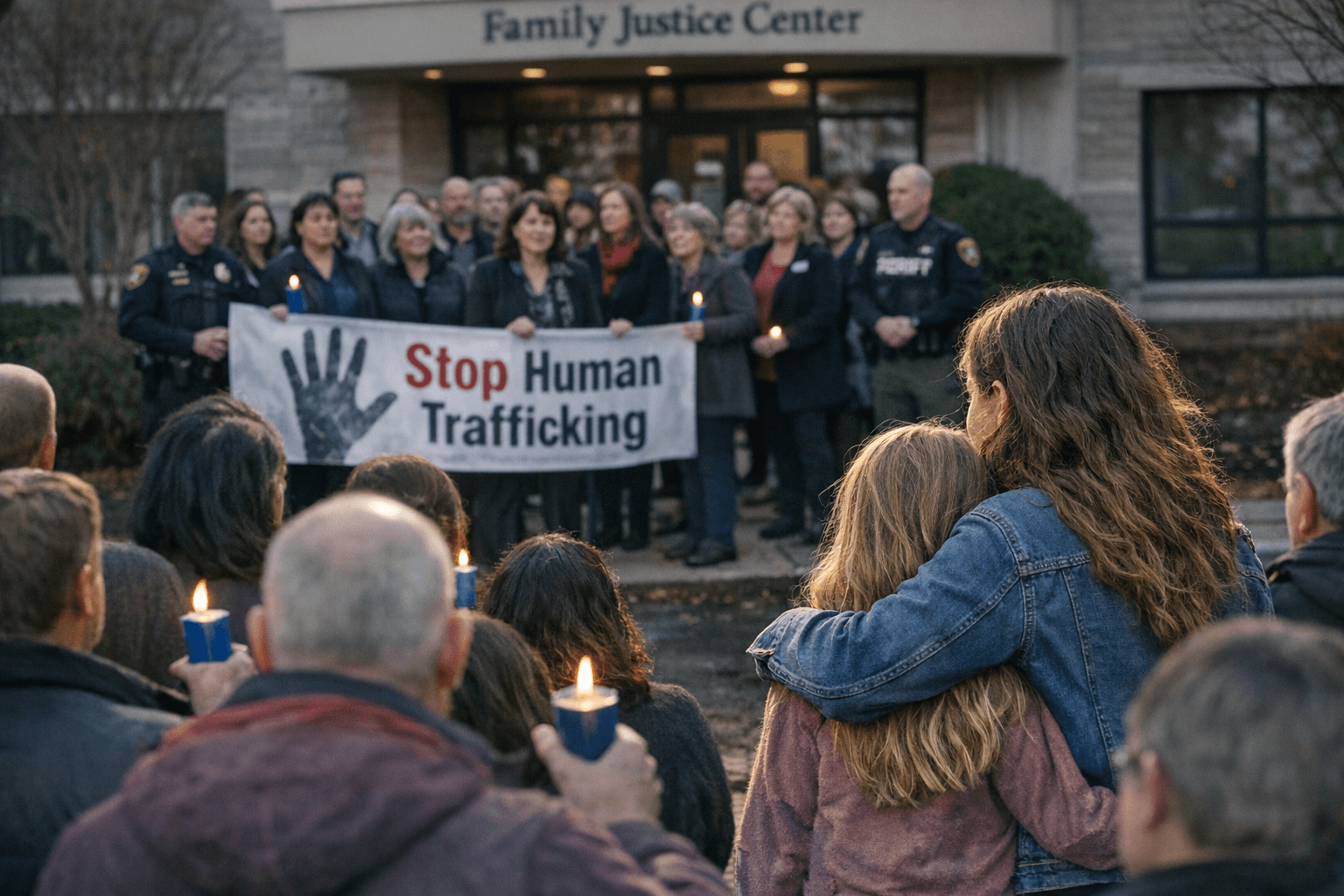
Community advocates, county staff and service partners gathered outside the Family Justice Center at 35 Woodfin St. in Asheville on Jan. 14 for an annual photo marking Human Trafficking Prevention Month. The event, organized through Buncombe County Justice Services and Our Voice, drew participants who wore blue to signal awareness and solidarity with survivors.
The visible turnout underscored more than symbolism. Our Voice provides advocacy and therapy for labor and sex trafficking survivors aged 13 and older, and the organization coordinates with the Mountain Child Advocacy Center for services to minor survivors. That cross-agency approach places local service delivery in front of residents, making clear where survivors can seek help and where community members can direct concerns.
The county’s notice asked attendees to arrive promptly for the 2 p.m. gathering and included logistical and contact guidance for residents seeking more information. Holding the event outside the Family Justice Center on Woodfin Street centered the message in downtown Asheville, where partner agencies, law enforcement and social service providers already converge on victim support and case coordination.
Beyond awareness, the event signals local policy priorities. When county governments visibly back coordinated responses to trafficking, it strengthens the case for sustaining or expanding funding streams for counseling, legal advocacy and child-focused services. Economically, early and integrated support for survivors can reduce longer-term costs tied to emergency services, unaddressed health needs and disruptions to education or employment. For Buncombe County, that means investments in prevention and treatment can yield fiscal and social returns over time by improving survivors’ chances of labor-market reentry and reducing recurring demand on crisis systems.
For residents, the photo and allied outreach are practical touchpoints. They remind the public where to refer suspected trafficking cases, how to support survivors and which local entities specialize in age-appropriate services. Placing the event at the Family Justice Center also reinforces the center’s role as a central hub for legal, medical and advocacy referrals.
This visible show of community and county partnership helps normalize reporting and support for survivors while making coordination easier for frontline responders. In the weeks ahead, Buncombe County officials and partner organizations are likely to continue outreach during Human Trafficking Prevention Month, reinforcing pathways to care and the county’s broader strategy to reduce trafficking and its long-term social costs. For more details or to connect with services, residents can contact the Family Justice Center at 35 Woodfin St. or visit buncombenc.gov.
This article was produced by Prism’s automated news system from verified source data, official records, and press releases, then run through automated quality and moderation checks before publishing. The system is built and supervised by the people who set the standards it runs under. Read our full AI policy.
Did this article answer your question?