Buncombe County Overdose Deaths Drop, but Fentanyl Threat Persists
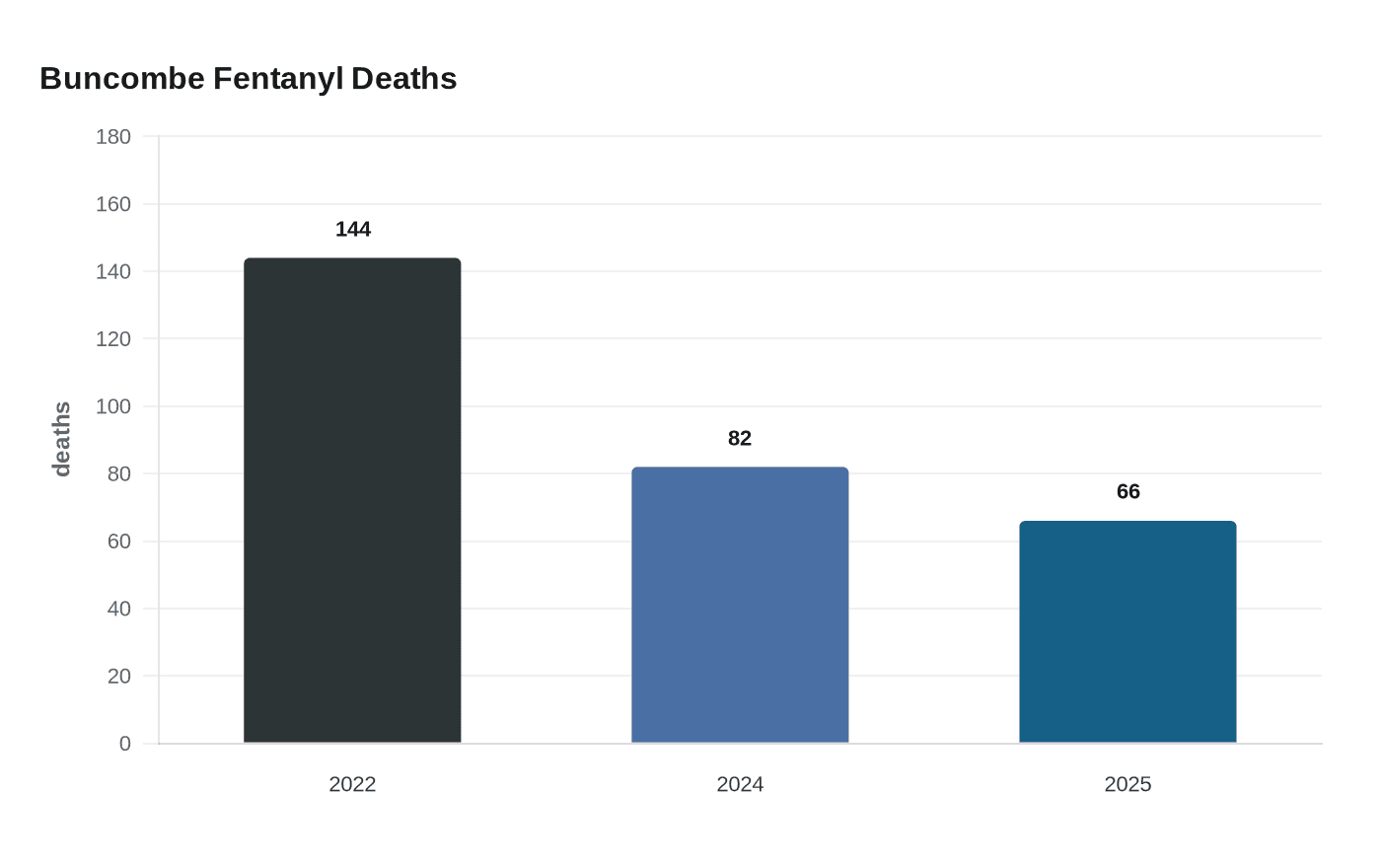
Fentanyl deaths fell from 144 in 2022 to 66 in 2025, but Capt. Chris Stockton warns supply routes through Charleston and Wilmington still funnel the drug into Buncombe.
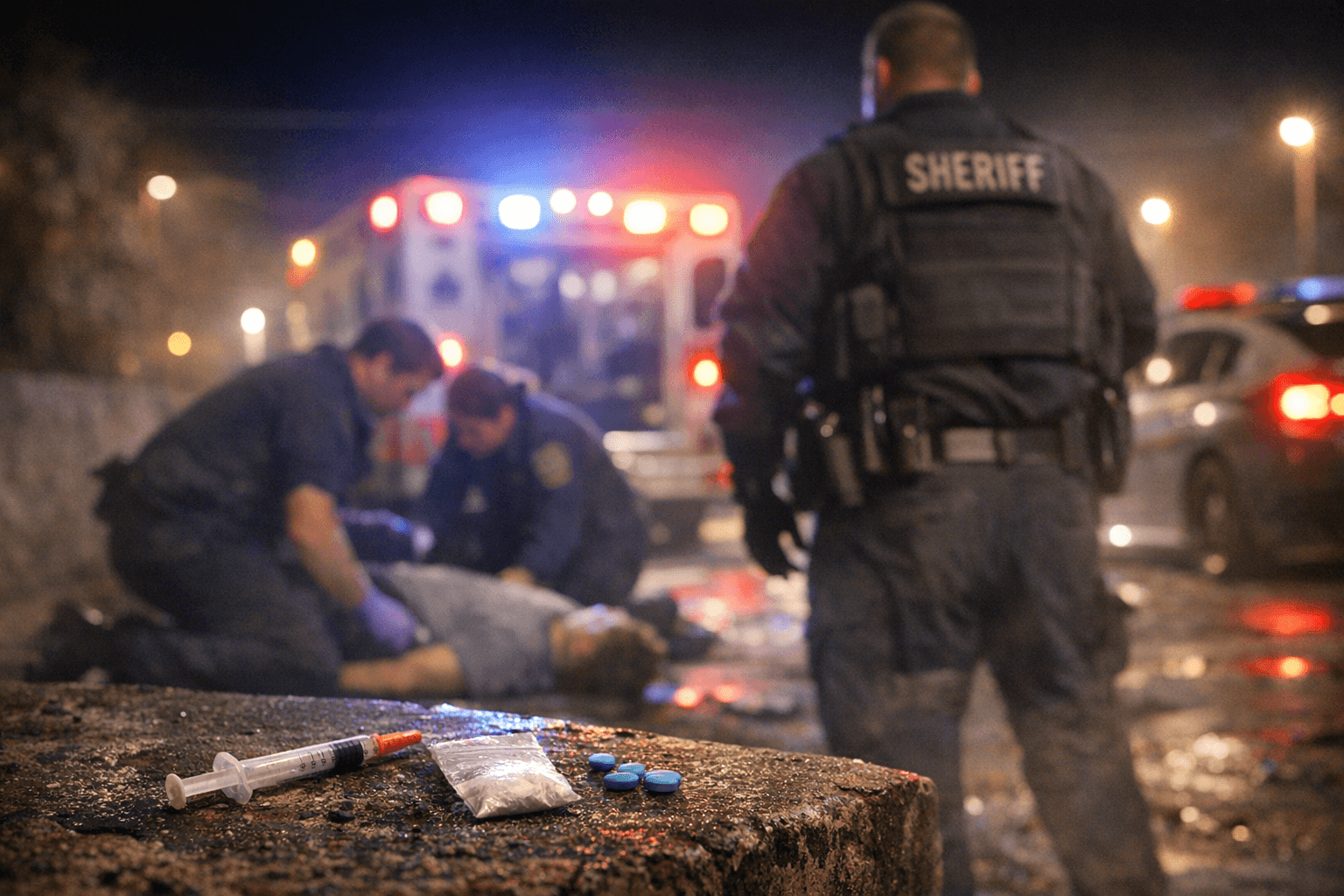
Fentanyl killed 66 Buncombe County residents in 2025, less than half the toll at the drug's 2022 peak, but on March 31 Buncombe County Sheriff's Office Capt. Chris Stockton made the county's condition plain: the supply is still moving.
"It's funneling in across Buncombe County. There's not just one singular common spot. It can be anywhere," Stockton said.
Data from the North Carolina Office of the Chief Medical Examiner shows Buncombe County recorded 66 fentanyl-positive deaths in 2025, down from 82 in 2024 and significantly lower than the peak of 144 deaths in 2022. Emergency departments recorded 336 overdose-related visits in 2024, compared to 521 in 2023, according to state health data. Fentanyl-positive deaths declined by more than 40 percent between 2023 and 2024 alone, according to the North Carolina Office of the Chief Medical Examiner. "All signs do point toward a decrease," said Mary Beth Cox, a substance use epidemiologist for the North Carolina Division of Public Health.
Stockton credited the decline in part to increased availability of naloxone, improved training for recognizing overdoses, and expanded response programs in Buncombe County. The drug's distribution network, however, kept pace. "Most prevalent ones we're seeing right now are starting at a port in either Charleston or Wilmington," Stockton said. "They'll make their way from there to Charlotte, Knoxville, and Atlanta, and from there into our community." Local buyers bridge that network to street demand. "You have local folks within the community that know of demand and they just source out to find folks who are eventually linked into much larger organizations," Stockton said.
The toxicology behind those deaths complicates the progress narrative. The Chief Medical Examiner's data shows 19 percent of fentanyl-positive deaths involved fentanyl alone, meaning the remaining 81 percent also detected cocaine, methamphetamine, prescription drugs, or alcohol. Male residents between the ages of 25 and 54, both Black and white, died at rates exceeding the statewide figure of 31.4 per 100,000. "At the same time, those fatalities are tragically still happening very often," Stockton said.
Enforcement actions in recent months show the scale of what investigators continue to encounter. On March 30, Heath Thomas C. Rice, 46, of Asheville, was sentenced to a minimum of 90 months and a maximum of 120 months in prison and ordered to pay a $750,000 fine after investigators seized more than 50 grams of fentanyl and multiple firearms from a Rector Street arrest in April 2025. Earlier this year, a search of a Mallard Run Drive home in Arden turned up 1.7 pounds of fentanyl, equating to an estimated 385,553 lethal doses, resulting in trafficking charges against Warren Dane Cox.
Naloxone, the overdose-reversal medication sold under the brand name Narcan, remains free and accessible across Buncombe County. The Buncombe County Health and Human Services Harm Reduction Program distributes it from the ground floor of the county building at 40 Coxe Avenue in downtown Asheville. The Steady Collective, which runs free, confidential services at three Asheville locations, provides naloxone and syringe exchange; reach the organization at steady@thesteadycollective.org. The Western North Carolina AIDS Project at 554 Fairview Road accepts walk-ins Monday through Friday from 9 a.m. to 5 p.m. and can be reached at (828) 279-8333. Sunrise Community's Overdose Prevention Program is available at (828) 920-8261, and Holler Harm Reduction offers naloxone by delivery or in-person pickup.
Investigations into fentanyl cases can begin in several ways: overdose calls, tips, or information from other agencies. "All of the above," Stockton said.
Know something we missed? Have a correction or additional information?
Submit a Tip