Buncombe County unveils recovery resources and funding for flood-hit small businesses
County and partners are coordinating debris removal, grant programs and volunteer support, Mountain Strong raised >$1.1M and United Way reports nearly $8M for an 8–10 year recovery.
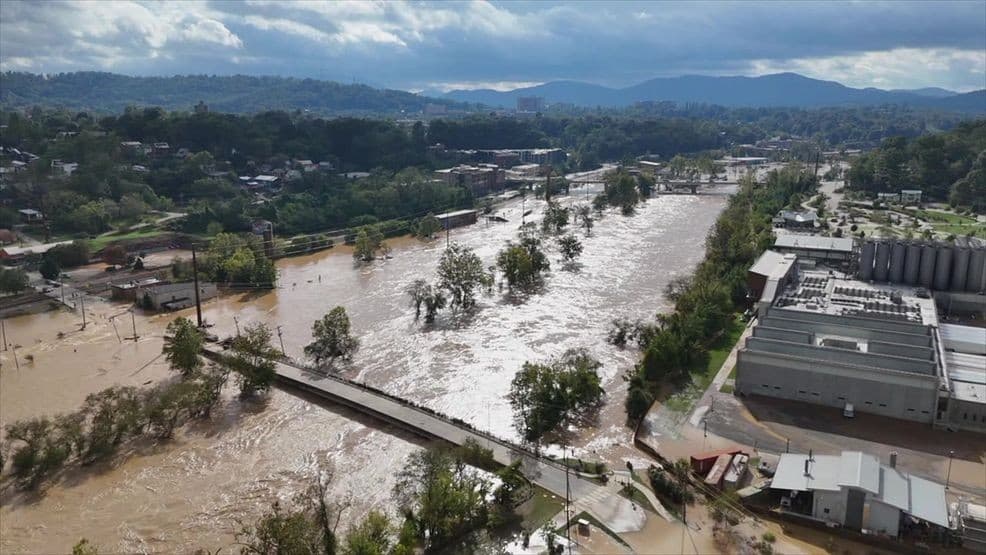
Buncombe County has layered local, state and federal resources to help flood-hit small businesses reopen and rebuild. The county’s recovery framework, pooled philanthropic dollars, volunteer networks and grant opportunities aim to speed commercial recovery while tracking long-term economic goals such as increasing the county’s small-business base from a 2023 baseline of 9,429 toward a 2030 target of 9,900.
1. Recovery Support Functions (RSFs) and task forces
Buncombe County “has established a recovery framework, in alignment with state and federal frameworks, that includes seven Recovery Support Functions (RSFs) centered on the most critical issues for our County to coordinate recovery operations,” according to county materials. Each RSF “is aligned with long-term goals and will coordinate resources, track progress, and meet specific needs within the community,” and the county is forming task forces of subject-matter experts to identify intermediate needs and coordinate partners on implementation. Note: published materials list six RSF headings (Debris Management; Economic Revitalization; Health and Social Services/Education; Housing; Infrastructure; Natural and Cultural Resources), and the county’s official RSF count should be verified to reconcile that numeric discrepancy.
2. Debris management programs and options for businesses
Debris Management is defined broadly to include “solutions for debris removal on public and private property and waterways, managing specialized debris types, evaluating hazardous materials considerations, coordinating disposal, and exploring sustainable re‑use of debris.” Local notices state private property and commercial business owners in Buncombe County, the City of Asheville, and the Town of Black Mountain have “two free options for debris removal” after Helene; the publicized options themselves were not specified in available excerpts, so owners should confirm eligibility, scheduling and scope with Buncombe County Emergency Management or their municipal public works office. Weavervillenc also says the county will “work with unincorporated communities to understand ongoing, unmet recovery needs and develop projects for commercial improvements” and will design projects that can be tied to competitive grant applications such as CDBG‑DR and the State Small Business Infrastructure Grant.
3. Mountain Strong Fund: immediate grant relief and distribution
“The Mountain Strong Fund for Business Recovery raised over $1.1 million to support grants to businesses impacted by Helene,” the Asheville Area Chamber reports, and those grants “were distributed in winter 2024‑2025 to more than 55 small businesses and 16 regional chambers of commerce.” Business owners should note that local philanthropic fundraising provided near-term working capital and that the Chamber, alongside partner organizations, continues to invite support through its AVL 5×5 planning process; the Chamber’s communications include the CTA “DONATE NOW” to sustain ongoing economic recovery efforts.
4. State and federal grant avenues: CDBG‑DR, State Small Business Infrastructure Grant, HMGP
Buncombe County materials identify major funding routes for recovery projects, including the Community Development Block Grant‑Disaster Recovery (CDBG‑DR) program and the State’s Small Business Infrastructure Grant, both named as targets for competitive applications to repair or upgrade commercial infrastructure. The Hazard Mitigation Grant Program (HMGP) is also highlighted for property owners and offers funding “for various mitigation strategies, including voluntary elevation, property mitigation reconstruction, and acquisition.” Exact application windows, eligibility rules, award sizes and administering contacts vary by program, businesses should contact Buncombe County recovery staff and the North Carolina state HMGP/FEMA liaison to confirm deadlines and required documentation.
5. Economic Development Coalition (EDC) and AVL 5×5 supports
The Economic Development Coalition for Asheville‑Buncombe County is presented as a long-standing partner, “a 30‑year public‑private partnership” focused on job creation and business retention. The EDC’s five core services, business retention and expansion, entrepreneurship, marketing and recruitment, workforce development and Riverbird Research, are already being mobilized with economic recovery “a key tenant in all areas of our work moving forward,” per the Chamber. The EDC is funded by Buncombe County, the City of Asheville, the Asheville Area Chamber and the AVL 5×5 Campaign, and can be a clearinghouse for procurement opportunities, workforce supports and technical assistance for small firms.
6. United Way fundraising and volunteer mobilization
United Way of Asheville and Buncombe County reports “Our team has already raised almost $8M for relief and recovery efforts in Buncombe County, but we have much more to do with an estimated 8‑10‑year recovery period ahead of us.” The organization explicitly frames recovery as a long‑term effort, “We’re in this together, and by working as one, we will rebuild, BUNCOMBE STRONG | BUNCOMBE UNITED.”, and is using its Volunteer Center (Hands On Asheville‑Buncombe) to match nonprofits and businesses with volunteers. Nonprofits and business groups can register needs through the Volunteer Center (“GET HELP for Your Nonprofit”); individuals can sign up to volunteer via “GIVE HELP Volunteer Today.”
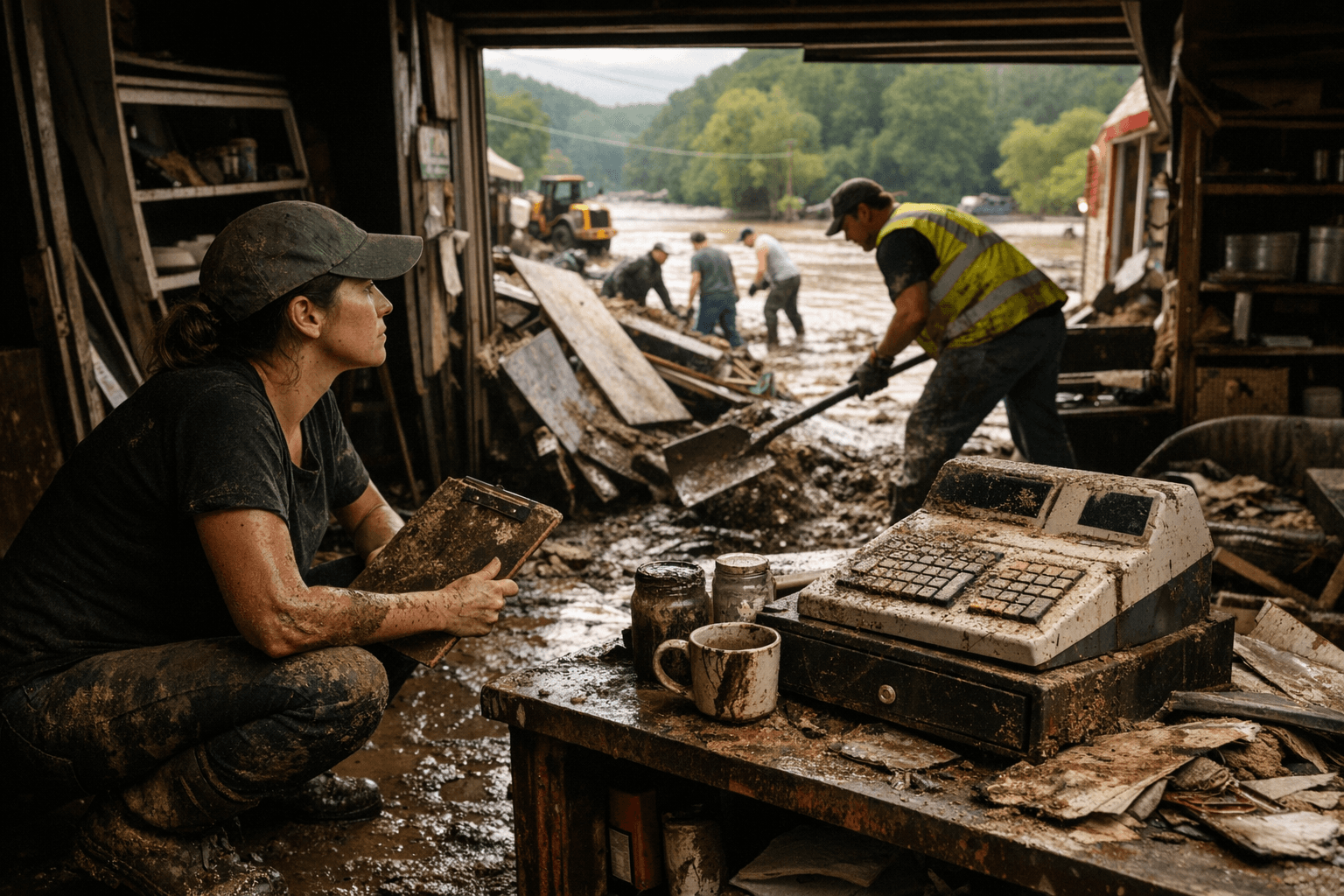
7. Small‑business metrics, targets and procurement goals
Buncombe County defines small businesses as establishments with fewer than 50 employees and documents that the number of small businesses increased 10% between 2019 and 2023. The county sets a specific target: “Increase the number of small businesses in Buncombe County from 9,429 in 2023 to 9,900 (5% increase) by 2030.” To support local firms, the county also intends to strengthen procurement processes, staff believe a 10% small‑business participation target is realistic where law allows, and aims for “85% of annual service contracts [to] have at least 2 performance indicators” by 2030. These targets create both an economic-development objective and a potential path for local firms to seek more county contracting opportunities during recovery.
8. Named faith communities and businesses that provided relief
Local relief efforts involved numerous congregations and businesses that delivered free relief or resources. Faith communities listed include Bethel International Church; Biltmore Church; Brown Temple CME; Crossroads Church; Grace Covenant Presbyterian Church; Land of the Sky UCC; Liberty Baptist Church; Maple Ridge Baptist Church; Mt. Zion Missionary Baptist Church; Nazareth First Baptist Church; New Salem Baptist Church; Newbridge Baptist Church; Nuevo Comienzo Church; Rock Hill Baptist Church; St. James AME; St. John Baptist Church; Tried Stone Missionary Baptist Church; and Trinity Baptist Church. Area businesses named for relief efforts include Bear’s BBQ; French Broad Chocolate; Eluvium Brewing Company; Highland Brewing; Ingles Markets; Pisgah Brewing; and Pratt & Whitney. Business owners and community groups should consider these local partners for in‑kind support, supply donations or volunteer coordination.
9. County communications: sign up for alerts and follow updates
To receive official emergency and recovery notices, the Chamber reproduces the county alert instruction: “Sign up for BC Alerts: Sign up for BC Alerts by texting ‘BCAlert’ (not case sensitive) to 99411. Learn more” and recommends following Buncombe County on Facebook and Instagram for live emergency management updates. Timely subscription to BC Alerts and municipal social feeds is essential for firms scheduling debris pickup, mitigation contractors, permit deadlines and grant application windows.
- Confirm debris‑removal options and eligibility with Buncombe County Emergency Management or your town public works office; if you are in unincorporated Buncombe, ask about community‑level commercial improvement projects the county is designing.
- If you need short‑term operating support, check whether you received or are eligible for Mountain Strong Fund grants (the fund raised over $1.1M and distributed grants in winter 2024‑2025 to more than 55 small businesses and 16 regional chambers). Contact the Asheville Area Chamber or the EDC for follow‑up on past grantees and any remaining philanthropic programs.
- For mitigation and capital repairs, contact county recovery staff about CDBG‑DR, the State Small Business Infrastructure Grant and HMGP; HMGP specifically “offers funding for various mitigation strategies, including voluntary elevation, property mitigation reconstruction, and acquisition.”
- Explore procurement opportunities with Buncombe County as the procurement initiative unfolds, small businesses (<50 employees) are the intended beneficiaries of the county’s procurement target and contract performance goals.
10. What small businesses should do next (immediate checklist)
11. Items flagged for follow‑up and how the newsroom can help
Several source documents contain truncations or missing details that matter to business owners: the county’s authoritative RSF list and count, the specifics of the “two free options for debris removal,” the Mountain Strong Fund’s administrator and grant amounts, and a breakdown of United Way’s “almost $8M” allocation plan across the estimated 8–10‑year recovery. Journalists and municipal liaisons should request the county’s RSF one‑page descriptions, the full text of the original recovery guide, detailed debris‑removal program notices, and program‑level application materials for CDBG‑DR, State grants and HMGP to publish step‑by‑step application instructions for affected businesses.
Conclusion Buncombe County’s recovery combines an institutional RSF framework, immediate philanthropic relief and long‑term federal and state funding pathways. For flood‑hit small businesses, the near‑term priorities are confirming debris‑removal options, checking eligibility for philanthropic and emergency grants (Mountain Strong Fund and United Way channels), and preparing applications for CDBG‑DR, State Small Business Infrastructure Grant and HMGP funding while tracking county procurement openings tied to its 2030 small‑business goals.
This article was produced by Prism’s automated news system from verified source data, official records, and press releases, then run through automated quality and moderation checks before publishing. The system is built and supervised by the people who set the standards it runs under. Read our full AI policy.
Did this article answer your question?


