Cabins and Castles became a key Buncombe County preservation guide
Cabins and Castles still maps Buncombe County’s class, development and preservation battles, from Asheville to Black Mountain and Weaverville. Its 1981 survey remains a guide to what survived.
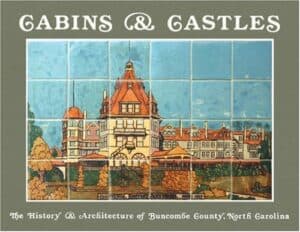
First published in 1981, *Cabins and Castles: The History & Architecture of Buncombe County, North Carolina* was produced by Douglas Swaim, Talmage Powell and John Ager in a joint effort of the Historic Resources Commission and the North Carolina Division of Archives and History. The book was built as a preservation tool for Asheville, Black Mountain, Montreat, Weaverville, Woodfin, Candler, Leicester and Fairview.
Why the book still carries weight
The Historic Resources Commission of Asheville and Buncombe County was created in 1979 through a local ordinance adopted by both the City of Asheville and Buncombe County, so *Cabins and Castles* appeared just as the county’s formal preservation system was taking shape. In 2015, the commission was a 12-member, jointly appointed quasi-judicial body, with six members appointed by Asheville City Council and six by the Buncombe County Board of Commissioners.
The book sits inside the same framework that still governs how historic places are documented, reviewed and protected, and the Preservation Society of Asheville & Buncombe County continues to point people to the HRC as a key local preservation resource.
What Buncombe County’s buildings reveal
Asheville alone contains layers of domestic, commercial, civic and resort-era building, while nearby towns and communities bring in rural, mountain and suburban forms. *Cabins and Castles* helps readers read why one block feels more vernacular, why another looks more formal or urban, and how the county’s boom periods left behind buildings that still define the landscape.
Those differences show class and development patterns. A county shaped by a growing city, mountain settlements and resort influence did not build itself evenly, and the built environment still reflects that uneven history. The result is visible in the kinds of houses, streetscapes and districts that survived, and in the ones that were altered or lost as the region modernized.
For readers moving through Asheville’s older neighborhoods or the historic streets of Black Mountain and Weaverville, the book gives context for the houses that remain, the neighborhood fabrics that still hold together, and the places where preservation pressure has been strongest. It is useful not only to historians, but to homeowners, planners and anyone trying to understand why a block matters before it changes.
How the book is organized
The volume has two major sections: a historical overview and a record of individual properties built in the area. That combination lets readers move from the county’s broad architectural story to specific houses and places, which is exactly what house-history research requires.
The book became hard to find and was reprinted in 2008, which helped keep it in circulation after its original run. The reprint kept it in circulation for people identifying styles, tracing property histories and understanding the built landscape long after the first edition had disappeared from shelves.
Where to start if you are tracing a house or neighborhood
Buncombe County Special Collections offers a useful next step for anyone working from the book. Its database includes photographs, newspaper articles, architectural drawings, maps, letters and manuscript collections, all of which can help place a house in time and context. Used together with *Cabins and Castles*, those materials can show not only when a structure was built, but how it was documented and remembered.
A practical research path looks like this:
- Start with the street, neighborhood or town name from the book.
- Match it with photographs, maps and architectural drawings in Buncombe County Special Collections.
- Use newspaper articles and letters to find names, owners and changes over time.
- Check preservation resources for the City of Asheville, which maintains historic district guidelines and a historic preservation overlay district.
Preservation in Asheville is still an active policy issue. Historic district guidelines and overlay rules shape what can be changed, what must be reviewed and what kind of public oversight applies when older buildings are altered.
Why the source remains essential now
The county’s preservation framework has matured since 1979, but the underlying question has not changed: which buildings get documented, which get protected and which disappear under pressure from redevelopment, neglect or changing tastes. *Cabins and Castles* captures a countywide picture before later losses and before many neighborhood debates hardened into today’s rules.
Asheville, Black Mountain, Montreat, Weaverville, Woodfin, Candler, Leicester and Fairview each carry different architectural histories, and those histories still shape how residents see their blocks and how local government makes preservation decisions.
This article was produced by Prism’s automated news system from verified source data, official records, and press releases, then run through automated quality and moderation checks before publishing. The system is built and supervised by the people who set the standards it runs under. Read our full AI policy.
Did this article answer your question?