Charges Dropped Against Arden Veteran Who Burned Flag Near White House
Federal prosecutors dropped all charges against Jay Carey, 55, of Arden after the Army veteran burned a flag near the White House protesting Trump's flag-burning executive order.
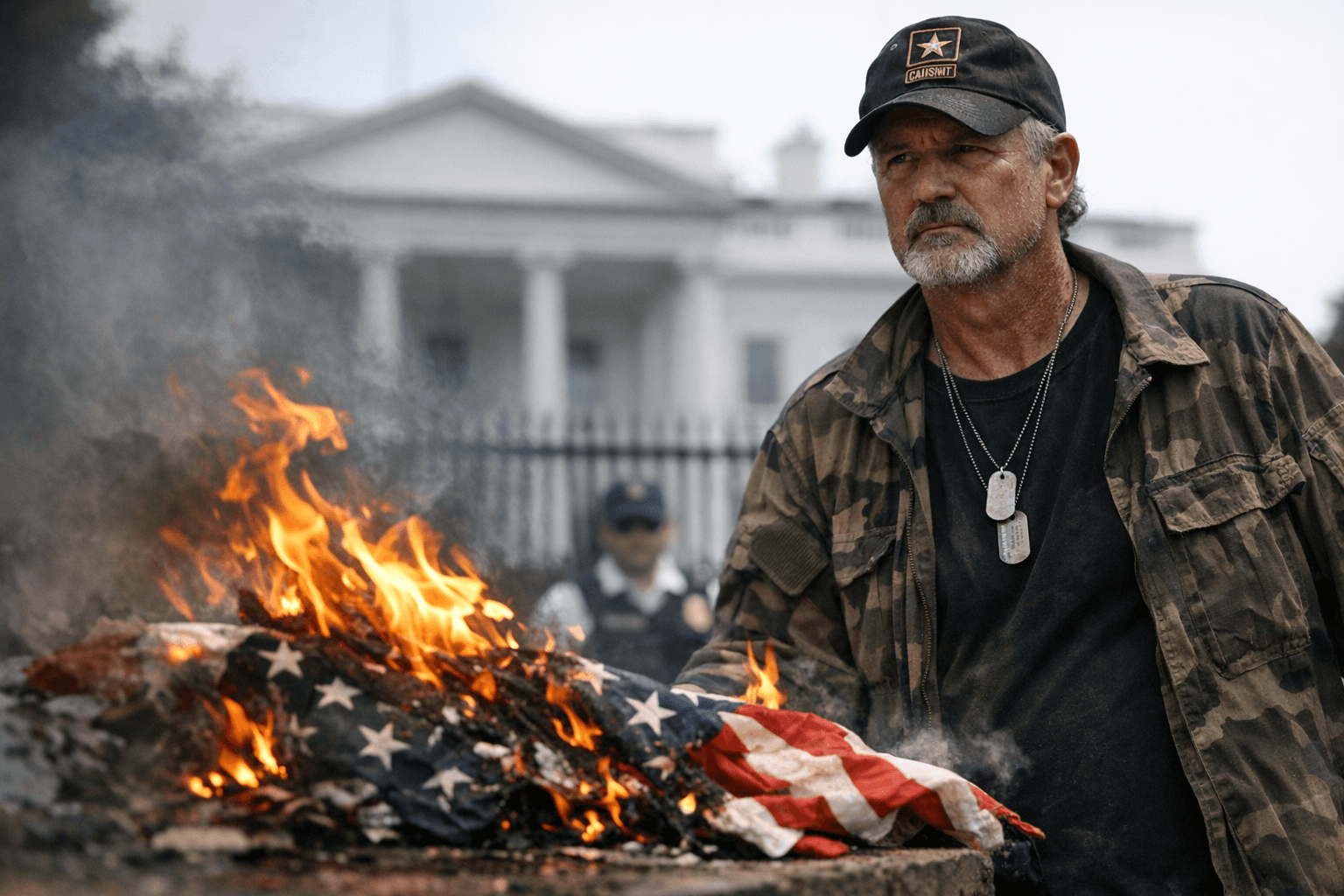
Federal prosecutors on March 13 dropped all charges against Jan "Jay" Carey, a 55-year-old Army veteran from Arden, after a seven-month legal battle that his attorneys characterized as a constitutionally dubious retaliation for protected political speech.
Carey, who lives in the unincorporated Buncombe County community south of Asheville, was arrested August 25 after setting fire to an American flag in Lafayette Park, the National Park Service-managed grounds adjacent to the White House in Washington. The arrest came the same day President Donald Trump signed an executive order directing the Justice Department to investigate and prosecute people for burning the American flag.
Federal prosecutors had charged Carey with two misdemeanor counts: starting a fire in a prohibited location and creating flames that damaged property or park facilities. Neither count directly addressed flag burning itself. Carey entered a not-guilty plea at his arraignment at the E. Barrett Prettyman Federal Courthouse on September 17.
The motion to dismiss was filed with prejudice, meaning prosecutors cannot refile the charges. It arrived on the Friday before discovery was due in the case, and prosecutors offered no explanation in the filing. The Justice Department did not respond to requests for comment.
Carey said prosecutors had been seeking a plea deal earlier in the week but offered no specifics about what they were asking for. He had no intention of changing his plea.
"They tried to use the power of government to bully me and that didn't work. So, they quit," Carey told the Asheville Citizen-Times.
The dismissal followed a January ruling by Chief Judge James Boasberg, who found that while the misdemeanor charges applied to Carey's conduct, he "is entitled to proceed with a further inquiry into whether he is being prosecuted to punish him for his allegedly illegal actions or for his constitutionally protected speech." That ruling would have compelled prosecutors to answer questions about their motivations before proceeding to trial.
Carey's attorney, Mara Verheyden-Hilliard, a co-founder of the Washington-based Partnership for Civil Justice Fund, said the timing of the dismissal was deliberate. "The timing is surely not accidental, that they are moving to dismiss the charges immediately in advance of their obligation to provide information into their internal decision making to prosecute Mr. Carey, as well as directives related to an executive order that we believe is not constitutionally sound," she told NBC News.
Verheyden-Hilliard called the outcome a broader vindication. "This is a very significant victory for not only the First Amendment rights of Mr. Carey but the rights of all Americans to stand up and speak out on issues that they care about without being targeted for punishment by the Justice Department," she said.
Carey, who served in the Army from 1989 to 2012 with deployments to Iraq and Afghanistan, had framed the flag burning as a direct response to the executive order from the moment of his arrest. "This was a direct protest about an illegal order that President Trump tried to put in place. I did not do this just for myself, but for everyone who believes in the Constitution and the protections for all that it provides," he said in a statement released through his legal counsel after his September arraignment.
In October, his attorneys had argued the prosecution amounted to "vindictive prosecution" and called the case a "stalking horse for President Trump's animus toward those who exercise their First Amendment right to burn the American flag."
The Supreme Court established in a 5-4 decision in 1989 that flag burning constitutes protected political speech under the Constitution. Trump's executive order sought to carve out prosecutorial space by arguing flag burning could be charged when it "is likely to incite imminent lawless action" or constitutes "fighting words."
With the dismissal filed with prejudice, Carey's case is closed.
Know something we missed? Have a correction or additional information?
Submit a Tip

