Content creators help Buncombe County tourism rebound after Helene
Aisha Adams is turning recovery stories into travel traffic, and Buncombe businesses are betting that real-time creator content can convert curiosity into visits, meals and room nights.
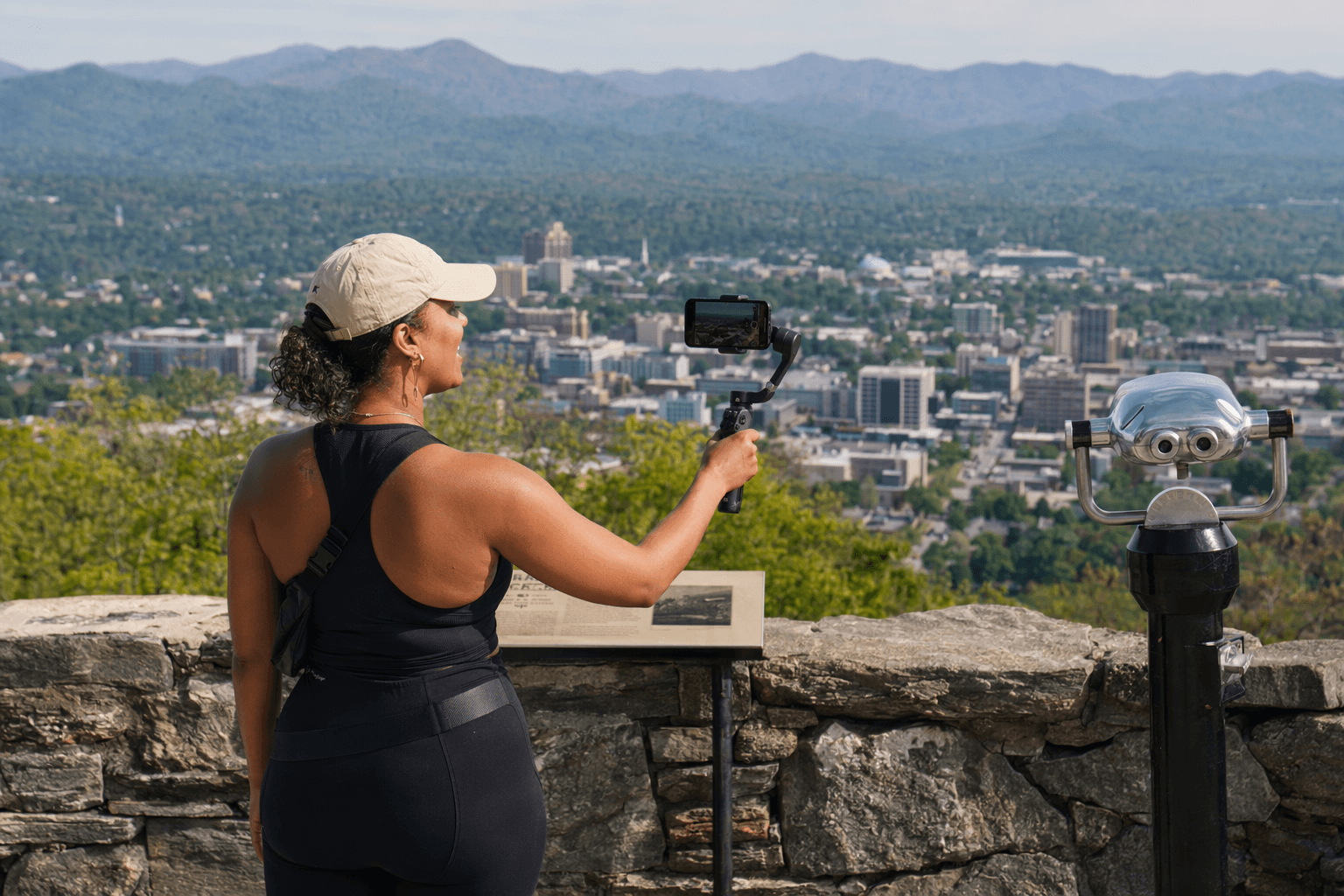
Can a social media video turn into a hotel booking, a restaurant check and a downtown shopping trip in Buncombe County after Helene? That is the economic test now facing Asheville and the broader mountain tourism economy. Local leaders say the answer may be yes, and they are putting content creators like Aisha Adams at the center of the comeback effort.
Why creator content now matters
Helene left a lasting mark on western North Carolina, but it also created a branding problem as much as a physical one. Gov. Josh Stein said the region’s challenge is changing outside perceptions that still lag behind current conditions, and that gap matters for a county where tourism supports one in seven local jobs. Explore Asheville says nearly 30,000 people in Buncombe County earn their living through tourism, visitors spent almost $3 billion here in 2023, and that spending generated about $265 million in taxes.
That is why tourism leaders are treating creator posts as more than feel-good promotion. They are using them to show that the county is open, that recovery is visible, and that many of the places travelers want to see are working again. Explore Asheville says 90% of the Asheville area is open and ready, and it has already invested more than $10 million in marketing to drive that message home.
Aisha Adams and the new recovery story
Aisha Adams, a Mills River resident, is one of the people helping shape that message. Explore Asheville lists her as an influencer focused on community economic development and as a program developer for the Lenoir-Rhyne Equity & Diversity Institute. In practice, that means she is using travel videos and online stories to show visitors not only what has reopened, but also what recovery still looks like on the ground.
Adams does not edit Helene out of the frame. She has said she does not hide the storm’s remnants when she films because recovery is now part of the region’s identity, not something to erase. That approach gives her posts a different kind of credibility, especially for travelers deciding whether Asheville and surrounding communities are ready for a trip.
The reach is substantial. One video Adams posted featuring the Jackson County Farmers Market drew nearly 60,000 views, and she said her Facebook posts now reach millions of views each month. For Buncombe County businesses, that scale matters because it can put local shops, markets and neighborhoods in front of travelers who may never click on a conventional destination ad.
What the numbers say about the rebound
The tourism rebound is still uneven, but the direction is improving. Explore Asheville said February 2025 hotel occupancy in Buncombe County was 62%, which was up 11 points from 2024 and four points from 2019. The organization also projected Asheville hotel room revenue would decline 9% in FY25 before rising 6% in FY26, a sign that lodging is recovering, but not all at once.
Visitor spending is expected to follow the same pattern. Explore Asheville said March 2025 visitor spending was projected to increase 3.5% in 2025 and then 5.2% in 2026. That suggests the county is moving from stabilization into expansion, even if the recovery does not happen in a straight line.
The stakes are broader than hotels. Explore Asheville says nearly 70% of traveler spending in Buncombe County goes directly to local businesses outside lodging, which means restaurants, retail shops, galleries, artist studios and attractions all depend on the same visitor flow. When a creator sends traffic toward a farmers market, a downtown storefront or a side trip in South Asheville, the benefit can spread quickly through the local economy.
Where the comeback is visible
Tourism leaders are eager to show that the county’s visitor map is not limited to a few headline attractions. Explore Asheville says the Blue Ridge Parkway has reopened with hundreds of miles available for scenic travel, and it points to downtown shops, restaurants, galleries and artist studios as open again. South Asheville is open, Asheville Regional Airport is open, and Biltmore Estate is open too.
The organization also says nearby communities matter to the rebound. Black Mountain is included in its open-and-ready messaging, and broader recovery materials highlight Weaverville as part of the reopened experience. That reflects a key shift in how the region is being marketed after Helene: not as a single downtown destination, but as a network of places that can absorb visitors across Buncombe County and beyond.
Vic Isley, president and CEO of Explore Asheville, has framed the moment as a chance to show travelers new experiences, returning favorites and a welcome that runs deeper than ever. That is not just branding language. It is an attempt to rebuild confidence by showing that the visitor economy is active again in real places, not abstract promises.
How tourism leaders are supporting the recovery
Explore Asheville and the Buncombe County Tourism Development Authority are pairing creator storytelling with direct financial support. After Helene, the organization created the Always Asheville Fund and committed $300,000 of earned revenue to emergency grants for small independent travel and hospitality businesses. That fund gives the recovery effort a practical edge, helping businesses stay in the game while tourism marketing rebuilds demand.
The county’s recovery strategy also depends on repetition. One post, one video or one market visit will not rebuild a destination brand by itself. But a steady stream of content from creators like Adams can help shift the narrative from storm damage to reopening, from uncertainty to progress, and from caution to booking.
That is the economic logic behind the partnership. Buncombe County’s tourism economy is too large, too interconnected and too local to rely on broad slogans alone. With nearly $3 billion in annual visitor spending, hundreds of millions in tax support and thousands of jobs tied to travel, the county needs travelers to see what residents already know: the region is not defined only by the storm, and every new visit helps prove it.
This article was produced by Prism’s automated news system from verified source data, official records, and press releases, then run through automated quality and moderation checks before publishing. The system is built and supervised by the people who set the standards it runs under. Read our full AI policy.
Did this article answer your question?


