Federal, local leaders join forces to curb Buncombe violent crime spike
Ferguson said Buncombe’s violence spike is increasingly driven by younger offenders and retaliatory gun cases, with hot spots in Downtown Asheville and Shiloh.
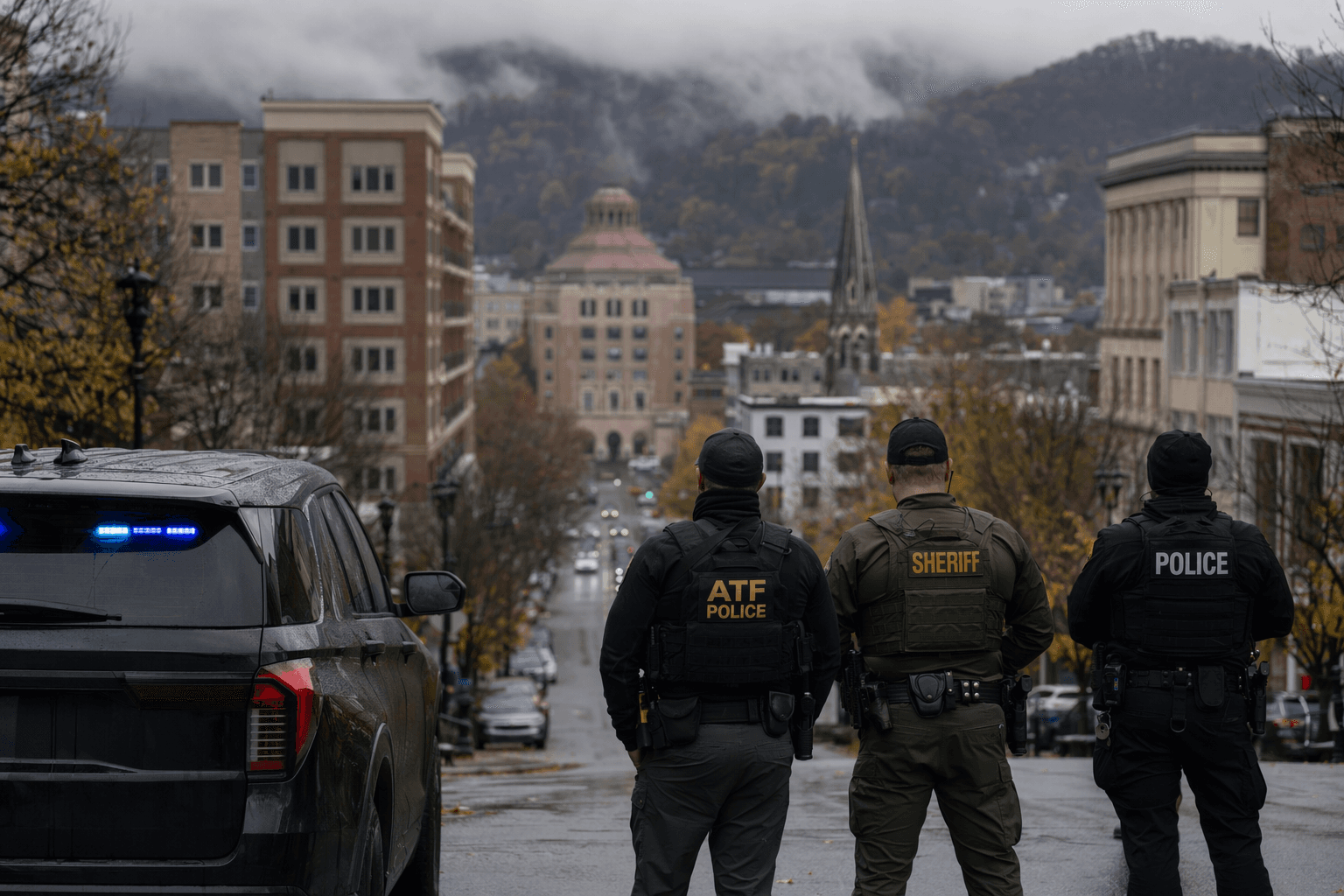
Federal, city and county leaders met in Asheville to confront a violent-crime pattern that officials say is shifting from broad trends to repeated gunfire in the same neighborhoods. U.S. Attorney Russ Ferguson said the most troubling cases involved “a lot of young, youth on youth violence” and shootings that were “premeditated organized, retaliatory,” a pattern he said was creating hot spots in the community.
The meeting brought together the Asheville Police Department, Buncombe County Sheriff’s Office, the U.S. Attorney’s Office and community leaders, with all sides promising closer coordination. Ferguson, who leads the Western District of North Carolina, oversees a federal district that spans 32 counties and more than three million people. He said he had also been meeting with schools and public-housing officials and was exploring Justice Department grants as part of a longer-term response.
City leaders said Asheville’s response already depends on far more than patrol cars and arrests. The city’s Gun Violence Task Force includes APD, the FBI, DEA, ATF, the U.S. Attorney’s Office, the Buncombe County District Attorney’s Office, the State Bureau of Investigation and state and federal probation and parole agencies. APD says the task force focuses on identifying and prosecuting repeat violent gun offenders, while the city said police presence is being increased in areas where gun violence has occurred.
The concern comes after a violent weekend on March 10, 2026, when three separate shootings left two people dead and nine others injured. It also follows a broader picture that is more complicated than a single headline suggests: Asheville’s violent crime was down 37% year over year as of September 2025, according to Chief Mike Lamb, even as shootings surged in specific stretches of the city. Officials have pointed to repeated trouble on North Lexington Avenue, including nightclubs and nearby parking lots, and to the Shiloh neighborhood, where a July 2025 shooting outside the Shiloh Community Center unfolded in broad daylight during four straight days of gunfire.
Mayor Esther Manheimer and other city leaders have said the answer must include prevention, youth programming, economic opportunity and mental health support, alongside enforcement. They have also said community cooperation can help prevent retaliation and solve crimes more quickly. For Asheville, the test now is whether the new alignment between federal prosecutors, local police and neighborhood partners can produce fewer shootings in the places residents already know too well.
This article was produced by Prism’s automated news system from verified source data, official records, and press releases, then run through automated quality and moderation checks before publishing. The system is built and supervised by the people who set the standards it runs under. Read our full AI policy.
Did this article answer your question?