Just Economics sets Buncombe living wage at $24.10 an hour
Just Economics raised Buncombe County's living wage to $24.10, tying pay levels to housing costs and changing certification rules for local employers.
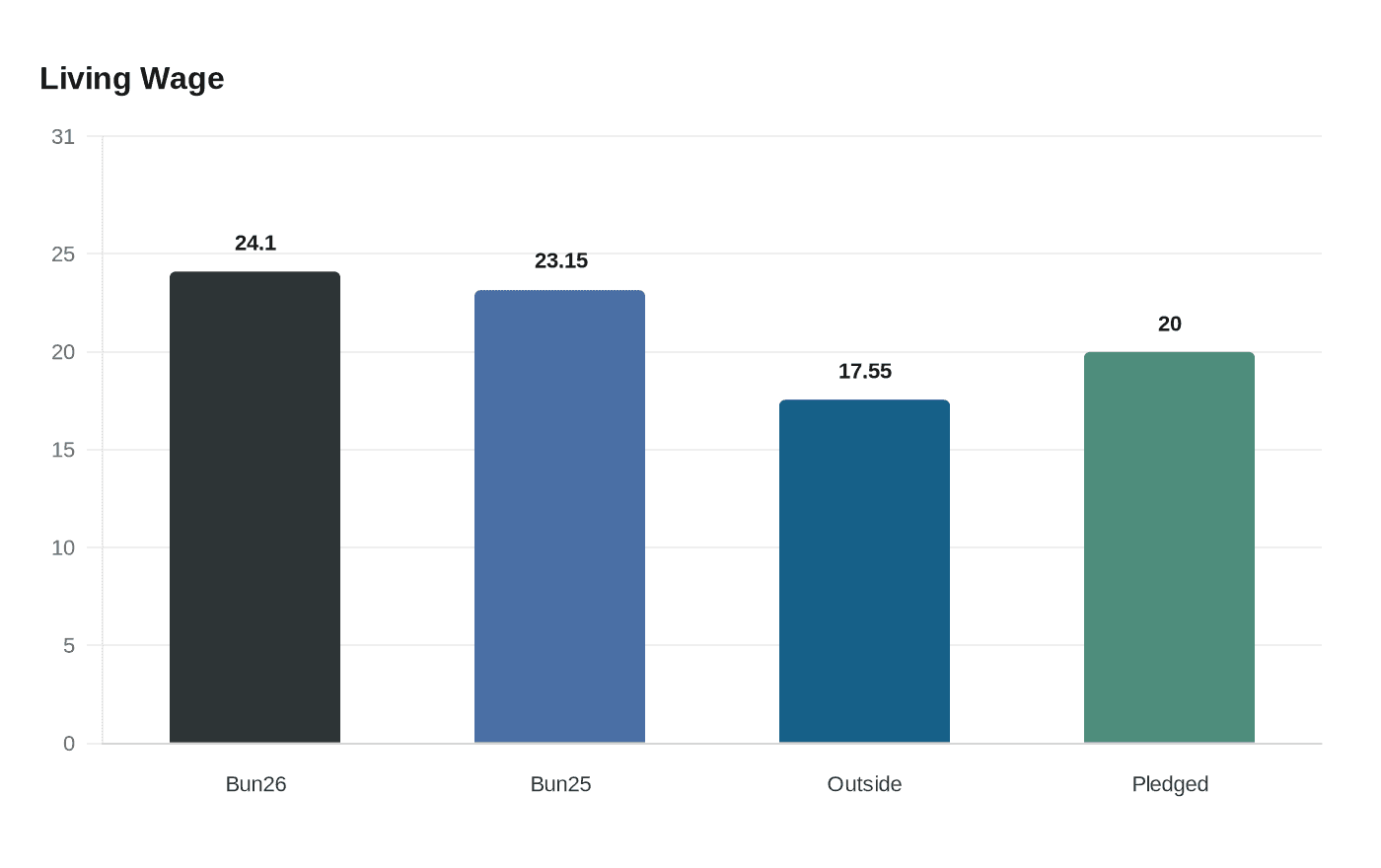
Just Economics of Western North Carolina announced on Jan. 15 that the 2026 living wage for Buncombe County will be $24.10 an hour, a 95 cent increase from the 2025 rate of $23.15. The rate represents the hourly wage a single full-time worker needs to afford a one-bedroom apartment in the county based on a four-year rolling average of HUD Fair Market Rent figures.
At a standard 40-hour work week, the new rate equates to about $50,128 annually. Outside Buncombe County, the organization kept the 2026 living wage at $17.55 an hour, which equals roughly $36,504 per year. For employers unable to meet the $24.10 floor, a pledged option allows certification if they pay at least $20 an hour in 2026 and commit to future increases; $20 full time is about $41,600 per year.
Under the resumed Living Wage Certification program, employers that pay at least $24.10 to all non-exempt workers are eligible for designation as Leading Living Wage employers. Just Economics also revised program rules for 2026, shifting certifications to one-year terms, clarifying or removing certain worker exemptions, and updating tipped worker guarantee requirements. The organization extended recertification deadlines to account for impacts from Helene and said it will continue studying and refining rules for rural employers and for the pledged pathway.
The changes matter for Buncombe's labor market and for households balancing wages and housing. Anchoring the living wage to one-bedroom rent ties the benchmark directly to local housing costs rather than broader cost-of-living indexes, which pushes the threshold higher in places where rental prices have risen. For employers, the updated certification timeline and clarified exemptions mean more frequent reviews and, potentially, faster adjustments to pay practices. For smaller businesses and nonprofits, the pledged option creates a compliance path that is less abrupt than the full $24.10 floor while still raising baseline pay.
Municipal and community service employers that staff frontline roles with non-exempt employees will need to assess payroll costs against the new thresholds. For workers, the increase narrows the gap between typical entry wages in service sectors and what is calculated as necessary to secure stable one-bedroom housing.
What comes next is a period of adjustment: employers must decide whether to qualify as Leading employers or use the pledged route, and Just Economics will continue refining rules for rural areas and pledged participants. Local employers should review budgets and staffing plans now, and workers can use the certification criteria to evaluate prospective and current employers as the program reboots across the region.
This article was produced by Prism’s automated news system from verified source data, official records, and press releases, then run through automated quality and moderation checks before publishing. The system is built and supervised by the people who set the standards it runs under. Read our full AI policy.
Did this article answer your question?


