Mary McDowell’s grave connects Asheville to 1887 railroad disaster
Learn how a Riverside Cemetery marker and local records rebuild Mary McDowell’s story and why it matters for Buncombe County memory and policy.

1. Mary McDowell’s life and local origins
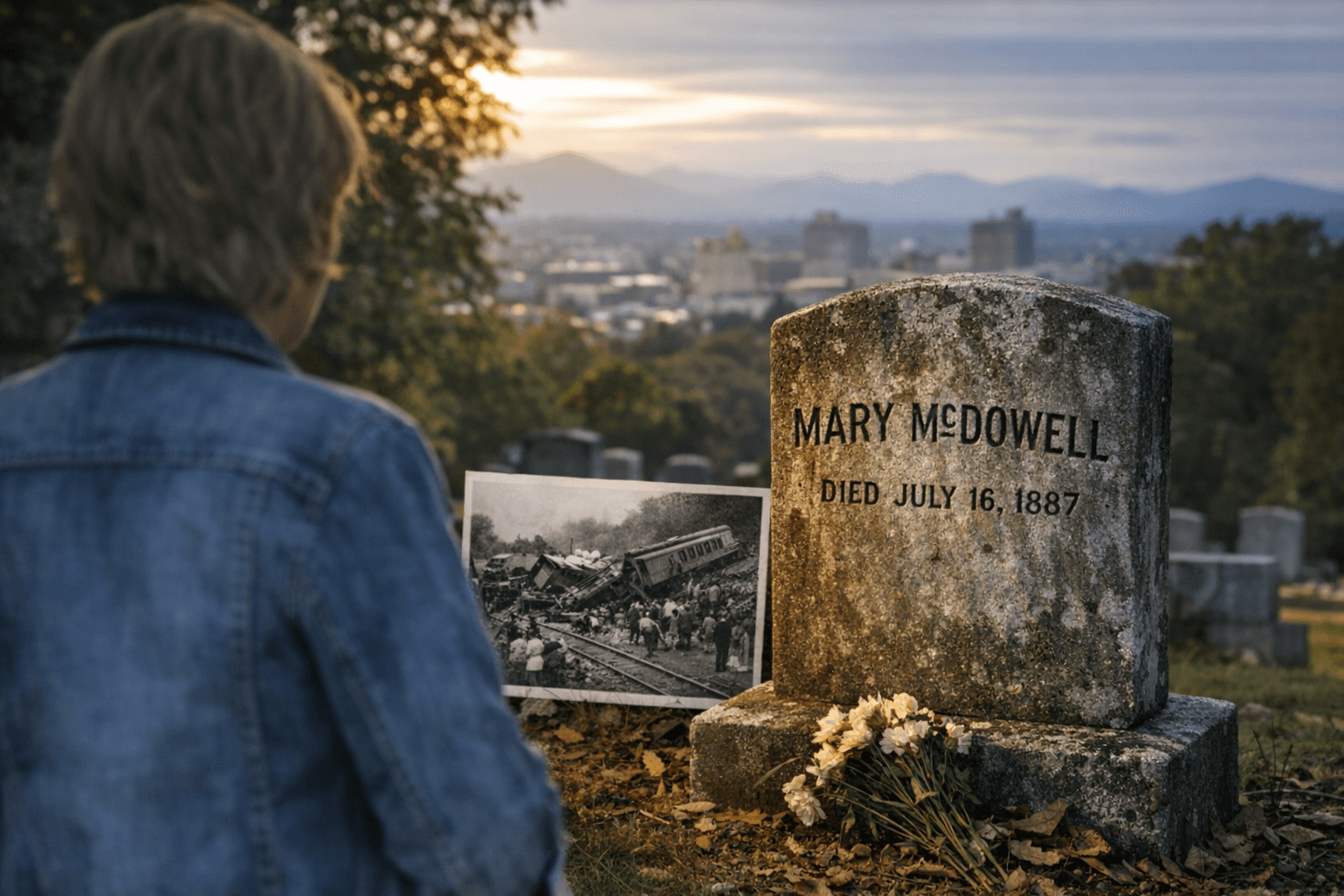
Mary McDowell is identified in local records as an Asheville native whose life now rests at Riverside Cemetery. The marker for her grave provides a tangible link to her identity and the tragedy that ended her life in 1887. Although historical details remain limited in public summaries, the existence of her grave in town gives neighbors a specific place to remember a person who otherwise might be anonymous in county history. That single burial spot anchors a human story amid broader civic narratives about the 19th century.
2. The 1887 railroad collision near Spartanburg
The event that claimed McDowell’s life was a railroad collision near Spartanburg, South Carolina, in 1887, a disaster that the local feature describes as having shocked Asheville. The incident underscores how transportation tragedies in the era extended their social and emotional reach across county lines, touching families and institutions in Buncombe County. While the immediate details of the crash belong to regional transportation history, the local consequence was clear: an Asheville native was buried back home, and the community absorbed the shock across distance. That cross-jurisdictional dimension matters when we examine how public safety, communications, and records were handled in the late 19th century.
3. The Riverside Cemetery marker as a public record
Riverside Cemetery’s marker for McDowell functions as more than stone; it is a public record and community reference point. Ballard’s feature uses that marker to reconstruct McDowell’s story, demonstrating how cemetery inscriptions often fill gaps left by missing civil records or fragmented newspapers. For Buncombe County, physical markers like this one are assets for genealogy, local history, and civic memory, but they also require maintenance and institutional stewardship to remain legible and useful. The marker’s preservation affects how future generations access and interpret this part of Asheville’s past.
4. Shannon Ballard’s Tombstone Tales installment and local reporting
On Jan. 17, 2026, Shannon Ballard published a Tombstone Tales installment on 828newsNOW that traces McDowell’s life and grave and draws on local historical records and the Riverside marker. That reporting reproduces how a single stone can prompt investigation and public conversation, and it exemplifies the role local journalism plays in recovering and contextualizing municipal memory. For residents, the piece is both a historical sketch and an invitation to scrutinize how county records and public spaces preserve personal histories. Local reporting like this shapes what the community recognizes as its shared past.
5. The role of local historical records in reconstruction
Ballard’s work relies on local historical records in combination with the cemetery marker to reconstruct events and lives that might otherwise be overlooked. This approach highlights the importance of accessible archives, digitized records, and cooperation between local governments, historical societies, and newspapers. When records are fragmented or locked behind limited access, reconstructing citizen histories becomes harder, and local government accountability in maintaining those records weakens. Ensuring public access to death registers, burial logs, and historical newspapers strengthens civic oversight and community memory.
6. Methodology: how a single stone is turned into a narrative
Turning a single cemetery stone into a coherent narrative requires cross-referencing physical markers with archival sources, local histories, and contemporary reporting; Ballard’s feature models that method. The investigative thread starts at Riverside Cemetery and moves through records that corroborate identity, date, and context, producing a story that situates one life within a larger social framework. That methodology is replicable and relevant to Buncombe County’s historical mission: prioritize preservation of both material artifacts and the records that give them meaning. Institutional investment in archival skills and resources amplifies the county’s ability to tell its own story accurately.
7. The disaster’s impact on Asheville and civic memory
The 1887 collision’s designation as a disaster that “shocked Asheville” points to the emotional and civic ripple effects such events produce, even when the physical site lies outside county borders. Shock can translate into municipal responses, from support for affected families to debates over transportation safety and regulation. While the historical record may not carry every municipal reaction forward, rediscovering episodes like this invites contemporary deliberation on how Buncombe County memorializes loss and extracts policy lessons from past tragedies. Remembering these impacts helps communities craft more resilient public responses today.
8. Broader narrative: a single stone linking community pasts
Ballard’s piece demonstrates how a single gravestone functions as a portal into 19th-century local history, connecting everyday lives to larger economic and infrastructural developments like railroads. That link matters for civic identity: which stories we preserve and how we interpret them shape communal self-understanding and political priorities. For auditors of public memory, the question becomes: does county policy support an inclusive record of lives like McDowell’s, or do resource constraints let such stories fade? An explicit policy for preservation and interpretive signage can turn solitary stones into community classrooms.
9. Practical implications and what residents can do now
Recovering Mary McDowell’s story offers actionable steps for Buncombe County governance and residents: support funding for cemetery upkeep and archival digitization, ask the county commission about preservation plans, and bring these local histories into classrooms and public programming. Visit Riverside Cemetery, share verified findings with local historical societies, and attend public meetings where cultural resources and records budgets are discussed; those civic acts sustain the institutional capacity to keep stories accessible. Preserving a single marker today preserves civic knowledge tomorrow, invest in the stones, the records, and the institutions that tell our collective story.
This article was produced by Prism’s automated news system from verified source data, official records, and press releases, then run through automated quality and moderation checks before publishing. The system is built and supervised by the people who set the standards it runs under. Read our full AI policy.
Did this article answer your question?