NCDOT Converts Aiken Road Intersection to All-Way Stop After 10 Crashes
Ten crashes in five years triggered a safety overhaul at Aiken and New Stock roads; it's the third all-way stop conversion in Buncombe County this year alone.
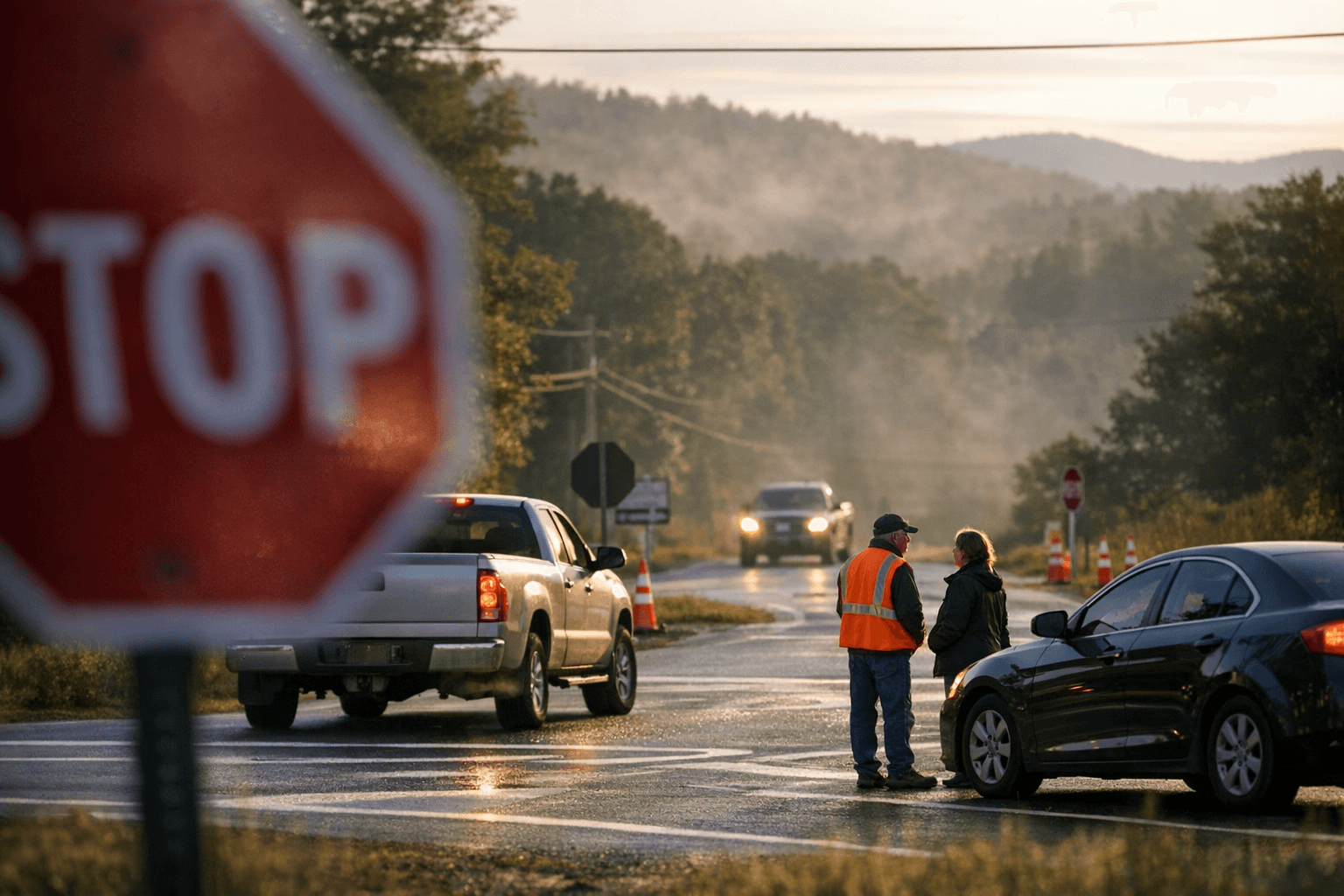
Ten crashes in five years at the offset intersection of Aiken Road and New Stock Road pushed state transportation crews to begin installing an all-way stop there Wednesday, April 8, converting a junction that NCDOT had flagged as a persistent collision site in Buncombe County.
The N.C. Department of Transportation announced the change on April 7, a day before installation crews arrived. The work includes oversized stop signs, warning placards, and new pavement markings on all approaches. NCDOT projects the redesign will reduce total crashes at the intersection by roughly 55 percent, based on agency crash studies of similar conversions.
The crash pattern NCDOT identified at Aiken and New Stock roads follows a familiar and dangerous sequence: drivers fail to yield at two-way stop-controlled intersections and collide with vehicles that had no obligation to stop. The intersection's offset geometry compounded the risk.
The Aiken Road conversion is at least the third all-way stop installation in Buncombe County in 2026. On January 8, NCDOT completed two other conversions in the county: Old N.C. 20 at Jenkins Valley Road in the Alexander community and Alexander Road at Bear Creek Road in the Leicester community, both driven by documented crash histories. Three conversions in one county within a single calendar year points to an active safety push by NCDOT's Division 13, which oversees transportation infrastructure across the Asheville region.
The treatment is deliberately low-cost. All-way stop conversions typically run under $30,000, covering equipment rental, pavement markings, and sign upgrades, far less than traffic signals or roundabouts. An NCDOT case study following one 2007 conversion documented an 83 percent crash reduction at that site, from 23 crashes before the change to just 4 afterward, with even steeper reductions recorded at higher-speed locations.
The agency's research on the treatment has drawn national attention. In December 2025, NCDOT staff published "All Way Stops: Improving Rural Intersection Safety" in the ITE Journal, the flagship publication of the Institute of Transportation Engineers, which counts more than 18,000 members across 78 countries. The article concluded that all-way stops "save lives, and they do so at a fraction of the cost of most other effective intersection safety treatments."
NCDOT also included right-of-way guidance in Tuesday's announcement to reduce driver confusion as the new configuration at Aiken and New Stock roads takes effect.
This article was produced by Prism’s automated news system from verified source data, official records, and press releases, then run through automated quality and moderation checks before publishing. The system is built and supervised by the people who set the standards it runs under. Read our full AI policy.
Did this article answer your question?