Opinion urges Buncombe to boost election funding, improve turnout and integrity
Buncombe County’s elections are being asked to do more with less, and the gap shows up in turnout, staffing strain and storm recovery.
Election funding is now a democracy issue in Buncombe County
Buncombe County’s elections are carrying a heavier load than the county has funded them to handle. The county ranked 18th statewide in 2022 general-election turnout, yet it ranked only 31st among counties that reported 2022-23 budget data for per-voter election spending, putting just over $13 behind each ballot cast. That mismatch is not abstract bookkeeping. It affects how many sites can open on time, how quickly poll workers can be trained, and how resilient the system is when the county is hit by a crisis.
The county’s own numbers show why the debate matters now. Official state results put Buncombe’s 2022 general-election turnout at 57.55 percent. In 2024, the county saw about 159,778 voters cast ballots in the general election, with all 80 of 80 precincts reporting. Kamala Harris carried Buncombe County with 98,662 votes to Donald Trump’s 59,016, and Josh Stein won the governor’s race here 106,611 to 44,373. Yet the county’s 2024 primary turnout fell to 28.5 percent, the lowest for a presidential-primary year since 2004, showing that participation can swing sharply from one cycle to the next.
How the county spends shapes how the county votes
The accountability issue begins with the budget. The Buncombe County Commission approved a 2022 budget that devoted 0.70 percent of spending to administer elections for the 2022 general election and the 2023 primary. That is well below 1 percent for a service that has to support local, county, state and federal contests, maintain voter registration records, prepare voting sites, and keep the machinery of democracy moving across a fast-growing county.
That spending level matters because election administration is not a passive function. Buncombe County Election Services and the Buncombe County Board of Elections must build and maintain the infrastructure that makes voting possible, from precinct setup to voter records to staffing. When turnout rises, when ballot counts get longer, or when the county must move polling places, the work load does not simply scale itself. It requires money, people and planning.
The county’s turnout history page underscores that this is not a one-election dispute. Buncombe tracks election-history data going back decades, and that long record makes the current funding debate more consequential, not less. It shows that the county has enough experience to know when its election system is being asked to stretch beyond what its budget can comfortably support.
Hurricane Helene exposed the strain on election operations
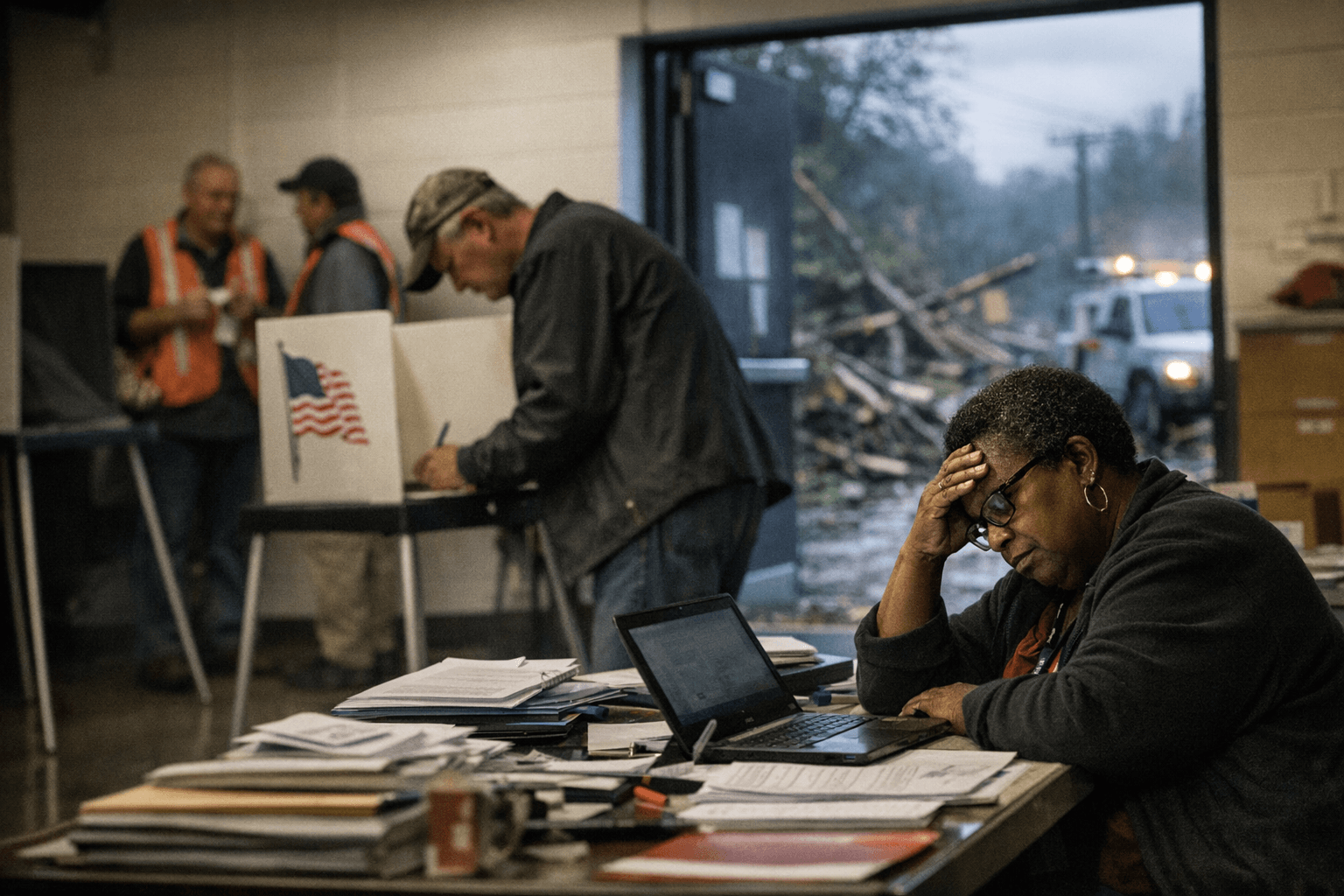
The pressures became much more visible after Hurricane Helene. The North Carolina State Board of Elections approved a modified early-voting plan for Buncombe County because county officials were assessing the status of 80 Election Day polling places and contacting poll workers. That kind of disruption is a direct test of election resilience: if roads are damaged, power is out, staff are displaced and facilities are compromised, the county needs enough administrative capacity to rebuild its voting plan quickly and keep access intact.
This is where funding and integrity intersect. A well-funded election system is not only about convenience. It is about maintaining confidence that voters can still cast a ballot when normal routines break down. In Buncombe, the storm turned a long-simmering budget debate into a practical test of whether the county can keep elections open, staffed and credible under pressure.
Corinne Duncan, who has been a central public voice in county election administration, has credited poll workers and staff for keeping voting operations running, including during the post-Helene period. That recognition matters because it highlights the human side of election administration. Machines do not staff polling places, reassure voters, or reorganize sites after disaster. People do, and those people need a system that is funded well enough to support them.
What the turnout numbers say about access and confidence
Buncombe’s 2024 general-election results show a county that remains politically engaged. The county delivered strong margins for Democrats in major races, and turnout reached nearly 160,000 voters. But the lower 2024 primary turnout, paired with the county’s budget ranking, suggests that engagement alone is not enough. Participation rises and falls with the quality of access, the stability of sites and the clarity of the voting process.
That is the key policy lesson for local officials. If Buncombe wants turnout that holds up across election types, it has to treat election administration as core infrastructure, not a line item to be squeezed. A county that spends just over $13 per voter on elections cannot expect the same margin of resilience as one that invests more in staffing, site preparation and contingency planning.
What commissioners should do before the next election
The county commission does not need to guess what would help. The pressure points are already visible. Before the next major election, local officials should focus on funding changes that strengthen the parts of the system most likely to fail under stress:
- More staffing support for the Board of Elections, so registration work, site preparation and troubleshooting do not bottleneck during peak periods.
- Better funding for poll-worker recruitment and training, especially after a storm or other disruption reduces the available workforce.
- Greater flexibility for contingency voting plans, so the county can move quickly if a polling place becomes unusable.
- Stronger support for facilities, equipment and communications, so voters are not left guessing where to go or whether a site can open.
- Budget planning that reflects Buncombe’s scale and growth, not just the minimum needed to get through a routine cycle.
Those are not abstract improvements. They are the practical steps that determine whether people can vote without confusion, delay or unnecessary barriers.
The real test is next cycle, not the next talking point
Buncombe County has already shown that it can produce high turnout in major elections. It has also shown, in the low-primary numbers and the post-Helene scramble, that election administration can be stretched quickly. The county’s challenge now is to match its democratic ambitions with the money needed to sustain them.
If commissioners want stronger turnout and stronger integrity, they will have to fund the election system like a public necessity, not a leftover expense. In Buncombe County, the difference between those two approaches will be visible at the polling place, in the registrar’s office and in the confidence voters bring to the next election.
This article was produced by Prism’s automated news system from verified source data, official records, and press releases, then run through automated quality and moderation checks before publishing. The system is built and supervised by the people who set the standards it runs under. Read our full AI policy.
Did this article answer your question?