Riverside Cemetery angel carved from leftover Biltmore stone, local history reveals
A Riverside Cemetery angel carved from Biltmore leftovers shows how Asheville’s elite estate and its public burial ground share the same stone, and the same memory.
A stone angel with two Asheville histories
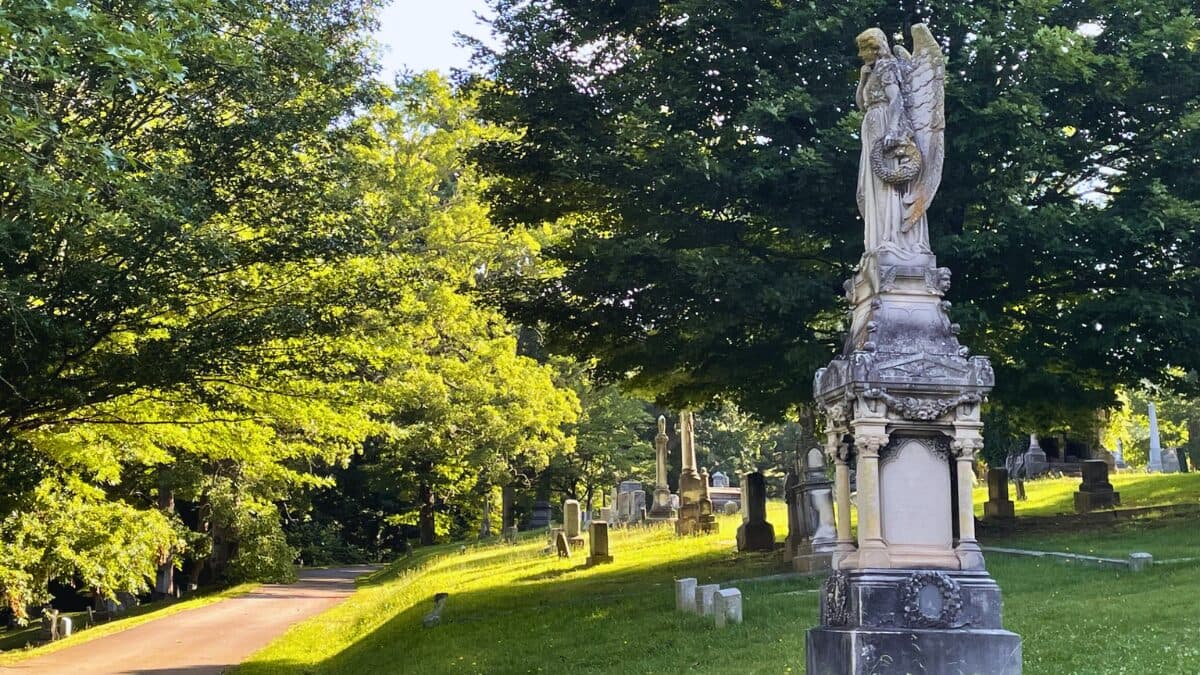
At Riverside Cemetery, one angel quietly connects two of Asheville’s most recognizable historic places: the public burial ground and Biltmore Estate. The monument was carved from limestone left over from Biltmore’s construction, turning estate surplus into a memorial that still stands in Buncombe County’s civic memory.
That detail changes the way the angel reads. It is not just a decorative marker, but a physical record of how Asheville built itself, who had access to skilled labor, and how materials intended for elite display found a second life in a place meant for public mourning.
Why Riverside Cemetery was created
Riverside Cemetery was founded in 1885, after Asheville leaders and businessmen began meeting to discuss a large, modern civic cemetery. The need was urgent. The city’s downtown church graveyards were crowded, together covering just over an acre, and local leaders worried they could contaminate groundwater near the Beaucatcher Mountain reservoir.
The cemetery reflects a city in transition. Asheville’s population had quadrupled after the railroad arrived in 1880, and that growth put pressure on burial space, sanitation, and civic planning. Riverside was not an ornamental afterthought. It was a response to a fast-changing mountain city that needed a new way to care for the dead.
That makes the angel more than a pretty object. It sits inside a cemetery created because Asheville could no longer manage death through small churchyards and informal limits. The monument belongs to a broader story about public health, urban growth, and the city’s decision to create a shared resting place for the dead.
From Biltmore’s construction to a cemetery monument
The limestone tied to the angel came from Biltmore Estate, built for George Vanderbilt between 1889 and 1895. Biltmore’s official history says the limestone façade was quarried in Oolitic, Indiana, then shipped to Asheville by rail and stored on the Esplanade before being used. The estate also operated a brick works and a quarry that supplied stone for the foundation.
That supply chain mattered. It shows how Biltmore was not just a mansion, but a vast construction project fed by distant stone, rail transport, on-site production, and skilled labor. Leftover material from that process did not disappear when the house was finished. In the case of the Riverside angel, surplus limestone became part of Asheville’s burial landscape.
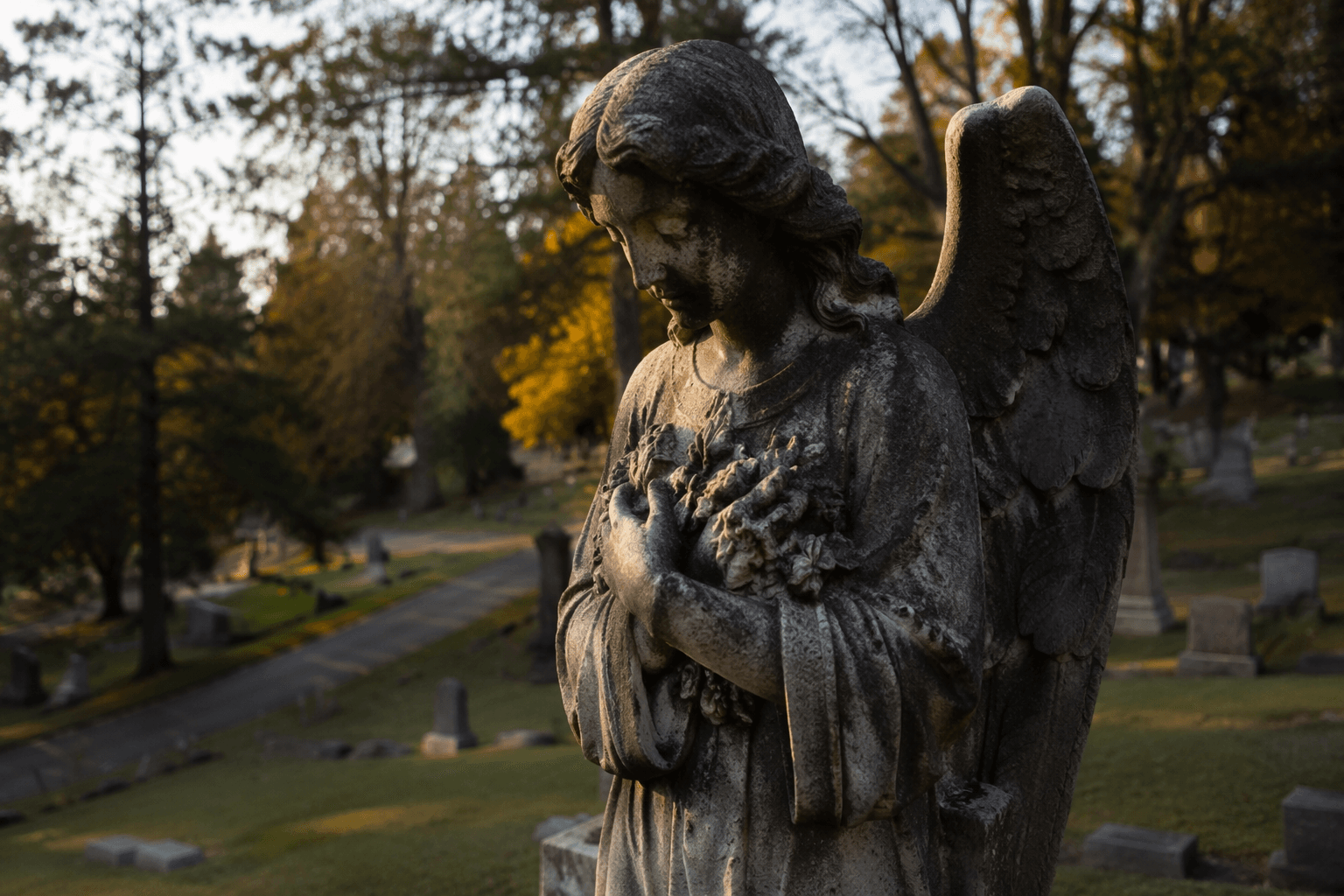
The Buchanan family commissioned the memorial after Buchanan’s death in 1902, giving the stone a second identity. What began as estate material became a private act of remembrance in a public cemetery. That shift from grand construction to personal memorial is part of what makes the monument so revealing. It shows how the city’s most famous estate continued to shape Asheville long after the mansion itself was complete.
The craftsman behind the angel
828 News NOW identifies the carver as Fred Miles, an English stoneworker and one of the artisans who came to Asheville to work on Biltmore. Miles was born in Shaftesbury, Dorset, England, in 1860 and emigrated to the United States in 1892. He later settled in Asheville to work at Biltmore Estate and died in 1921.
Miles was not a one-site craftsman. After Biltmore, he carved ornamentation for the Basilica of St. Lawrence and worked on the Drhumor Building, adding his hand to some of Asheville’s best-known architecture. His career shows how immigrant labor helped define the look and feel of the city’s Gilded Age built environment.
That matters because local history is often told through patrons and landmarks, while the artisans who shaped the stone remain less visible. Miles’ work links the estate, the downtown skyline, and Riverside Cemetery through the same skilled hands. The angel is therefore a record of craft as much as commemoration.
What the angel reveals about public memory in Buncombe County
The Riverside angel is easy to overlook unless someone points it out, which is part of why the story matters now. Asheville tends to remember its grandest places first: Biltmore, the Basilica, and the historic districts that draw the most attention. A cemetery monument carved from leftover estate stone shows a different pattern, where the city’s history survives in plain sight, embedded in markers, masonry, and reused material.
It also raises a harder question about memorialization. Who gets carved in stone, who gets noticed, and which histories are preserved because they connect to wealth, architecture, or famous names? Riverside Cemetery was created as a civic solution for a growing city, yet the angel inside it carries the material trace of elite estate building. The public and the private are literally joined in the same limestone.
For Buncombe County residents today, that intersection matters because it turns local history into something tangible. The angel shows how Asheville’s identity was shaped not only by grand design, but by workers, surplus stone, burial decisions, and the choices made about what should last. In a city that still markets its historic character, Riverside Cemetery is a reminder that memory is built, moved, reused, and sometimes hidden in the most ordinary-looking stone.
This article was produced by Prism’s automated news system from verified source data, official records, and press releases, then run through automated quality and moderation checks before publishing. The system is built and supervised by the people who set the standards it runs under. Read our full AI policy.
Know something we missed? Have a correction or additional information?
Submit a Tip