Senate passes camping ban as Buncombe homelessness reaches record high
The Senate's camping ban landed as Buncombe County counted 824 people without stable housing, including 334 sleeping outside. Asheville now faces a question of where they go.
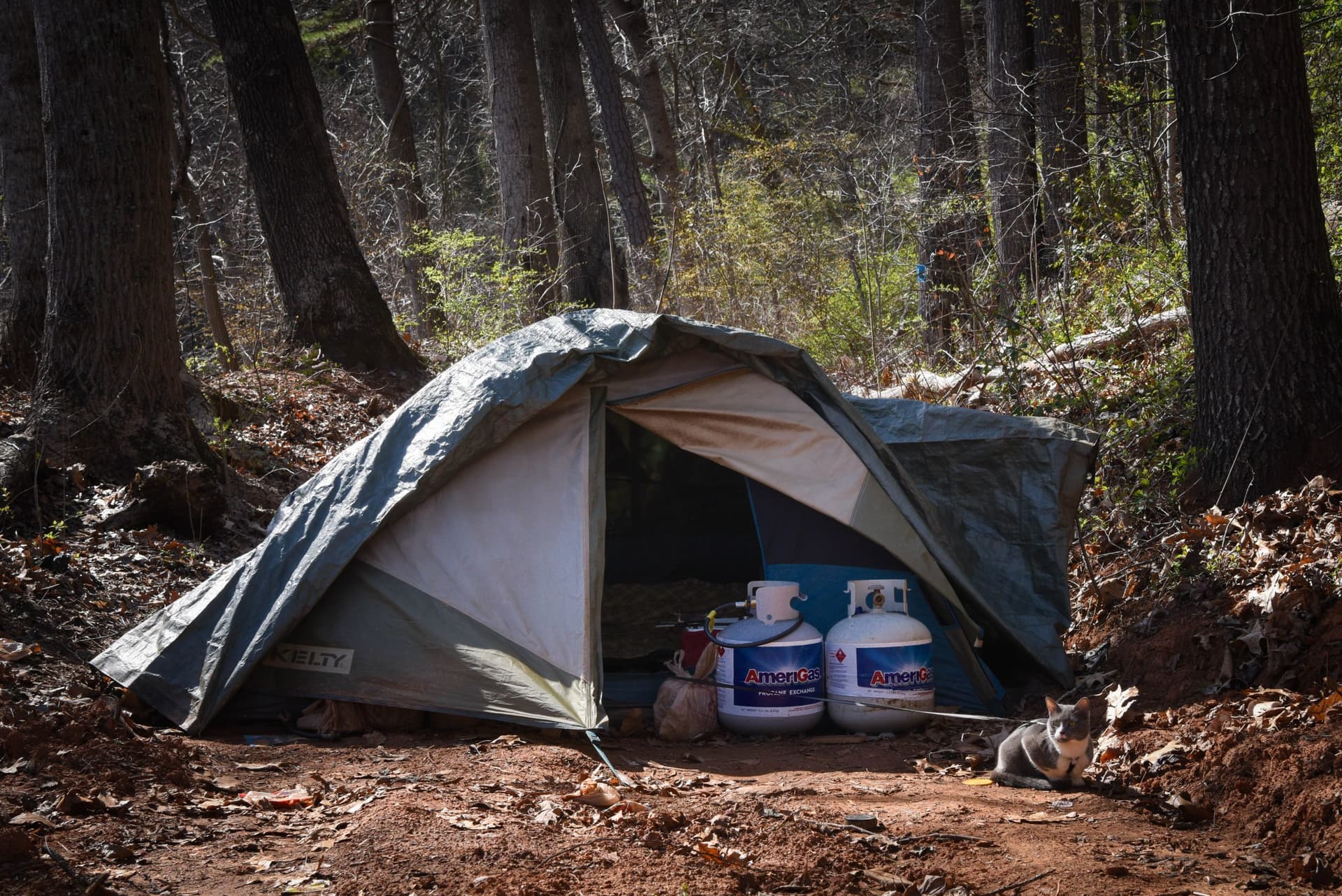
The North Carolina Senate approved House Bill 437 on June 24, advancing a ban on unauthorized camping or sleeping on public property just as Buncombe County recorded 824 people experiencing homelessness, including 334 who were unsheltered.
The substitute bill, titled Drug-Free Zones/Unauthorized Public Camping, would bar local governments from allowing public camping on public property. It would still let a city or county designate one camping site for up to a year, but only if the site met standards for safety, security, sanitation, coordination with county health departments and bans on illegal substance and alcohol use. The measure also would open the door for residents and business owners to sue a local government that allows camping.

Asheville homelessness response is coordinated through the Asheville-Buncombe Continuum of Care, where the City of Asheville holds seats on the board, and providers such as Homeward Bound of WNC are already working in a strained system. The county’s February point-in-time count was the highest total the continuum had recorded in its service area.
That February count showed 390 people in shelters or transitional housing and 334 unsheltered. Sixty-five volunteers gathered on Feb. 10 to help conduct the annual count. At the June 10 Senate Judiciary Committee discussion, the bill came without additional funding for local governments, leaving Asheville and Buncombe County to absorb any extra cost through existing police, outreach and shelter systems.
Supporters of the measure say it gives cities and counties a clearer legal standard and a way to restore order in public spaces. Critics say it criminalizes homelessness without adding housing or service capacity. House Bill 781, the predecessor version, barred local governments from authorizing regular public camping or sleeping on public property, with exceptions for recreational camping and certain registered, insured motor vehicles.
This article was produced by Prism’s automated news system from verified source data, official records, and press releases, then run through automated quality and moderation checks before publishing. The system is built and supervised by the people who set the standards it runs under. Read our full AI policy.
Did this article answer your question?