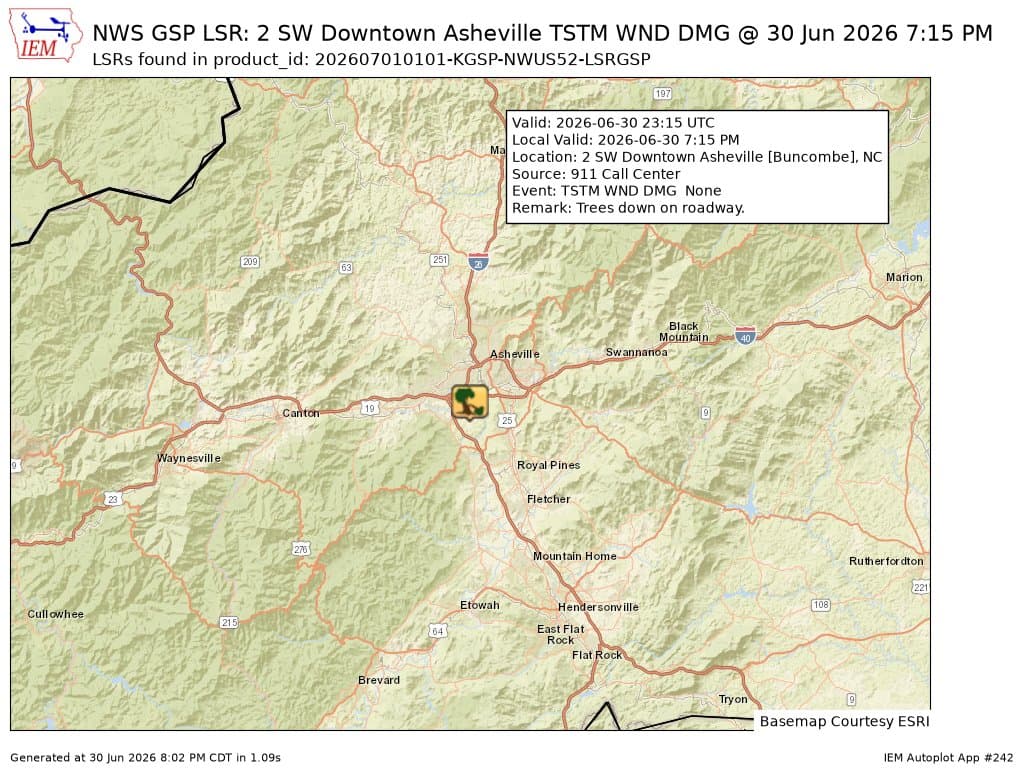
Severe Drought Tightens Over Asheville, Buncombe After 12th Driest January
Asheville recorded just 1.96 inches of precipitation in January, its 12th driest January on record, leaving much of Buncombe County classified in severe drought.
Asheville recorded just 1.96 inches of total precipitation in January, making it the 12th driest January in records dating to 1895, a shortfall that has pushed much of Buncombe County into severe drought. The National Weather Service office in Greenville-Spartanburg reported the local deficit, saying, “Asheville is 4.81 inches below normal for precipitation since Dec. 1, 2025, and 1.81 inches below normal since Jan. 1.”
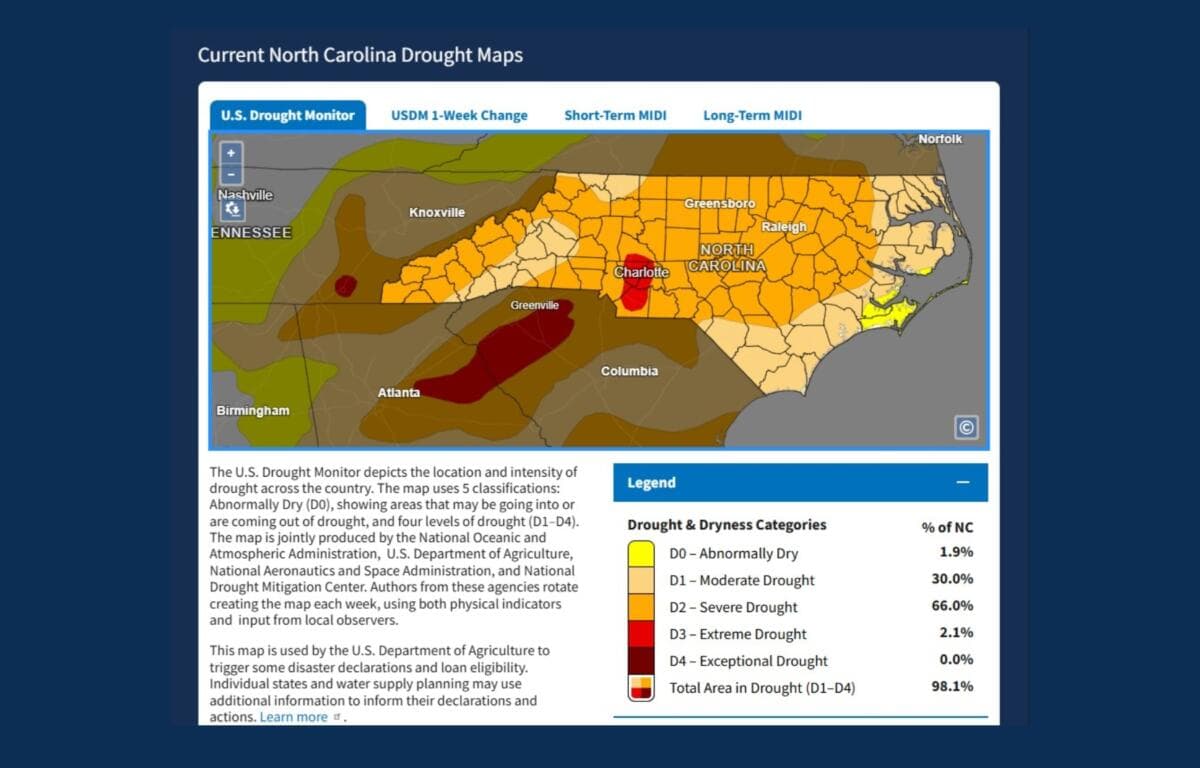
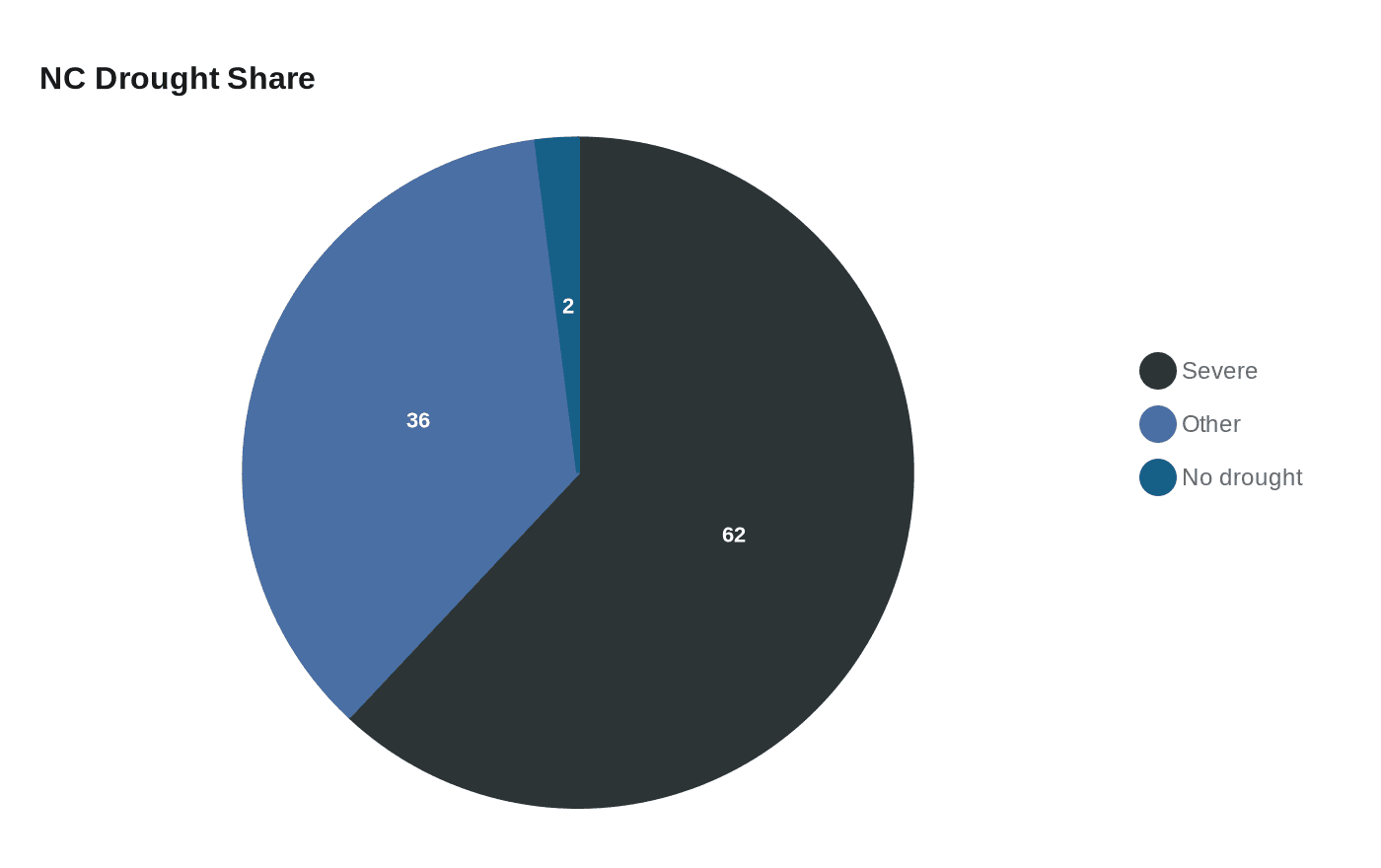
Statewide monitoring shows the shortage extends far beyond the city. “The latest U.S. Drought Monitor data, published on Drought.gov, shows 9.4 million North Carolina residents living in areas classified as drought,” the report states, and a separate update noted that 98 percent of North Carolina is now experiencing some level of drought with “more than 62 percent of the state is classified in ‘Severe Drought’ (D2).” Those classifications place Buncombe County among the areas in D2 conditions.
The U.S. Drought Monitor lists a broad swath of Western North Carolina as experiencing drought conditions ranging from moderate to severe. “In Western North Carolina, Buncombe, Haywood, Henderson, Madison, McDowell, Mitchell, Yancey, Avery, Watauga, Ashe, Wilkes, Caldwell, Burke, Rutherford, Polk, Transylvania, Jackson, Macon, Swain, Graham and Cherokee counties are all experiencing drought conditions ranging from moderate to severe,” the report says.

Hydrologic indicators are already showing local impacts. Across the mountains and foothills, streamflows are running “well below normal,” and soil moisture levels remain “extremely low for this time of year,” according to the drought reporting. Forecasters and water managers warn that reservoirs and streamflows require more than a single wet spell to recover; experts say, “Sustained, above-normal rainfall over weeks or months would be needed to erase the current deficit and restore streamflows and reservoir levels.”
Recent winter storms provided visible snow but little lasting relief. The region received several rounds of snow in the past two weeks, with “some higher elevations picking up more than a foot,” yet meteorologists caution that snow can overstate moisture. “An inch of snow does not equal an inch of rain. Because snow contains air pockets between flakes, it typically melts down to much less liquid water,” the reporting explains, adding that “under the standard 10-to-1 snow-to-liquid ratio used by meteorologists, 10 inches of snow melts to about 1 inch of rain.” The report notes that drier, powdery snow yields even less liquid equivalent.
Forecasts show multiple chances for precipitation over the coming weekend, but forecasters emphasize the limits of short-term relief: “Whether the upcoming rain will significantly ease drought conditions in Buncombe County remains uncertain.” Local officials and utilities have not issued public water restrictions in the material provided, and the U.S. Drought Monitor map and National Weather Service hydrologic charts remain the primary public indicators to track recovery in the weeks ahead.
This article was produced by Prism’s automated news system from verified source data, official records, and press releases, then run through automated quality and moderation checks before publishing. The system is built and supervised by the people who set the standards it runs under. Read our full AI policy.
Did this article answer your question?