Silver-Line Plastics debris still clogs French Broad River after Helene
Twenty months after Helene, Silver-Line pipe debris still lines the French Broad River, putting Woodfin's biggest employer at the center of a cleanup and accountability fight.
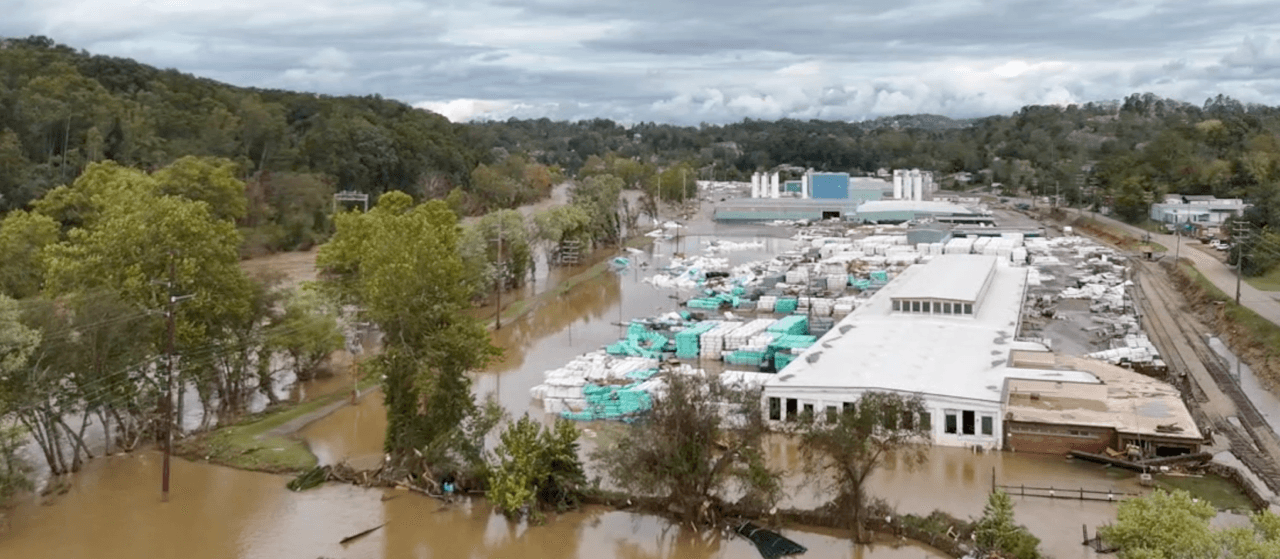
Twenty months after Helene, chunks of plastic pipe from Woodfin’s largest employer are still caught in the French Broad River, a visible reminder that the storm’s industrial debris has not been fully forced out of the water. The unanswered question in Buncombe County is not whether Silver-Line Plastics spilled into the river, but who has the leverage to make the cleanup finish.
The Woodfin site, now owned by IPEX after its 2019 acquisition of Silver-Line Plastics, sits on the east bank of the French Broad and employs more than 200 people. That makes the factory both a major local paycheck and a source of environmental damage, a combination that has left Woodfin officials with limited leverage and pushed pressure outward to state agencies, cleanup groups and federal regulators.
Helene overwhelmed the site when the French Broad overflowed its levee and filled the lot like a bathtub. Asheville Watchdog reported that literally thousands of PVC pipes were still in the river six weeks after the storm, and later coverage said hundreds of thousands of pipes were swept from the property and carried as far as Douglas Lake, Tennessee, about 70 river miles away. The debris did not disappear with the floodwaters. It moved downstream, where it has remained a public nuisance and an ecological concern.
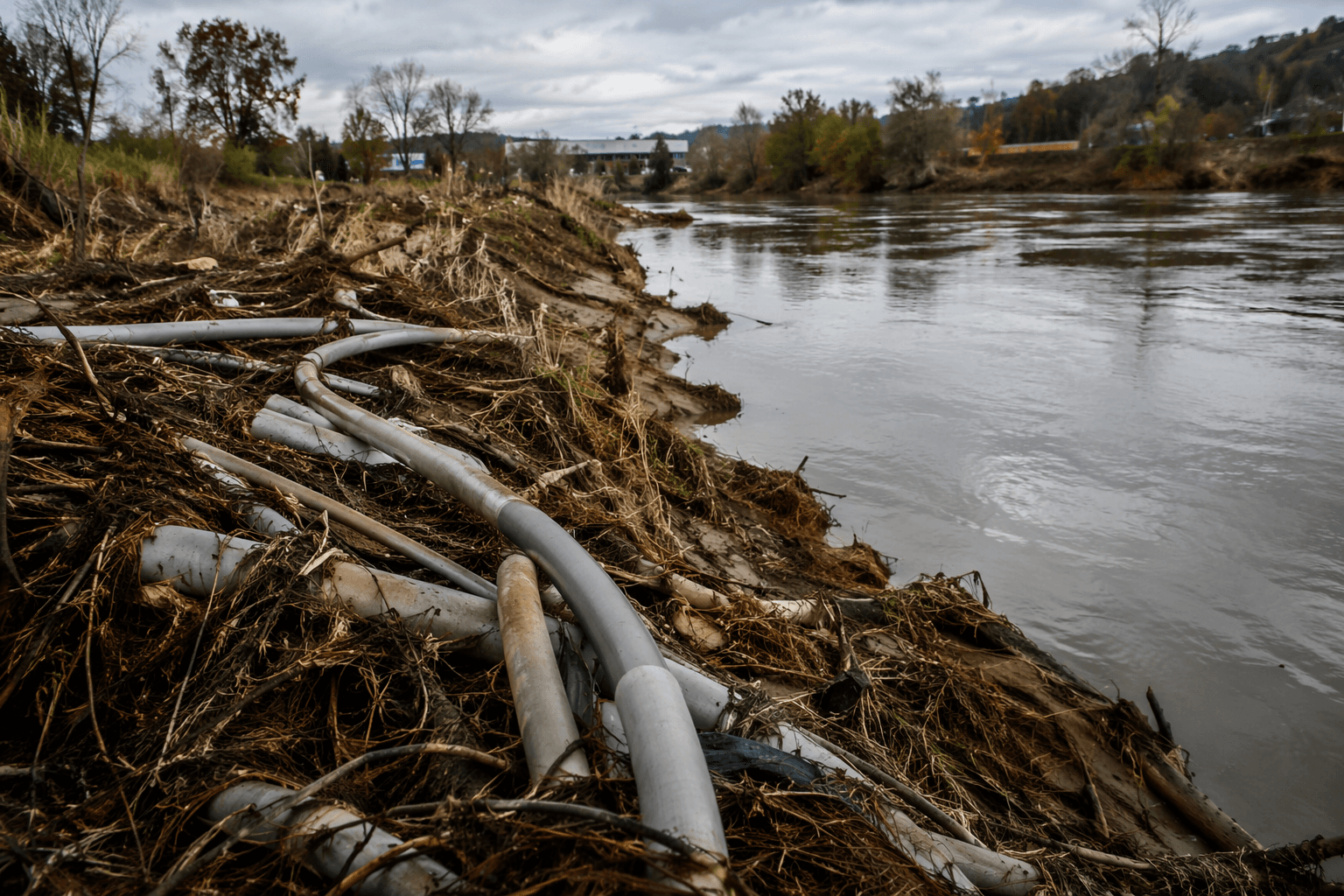
MountainTrue, which has been working on debris removal in the French Broad, says about 40% of the material it has pulled from the river and its banks downstream of Woodfin has been IPEX material. In stretches closest to the plant, the nonprofit says that figure rises to about 80%. By May 20, 2026, more than 800 residents had emailed IPEX after community meetings in Woodfin, Marshall and Hot Springs, a sign that frustration has spread well beyond the riverbank near Riverside Drive.
State officials now describe Helene recovery as an ongoing responsibility, not a finished emergency. The North Carolina Department of Environmental Quality says the storm caused significant damage in Western North Carolina on Sept. 27-28, 2024, and it has set up a response page with debris-management guidance and a $10 million River Debris Cleanup Program with MountainTrue. In Woodfin, officials have also discussed using Silver-Line Park as a temporary staging area for river debris removal and keeping it closed during cleanup work.
For Buncombe County, the stakes are bigger than one factory or one flood. The French Broad is central to recreation, ecology and local identity, and the lingering pipe debris shows how recovery can stall when the source of the damage is also one of the town’s largest employers. The river is still carrying the cost of Helene, and the cleanup now depends on whether public pressure can do what local authority has not.
This article was produced by Prism’s automated news system from verified source data, official records, and press releases, then run through automated quality and moderation checks before publishing. The system is built and supervised by the people who set the standards it runs under. Read our full AI policy.
Know something we missed? Have a correction or additional information?
Submit a Tip