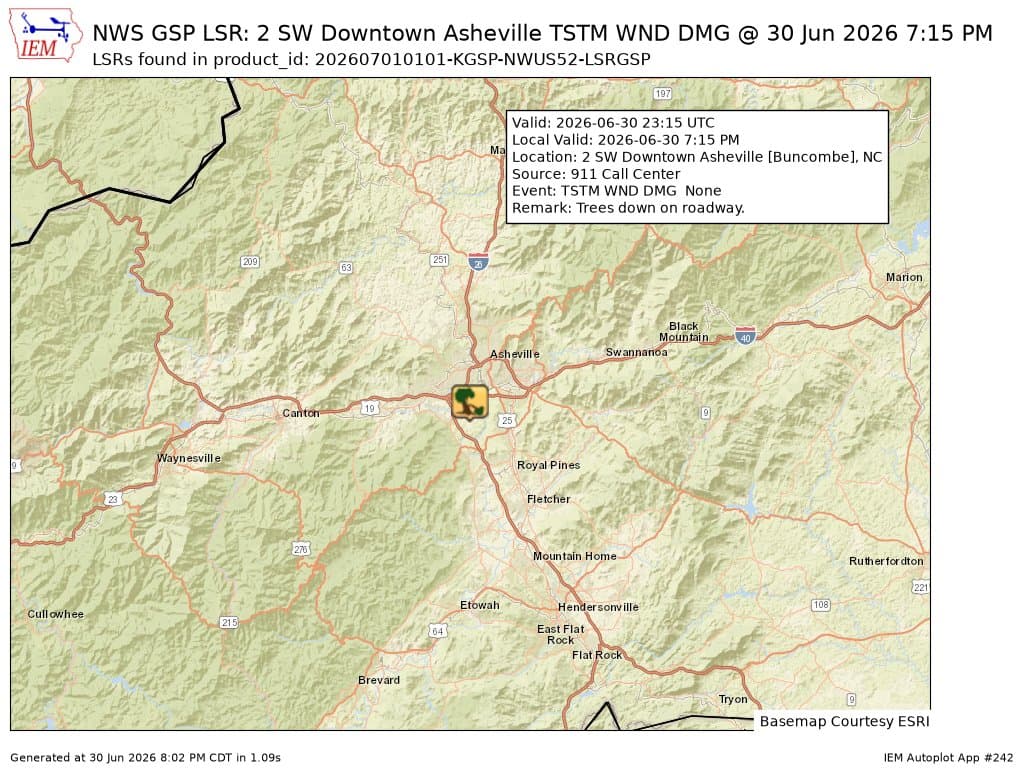
UNC Asheville Hosts Free Skywarn Storm Spotter Training in April
Free Skywarn training at UNC Asheville on April 21 will teach Buncombe residents to spot tornadoes and flash floods and report directly to the National Weather Service.
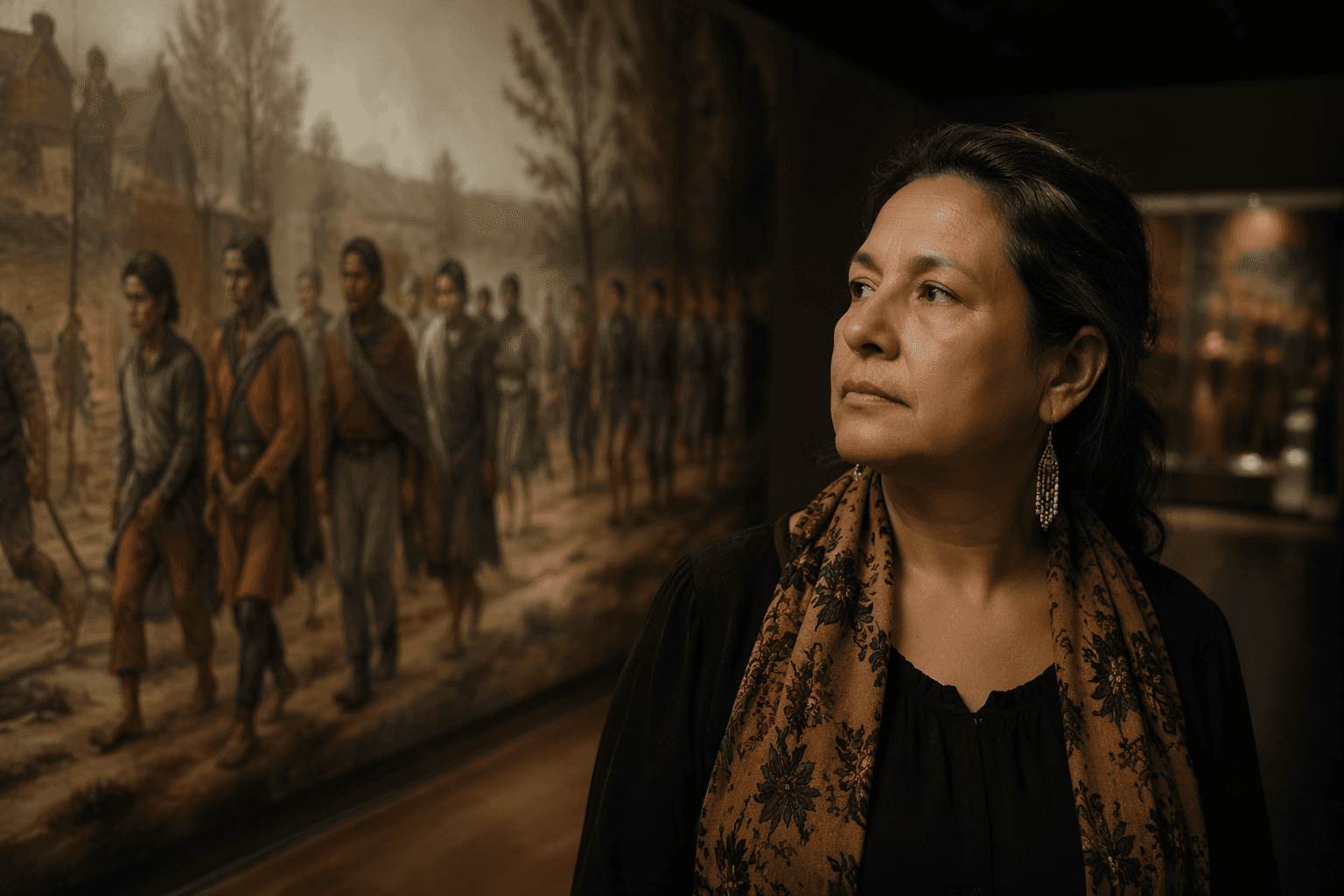
The flooding that tore through Swannanoa and other Buncombe County communities during Hurricane Helene made clear how quickly severe weather can outrun the warning system. On April 21, UNC Asheville will host a free two-hour Skywarn storm-spotter training designed to put more trained eyes on the ground across western North Carolina before the next major storm arrives.
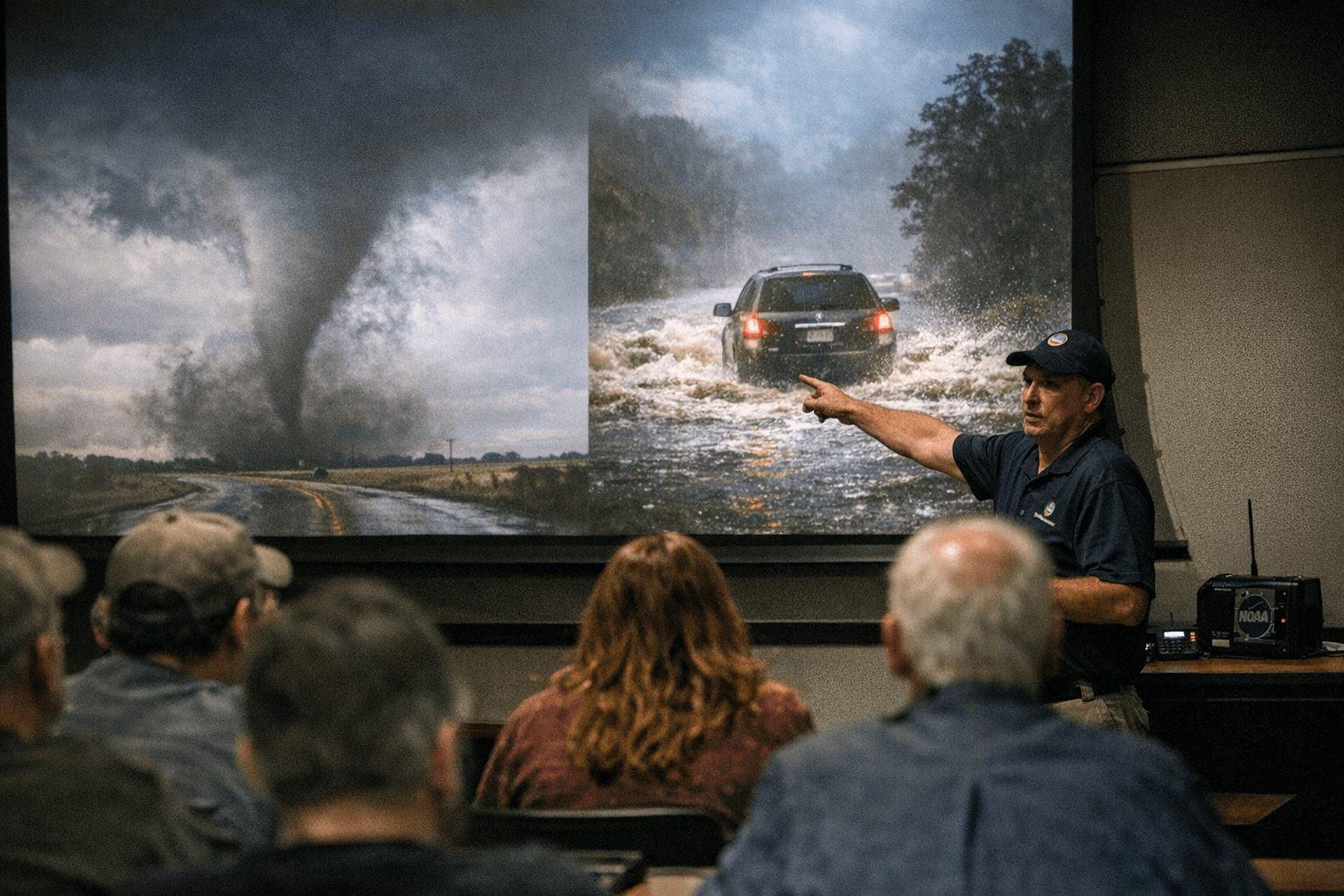
Thomas Winesett of the Greenville-Spartanburg National Weather Service Forecast Office will lead the session, beginning at 7 p.m. in Robinson Hall, room 125. The training is open to anyone: emergency responders, amateur radio operators, and community members with no technical background who simply want to contribute to the early-warning network that covers Buncombe County.
The core lesson is how to tell forecasters what instruments cannot always confirm on their own. Radar detects storm structure and precipitation, but a trained spotter standing in Barnardsville or East Asheville can confirm what a storm is actually doing at street level. Winesett will cover the specific signs forecasters need: wall clouds and tornado indicators, large hail accumulations, damaging winds, and the surface-level cues of rising water that precede flash flooding. When a spotter calls in a confirmed wall cloud or a rapidly swelling creek crossing, forecasters at the Greenville-Spartanburg office can issue or strengthen warnings minutes faster than they otherwise would. In the narrow river valleys of western North Carolina, those minutes translate directly into evacuation time.
Skywarn spotters serve as the human layer in a warning system that relies on radar, forecast models, and real-time ground reports working in combination. The Greenville-Spartanburg NWS office covers a broad region, and trained spotters embedded in communities across Buncombe County close the gap between what sensors show and what is happening at street level.
Christopher Godfrey, UNC Asheville professor and chair of Atmospheric Sciences, is the local contact for registration and additional information. Attendees must register for a parking permit through UNC Asheville's parking website before arriving on campus; the training itself costs nothing.
Emergency managers, public-safety officials, and amateur radio operators who already hold communication roles during disasters are especially encouraged to attend. With spring convective season underway and hurricane season approaching, the April 21 session in Robinson Hall 125 is one of the more direct steps a Buncombe County resident can take to strengthen the community's capacity to warn and protect its neighbors.
This article was produced by Prism’s automated news system from verified source data, official records, and press releases, then run through automated quality and moderation checks before publishing. The system is built and supervised by the people who set the standards it runs under. Read our full AI policy.
Did this article answer your question?