West Asheville businesses feel compassion and fear amid homelessness crisis
West Asheville merchants say they are absorbing both visible poverty and real safety threats, while county counts show homelessness rising and services still stretched thin.
A corridor carrying more than one crisis
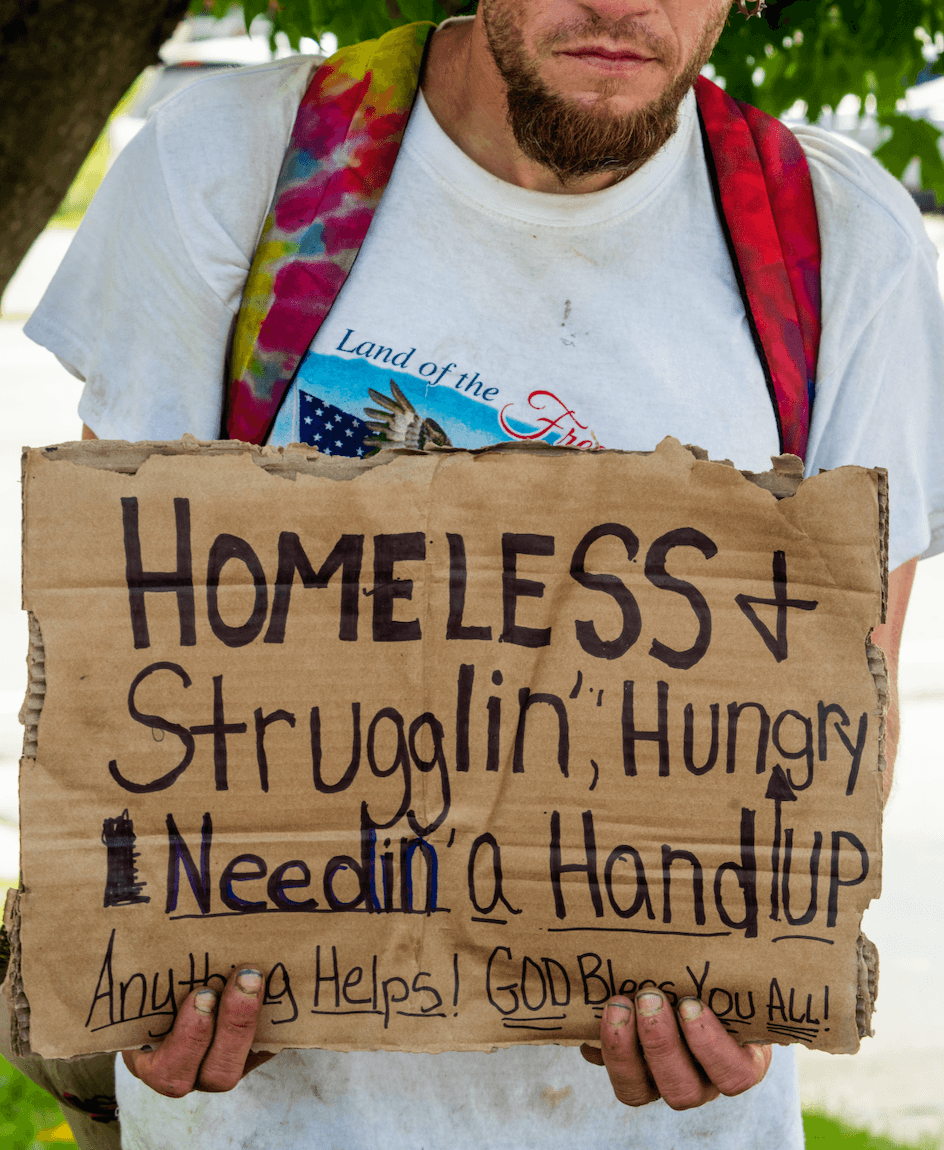
Haywood Road business owners describe a daily mix of compassion and alarm. Cat Matlock says repeated drug use, discarded needles, people sleeping in doorways and on stairs, and one confrontation that damaged her metal door and left her threatened helped push her massage studio to close in the summer of 2025.
Her story captures the tension that runs through West Asheville: many merchants see neighbors in distress and want help to exist, but they also say the corridor has become a place where public disorder, untreated mental illness, substance use and homelessness land directly on storefronts that were never built to absorb them.
What merchants say they are facing
Matlock says she watched the corridor change over more than 20 years, and her account is not just about one bad interaction. It is about a steady erosion of the conditions needed to keep a small business open, from customers feeling uneasy to renters leaving after repeated incidents around the property. That combination of fear and fatigue is what has turned a neighborhood conversation into an economic one.
Other West Asheville owners interviewed in the reporting describe the same split reaction. They are sympathetic toward unhoused people, yet they say the neighborhood has been left to carry a public-health and public-safety burden that individual businesses cannot manage alone. The central question is not whether poverty should be hidden, but how much of the visible crisis local merchants are expected to absorb before public agencies step in more forcefully.
At One World Brewing West, staff describe recurring drug use, needles, sleeping bags, a makeshift shelter assembled from delivery pallets, and a public indecency incident. Those details matter because they show the difference between complaints about crime and complaints about visibility. Some problems are clearly criminal or threatening, while others reflect the reality of people with nowhere stable to go.
Compassion is not the same as capacity
Kim Drye, who now owns West Asheville Yoga, says many of the unhoused people she sees are struggling with addiction or mental health challenges. That framing shifts the conversation away from simple enforcement and toward a service gap that business owners cannot fill on their own.
It also helps explain why so many West Asheville merchants speak in two voices at once. They want safety on their sidewalks, but they also know that forcing people from one block to another does not solve the underlying problem. In practice, compassion fatigue grows when the same few corridors keep receiving the same unmet needs, with no clear path to stable housing, treatment or crisis care.
The countywide numbers show a larger strain
The scale of the problem extends well beyond Haywood Road. Buncombe County’s homelessness count rose 9.1 percent to 824 people, underscoring that West Asheville is part of a much larger housing crisis, not an isolated neighborhood nuisance.
The City of Asheville says the Asheville-Buncombe Continuum of Care completed its 2025 Point-in-Time Count on January 28, 2025 with 135 volunteers and identified 755 people experiencing homelessness in Buncombe County. Of those, 328 were unsheltered, a 50 percent increase from 2024. The city also says 116 of those unsheltered people, or 35 percent, reported becoming homeless because of Tropical Storm Helene.
That storm’s impact is still echoing through the local housing system. The city says FEMA Transitional Sheltering Assistance hotel stays added 1,548 people to the HUD-reported total without housing because of Helene. Put plainly, the storm widened an already severe housing shortage and made the region’s shelter network work even harder.
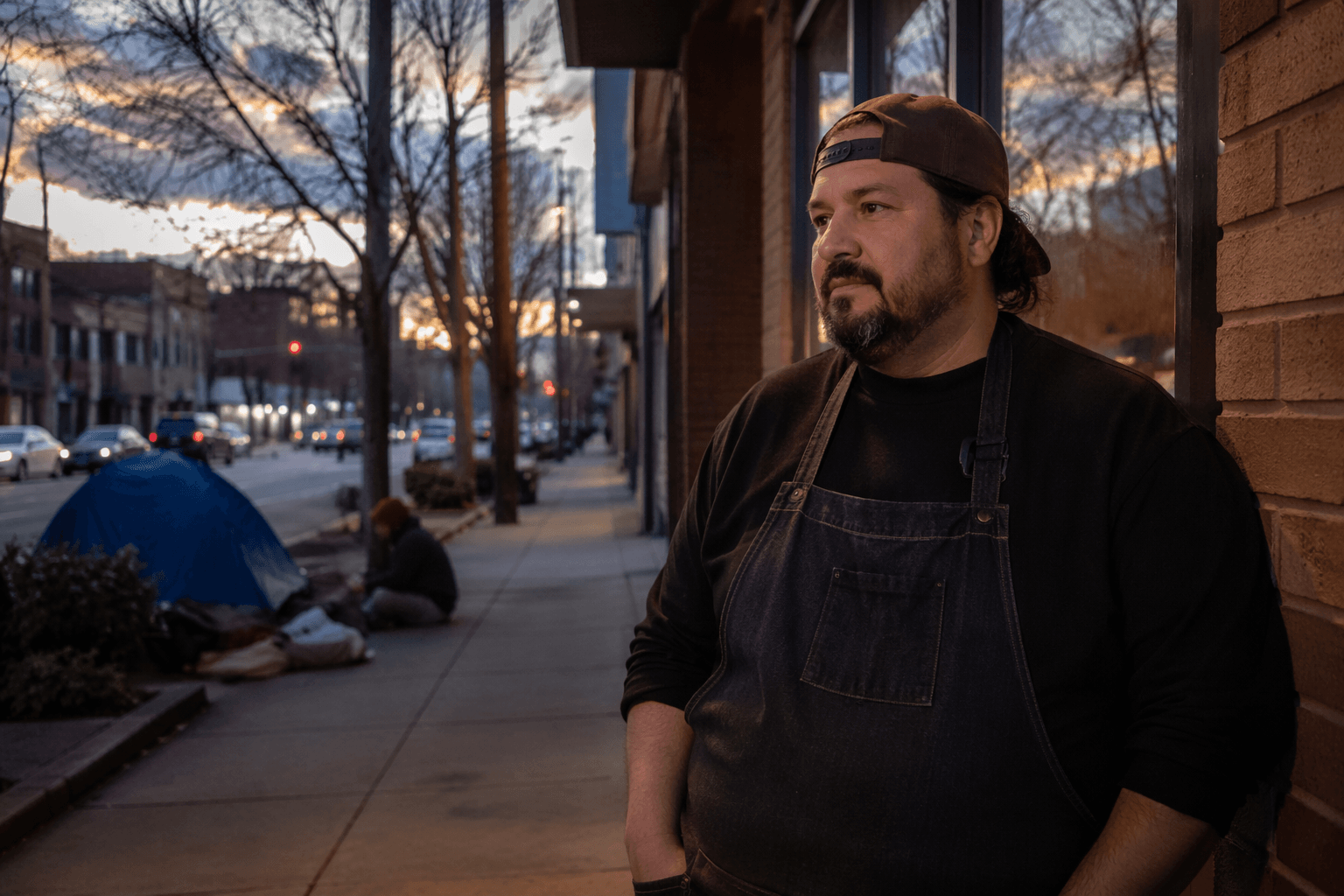
The trend did not begin with Helene. Mountain Xpress previously reported 739 people in Buncombe County’s January 2024 PIT count, and county homelessness had already increased 21 percent from 2021 to 2023. The 2025 figures show that the upward pressure never really let up.
Why West Asheville keeps becoming the flashpoint
West Asheville has been here before. In 2018, community complaints around a needle exchange and free café on the West Side made the corridor a recurring point of contention. In August 2024, the Continuum of Care board formed a working group specifically to address rising West Asheville concerns after an August 14 discussion.
That history matters because it shows the conflict is not just about one business, one encampment or one block. It is about a long-running corridor that has become a test case for how Asheville handles public disorder, harm reduction, shelter access and neighborhood pressure at the same time.
The Asheville-Buncombe Continuum of Care, established on February 29, 2024, is now the local planning body responsible for developing and overseeing the community’s response to homelessness. The City of Asheville serves as the lead agency for strategic and administrative support through its Homeless Strategy Division, which makes the issue a city-county coordination problem as much as a neighborhood one.
What the response network is trying to do
The service side of the story is dense, and it reaches deep into West Asheville. Asheville Poverty Initiative operates 12 Baskets Café at 610 Haywood Road, where it provides free meals and support for people facing hunger, housing instability and poverty. The organization says it rescues more than 2,000 pounds of food each week and serves about 500 community members through meals and grocery boxes.
Just down the road, Trinity United Methodist Church at 587 Haywood Road has become one of the neighborhood’s most important homelessness-response sites. Safe Shelter, a partnership of three Asheville churches and Counterflow LLC, began rotating a year-round 20-bed shelter among churches in 2024 and moved into a permanent West Asheville home at Trinity’s former educational building in October 2024.
The Trinity campus also hosts other aid efforts, including Wildflower House, a furniture bank serving formerly unhoused households and disaster survivors. Together, these programs show that West Asheville is not short on compassion or volunteers. The harder problem is scale, because food, shelter and furniture assistance can reduce suffering without fully offsetting the shortage of housing and behavioral health support.
What still has to work better
The story points to a city and county trying to align around a low-barrier shelter model while businesses ask for relief from the daily fallout on sidewalks and doorways. The Asheville City Council Public Safety Committee, Asheville Downtown Improvement District, Asheville Poverty Initiative, community paramedics, Safe Shelter, Trinity United Methodist Church, Homeward Bound of WNC, HARK and other partners all sit somewhere in that response web, but the burden on frontline businesses remains visible.
West Asheville’s crisis is now defined by three forces at once: a growing countywide homelessness count, post-Helene displacement and a neighborhood that has become a magnet for visible street-level disorder. The next step is not choosing between compassion and safety. It is building a response strong enough to hold both.
This article was produced by Prism’s automated news system from verified source data, official records, and press releases, then run through automated quality and moderation checks before publishing. The system is built and supervised by the people who set the standards it runs under. Read our full AI policy.
Know something we missed? Have a correction or additional information?
Submit a Tip